Saturday, May 12, 2012

Syurga Menyerbu Bumi (Bab 25)


Cerita Yahya Pembaptis dari Matius 3, Lukas 1, 3 dan Yahya 1

Pada masa lahirnya Isa, seorang lagi bayi turut dilahirkan. Namanya Yahya. Allah ada tugas istimewa untuk anak ini. Dia akan mempersiapkan semua orang untuk menerima kedatangan Isa. Pada hari dia dilahirkan, ayahnya tahu janji Allah kepada Ibrahim akan menjadi nyata – Allah akan hantar Penyelamat yang dinanti-nantikan itu. Dia sungguh gembira maka dia menyanyikan sebuah lagu:

“Kerana Kasih Allah kepada kita
Abadi, Sejati, Tidak Terhingga, Kebal dan Kekal Selamanya,
Syurga telah sampai di bumi.
Allah hantar Cahaya Syurga yang bersinar seperti mentari
KilauanNya menerangi kegelapan hidup kita
Dalam bayangan maut
Demi memimpin kita di jalan damai.”

Apabila Yahya dewasa, dia agak… (secara ikhlasnya) luar biasa! Dia tinggal di padang pasir dan pakaiannya diperbuat daripada bulu unta. Janggut dan rambutnya panjang, kusut dan bersemak. Yang paling ganjil adalah makanan Yahya –dia hanya makan belalang besar dicelup madu hutan (mungkin, lebih sedap kalau tambah sambal belacan?)

Tapi Allah suruh Yahya menyampaikan pesanan penting kepada umatNya:

“Jangan larikan diri daripada Allah. Lari kembali ke pangkuan Allah,” kata Yahya. “Kamu perlu diselamatkan. Aku ada berita gembira – Penyelamat kamu telah datang! Sediakan hatikamu untuk menerima kehadiranNya. Ya! Siapkan diri, kerana Raja kamu telah kembali.”

Himpunan besar mendengar kata-kata Yahya. Mereka kesal akan dosa mereka dan tidak mahu menyorok diri daripada Allah lagi. Mereka mahu dibebaskan. Jadi Yahya membaptis mereka – ertinya, dia menyelamkan mereka ke dalam air dan keluar semula. Ia menandakan niat mereka untuk mengikuti Allah dan memulakan hidup baru.

Pada suatu hari, Yahya sedang membaptis dalam Sungai Jordan di khalayak ramai seperti biasa. Apabila dia lihat seorang lelaki meghampiri tebing sungai, Allah berbisik kepadanya, “Inilah Dia!” Hati Yahya berlonjak girang. Saat yang dinanti-nanti seumur hidupnya telah tiba.

“Lihat,” kata Yahya sementara Isa masuk ke dalam sungai. “Anak domba Allah… yang menghapus dosa seluruh dunia”.

“Akan kamu baptis aku juga?” tanya Isa.

“Siapa diri aku untuk membaptiskan kamu?” jawab  Yahya.

“Mari kita genapi seluruh kehendak Allah,” kata Isa. Jadi Yahya pun menurut petunjukNya.

Tiba-tiba, seperti pintu syurga terbuka luas, sejalur cahaya yang indah menembusi awan dan menerangi Isa dengan sinar keemasan. Titisan air yang berkilau seperti permata berlian jatuh dari rambutNya.

Seekor merpati terbang turun lalu berehat atas Isa. Maka suara bergema dari syurga supaya semua orang dapat dengar dengan jelas: “Inilah Putera-ku yang Kukasihi. Aku berkenan kepadaNya,” kata Allah. “Dengar apa yang dikatakanNya”.

Syurga telah sampai di dunia ini.

Operasi Penyelamatan Allah telah bermula… 

Wednesday, May 09, 2012

Tangga Naik Ke Syurga (Bab 4)


Menara Babel, dari Kejadian 11


Nuh dan keluarganya hidup bahagia di dunia yang baru. Anak-anaknya dan cucu-cicitnya berlipat ganda sehingga bumi dipenuhi manusia sekali lagi.

Pada zaman itu, setiap orang bercakap dalam bahasa yang sama jadi kamu tidak perlu belajar Bahasa Jepun atau Swahili atau apa-apa pun. Kerana apabila kamu kata, “Salam sejahtera!” kepada sesiapa pun, mereka faham apa yang kamu maksudkan.

Suatu hari, semua orang sibuk bercakap dan tiba-tiba, mereka dapat buah akal baru: “Mari kita bina sebuah kota yang indah! Ia boleh jadi kediaman kita. Dan kita akan terlindung selama-lamanya.” Lepas itu, mereka fikir: “Mari kita bina sebuah Menara tinggi yang mencakar langit!”

“Ya!” kata mereka. “Semua orang akan sanjung tinggi kita. Lihatlah kehebatan kita di atas sini! Kita boleh pandang rendah semua orang di bawah sana. Barulah mereka tahu kita orang ternama. Kita akan jadi seperti Allah. Kita akan jadi terkenal, selamat, bahagia dan segalanya sempurna.”

Oleh itu, mereka mula kerja pembinaan. Satu demi satu, batu bata dilonggok menjadi menara gergasi yang tinggi… sampai mencecah langit. Mereka bina anak tangga supaya dapat dipanjat seumpama ke puncak syurga.

“Lihat!” sorak mereka. “Kita berjaya! Tengok apa yang dicapai dengan tangan kita sendiri!” Mereka gembira betul dengan kejayaan mereka itu.

Tapi Allah tidak gembira dengan sikap sombong mereka. Allah dapat lihat niat sebenar di sebalik usaha mereka.

Mereka cuba hidup tanpa Allah, tapi Allah tahu ia tidak akan memberi kebahagiaan kepada mereka. Ia tidak boleh membuat mereka selamat selamanya. Jika mereka berterusan begini, ia akan membinasakan diri mereka sendiri. Tapi Allah sayang mereka dan tidak rela membiarkan mereka hidup begini. Lalu Allah halang rancangan mereka.

Suatu pagi, mereka bangun dan pergi kerja seperti biasa. Tapi semuanya sudah berubah – kata-kata mereka kedengaran ganjil dan lucu. Allah telah memberi mereka bahasa yang berbeza! Tiba-tiba, mereka saling tidak memahami apa yang dicakap. Kalau seseorang itu tanya, “Apa khabar?” orang lain ingat dia kata, “Rambut kamu kena bakar?” Tak lucu! Kamu mungkin cakap sesuatu yang baik seperti, “Cantik sungguh pagi ini!” dan kena pukul kerana mereka ingat kamu kata, “Diamlah! Bosan betul budak ini.” (Kamu langsung tidak berpeluang kata, “Maafkan saya” kerana tiada orang yang faham ayat itu juga.)

Memang tidak mudah bekerjasama selepas ini. Mereka selalu gaduh dan lawan, keliru dan marah. Sehingga mereka tidak mampu terus bekerja dan langsung berhenti membina Menara yang dipanggil “Babel” itu.

Akibatnya, manusia pun mula berserak ke merata-rata tempat. (Oleh itu, kita ada bahasa yang berbeza sampai hari ini).

Lihatlah… Tidak kira betapa tinggi mereka panjat… Tidak kira betapa tekun usaha mereka… Allah tahu manusia tidak boleh kembali ke Syurga dengan kemampuan diri sendiri. Manusia tidak perlu sebuah menara bertingkat, mereka perlu seorang Penyelamat. Kerana jalan kembali ke syurga bukanlah anak tangga biasa, tapi Allah sendiri yang membuka lintasan dari syurga.

Manusia tidak mampu mengecapi Syurga, maka Syurga perlu turun mencari manusia. Suatu hari nanti, ia akan menjadi kenyataan.

Monday, May 07, 2012

Permulaan Baru (Bab 3)


Permulaan Baru

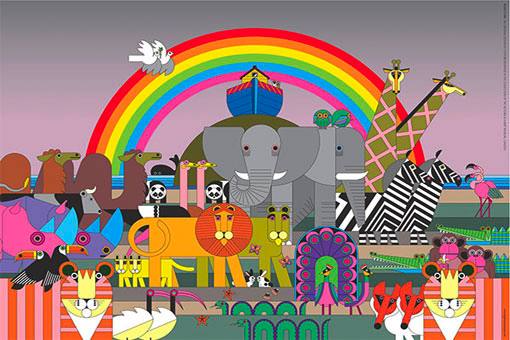
Bahtera Nabi Nuh, dari Kejadian 6 – 9


Masa berlalu. Dan bumi dipenuhi ramai manusia. Setiap orang di setiap pelosok dunia sudah lupakan Allah. Mereka hanya berbuat jahat selalu.

Hati Allah penuh duka apabila Dia melihat apa yang sudah terjadi kepada bumi kesayanganNya. Ancaman wabak penyakit, kemusnahan dan maut berleluasa di mana-mana – semua yang paling Allah benci.

Tapi Nuh adalah sahabat Allah (sesuatu yang aneh pada masa itu kerana tiada orang lain yang sebegitu). Nuh dengar kata Allah. Dia bercakap dengan Allah. Dia gemar bersama-sama dengan Allah, seperti anda suka bergaul dengan rakan karib anda.

“Nuh”, kata Allah. “Dunia ini sakit tenat. Manusia telah memenuhi bumi Aku dengan kebencian, bukan kasih sayang. Mereka membinasakan diri sendiri… Mereka saling bermusuhan sesama sendiri… dan menghancurkan dunia ciptaanKu. Aku mesti hentikan mereka. Terlebih dahulu, kita harus bina sebuah bahtera.”

(Tahukah anda cara membina sebuah bahtera? Nuh tidak tahu juga. Mujurlah, Allah tahu dan Allah akan ajar Nuh.)

“Ribut akan melanda”, Allah beritahu Nuh. “Tapi Aku akan selamatkan kamu. Aku janji. Aku akan hantar haiwan kepada kamu – binatang yang lompat, lari, gayut, panjat, rangkak dan rayap. Jangan lupa bungkus makanan mereka juga.”

Ribut akan datang menghanyutkan segala kebencian, kesedihan dan kejahatan manusia. Ia akan menjadikan dunia ini bersih semula. Allah merancangkan keselamatan Nuh, tapi dia harus percaya kepada Allah dan melakukan apa saja yang Allah suruh.

Jadi Nuh pun membina sebuah bahtera (ertinya, kapal yang amat besar).

Jiran-jiran bersebelahan Nuh keluar tengok… sambil menuding jari… sambil ketawa, kerana mereka tidak percaya kata-kata Nuh tentang bahtera… ataupun ribut… ataupun perlunya mencari jalan selamat… Dan Nuh kelihatan agak bodoh. Bahtera itu berada di tengah padang pasir, yang jauh daripada lautan biru dan tiada awan pun di atas langit. Siapa yang perlu bawa payung, bahkan sebuah perahu gergasi?

Tapi Nuh tidak peduli sangat apa yang orang lain fikirkan. Dia hanya peduli apa yang dipesan Allah. Jadi dia lakukan apa saja yang Allah suruh.

Apabila ia siap, Allah kata, “Semua naik kapal!” Maka keluarga Nuh dan semua haiwan segera masuk ke dalam. Lepas itu, Allah tutup pintu bahtera.

Hujan lebat pun turun – selama beberapa minit pada mulanya. Ia berterusan sampai beberapa jam. Ia berlanjutan selepas beberapa hari. Curahan air masih tidak henti-henti berminggu-minggu lamanya. Dan kolam kecil bertukar menjadi sungai yang deras… Sungai-sungai bercantum menjadi tasik yang dalam… sehingga banjir meliputi bumi.

Bahtera yang dulunya nampak besar kian kelihatan kerdil dalam gelora ribut. Walaupun ia terumbang-ambing dilanda ombak, gemuruh petir dan kilat bersabung, Allah masih bersama mereka. Allah melindungi mereka selama 40 hari dan 40 malam.

Akhirnya, hujan pun reda. Matahari muncul dan Nuh membuka luas semua tingkap dalam bahtera. “Kita selamat!” sorak mereka.

Nuh melepaskan seekor merpati untuk keluar menerokai dunia baru, dan tidak lama kemudian, ia membawa balik sehelai daun segar dari pokok zaitun. Setiap orang tahu ertinya: Sang merpati sudah dapat cari tanah lapang. Air banjir telah surut.

Bahtera mendarat di atas sebuah gunung. Apabila keadaan sesuai, Allah kata, “Semua keluar!” Lalu mereka turun melompat dan menari di atas tanah yang tidak basah lagi.

Perkara pertama yang Nuh buat adalah berterima kasih kepada Allah kerana menyelamatkan mereka seperti yang dijanji oleh Allah.

Perkara pertama yang Allah buat adalah menjanjikan bahawa: “Aku tidak akan memusnahkan dunia ini lagi.” Seperti pahlawan yang menyimpan busur selepas perang, Allah kata, “Lihat, Aku letak busur Aku di atas awan”. Maka, di atas langit, pelangi cantik muncul seperti busur yang diperbuat dari cahaya.

Ini permulaan baru untuk dunia Allah.

Tidak lama kemudian, semuanya akan kembali buruk. Tapi Allah tidak terperanjat kerana Dia sudah tahu apa yang akan berlaku. Oleh itu, dari awal lagi, Allah ada Rancangan yang lebih bagus. Rencana bukan untuk memusnahkan dunia tetapi untuk menyelamatkannya. Suatu hari nanti, Allah mahu hantar seorang Penyelamat.

Kemarahan Allah terhadap kejahatan, kepiluan dan kematian akan kembali – tetapi ia bukan ditujukan kepada manusia ataupun dunia. Tidak! Busur perang Allah bukan ditujukan ke bawah bumi.

Ia ditujukan ke atas langit, terus ke dalam hati Syurga. 

Wednesday, May 02, 2012

Dusta Yang Dahsyat (Bab 2)


Bagaimana Adam dan Hawa hilang segalanya (dari Kejadian 3)

    Adam dan Hawa hidup bahagia bersampingan di dalam kediaman baru mereka yang indah. Segalanya sempurna – buat seketika.

Sehingga suatu hari di mana segalanya bertukar menjadi buruk.

Allah ada seorang musuh yang mengerikan. Namanya Syaitan. Dulunya, Syaitan adalah malaikat ciptaan Allah tetapi dia tidak puas hati. Malah, dia mahu menjadi Allah sendiri.
Syaitan bertambah sombong, jahat dan penuh rasa benci sampai Allah menghalaunya keluar dari syurga.

Syaitan naik marah lalu cuba mencari helah untuk melukakan hati Allah. Dia mahu rencana Allah dirosakkan dan kisah cinta ini ditamatkan, serta merta. Jadi, dia menyamar diri seperti seekor ular sambil menunggu datangnya peluang di dalam taman itu.

Hanya satu peraturan Allah yang harus dipatuhi Adam dan Hawa: “Jangan makan buah dari pokok di tengah-tengah taman itu,” Allah beritahu mereka. “Kerana jika dimakan, kamu akan ingat yang kau tahu segala-galanya. Kamu tidak akan percaya kepada Aku lagi. Akibatnya, bayangan maut, kesedihan dan air mata akan tiba.”

(Ia begini… Allah tahu jika mereka makan buah itu, mereka akan anggap bahawa mereka tidak perlu Allah lagi. Dan mereka akan cuba cari kebahagiaan tanpa Allah. Tapi Allah tahu memang tiada kebahagiaan tanpa Allah, dan hidup tanpa Allah bukanlah hidup sebenarnya.)

Apabila Sang Ular lihat peluangnya tiba, ia mendekati Hawa dengan senyap. “Adakah benar Allah sayang kepadamu?” bisik ular. “Kalau Allah betul-betul sayang kamu, kenapa Dia tidak bagi kamu makan buah yang manis, sedap dan cantik itu? Kasihan engkau, mungkin Allah langsung tidak mahu kamu gembira.”

Kata-kata ular berdesir dalam telinga Hawa dan masuk seperti racun ke dalam hatinya. Adakah Allah sayang aku? Hawa bertanya. Tiba-tiba, dia tidak pasti lagi.

“Percayalah aku,” desas ular itu. “Kamu tak perlukan Allah. Hanya gigit sekali buah itu dan kamu akan riang gembira buat selama-lamanya”.

Maka, Hawa petik and makan buah larangan itu. Dan Adam pun makan juga.

Oleh itu, suatu bohong dahsyat memasuki alam. Ia meresap ke mana-mana jua. Ia tinggal di dalam hati setiap manusia, membisikkan sesuatu kepada setiap anak Allah: “Allah tidak sayang kepada kamu”.   

Ini bukan lamunan semata-mata. Ia seperti mimpi ngeri.

Seekor merpati pintas terbang meninggalkan Adam. Rusa segera melarikan diri ke dalam belukar. Mereka seperti takut akan sesuatu. Tiba-tiba, udara terasa dingin. Sesuatu yang aneh sedang berlaku. Walaupun Adam dan Hawa sudah sekian lama tidak berpakaian, tetapi sekarang mereka mula terasa malu dan bersalah. Mereka tidak mahu sesiapa pun yang nampak diri mereka. Jadi, mereka bersembunyi.

Pada waktu senja, Allah berjalan dalam taman lalu memanggil mereka, “Anak-anak?”

Biasanya, Adam dan Hawa suka mendengar suara Allah dan lari bertemu Allah. Tapi kali ini, mereka lari ke tempat gelap dan bersembunyi daripada Allah.

“Di manakah kamu?” panggil Allah.

“Kami takut pada Mu,” kata Adam. “Kami menyorok”.

“Sudahkah kamu makan buah yang Aku larang kamu makan itu?” Allah bertanya.

Adam jawab, “Hawa suruh saya makan!”

“Apa yang sudah kamu buat?” soal Allah lagi.

Hawa kata, “Ular yang suruh saya makan!”

Hati Allah amat pilu. Anak-anakNya bukan sahaja melanggar hukum yang tunggal; mereka juga menyakitkan hati Allah. Mereka telah putus ikatan mesra dengan Allah. Kini, segalanya akan jadi rosak. Dunia ciptaan Allah mula retak dan runtuh dan reput. Dari sekarang, segalanya akan mati – walaupun ia seharusnya kekal buat selama-lamanya.

Lihatkah anda? Dosa telah meresapi dunia Allah yang sempurna. Ia tidak dapat ditanggalkan. Anak-anak Allah akan sentiasa cuba melarikan diri dariNya dan bersorok di dalam bayangan. Hati mereka akan hancur dan tidak berfungsi sewajarnya. Allah tidak rela mengizinkan Adam dan Hawa hidup abadi dalam kesakitan begini, dalam kepahitan tanpa Allah. Hanya satu cara untuk melindungi mereka.

“Kamu harus pergi dari taman ini sekarang,” kata Allah kepada anak-anak kesayanganNya, air mata mengalir membasahi pipi. “Ia bukan lagi tempat kediaman milikmu.”

Tapi sebelum mereka meninggalkan taman syahdu, Allah menyediakan pakaian bagi anak-anakNya, demi melindungi mereka. Allah mengenakan pakaian di atas tubuh mereka lalu menghantar Adam dan Hawa keluar taman untuk merentasi suatu perjalanan yang panjang.  

Dalam cerita yang berlainan, semuanya harus berakhir di sini maka kisah pun…


TAMAT.


Tetapi bukan Cerita ini.

Allah teramat sayang kepada anak-anakNya sehingga tidak rela membiarkan kisah ini tamat begitu saja. Walaupun Allah tahu pengorbanan yang perlu ditanggungNya, Dia telah mengidamkan suatu rencana yang paling gemilang.

Suatu hari nanti, Allah akan datang menjemput anak-anakNya kembali ke pangkuanNya.
Suatu hari nanti, Allah akan memulihkan dunia ini menjadi kediaman sempurna mereka sekali lagi.
Dan suatu hari nanti, Allah akan sapu segala air tangisan dari mata mereka.

Tahukah anda? Tidak kira apa pun yang telah terjadi, Allah akan mengasihi anak-anakNya – dengan Cinta Abadi yang Tidak Terhingga, Tidak Mengaku Kalah, Kekal dan Kebal Selamanya.

Walaupun mereka cuba lupakan Allah dan melarikan diri, dalam hati nurani mereka, anak-anak Allah yang sesat itu akan sentiasa rindu kepada Allah dan ingin kembali ke rumah kediaman mereka yang sudah hilang itu.

Sebelum mereka berpisah, Allah berjanji kepada Adam dan Hawa: “Ia tidak kekal begini buat selamanya. Aku akan datang menyelamatkan kamu! Aku akan bertempuh dengan Sang Ular itu, dan menghapuskan semua dosa, kegelapan dan kepiluan yang kamu lakukan. Aku akan kembali mencari kamu!”

Dan Allah berpegang kepada janjiNya. Suatu hari nanti, Allah sendiri akan datang.

Thursday, April 26, 2012

Asal Usul Alam Maya (Bab 1)


Dari Kejadian 1 – 2 

Pada mulanya, tiada apa yang wujud.
    Tiada yang kedengaran. Tiada yang dirasakan. Tiada yang terlihat.
    Hanya kekosongan. Kegelapan. Selain dari itu, apa-apa pun tiada.

Tapi Allah ada. Dan Allah mengilhamkan suatu Rancangan indah.

“Akan Ku penuhi kekosongan ini!” firman Allah. “Dalam kegelapan, Ku berikan cahaya! Dari ketiadaan, akan Ku cipta… SEGALANYA!”


Seperti ibu burung menetaskan telurnya, Allah berlegar di muka kegelapan sunyi untuk memulakan nyala kehidupan.

Allah berfirman. Begitu saja. Dan apa yang dititah Allah menjadi nyata.

Allah kata, “Datanglah, cahaya!” lalu bersinarlah cahaya menerangi kelam. Allah gelar cahaya itu, “Hari” dan kegelapan itu “Malam”.

“Bagus!” seru Allah. Sememangnya, ia baik belaka.

Lalu Allah kata, “Datanglah, lautan! Marilah, langit!” Maka terbukalah ruang angkasa tinggi dan samudera yang serba luas dan dalam.

“Bagus!” seru Allah. Sememangnya, ia elok sekali.

Lepas itu, Allah kata, “Datanglah, bumi!” Maka timbul dari gelora lautan itu pantai pasir, daratan lapang dan gunung mencecah awan.

“Bagus!” puji Allah. Sesungguhnya, mereka diciptakan begitu.

“Bangkitlah, pokok!” firman Allah. “Tumbuh-lah, rumput dan bunga!” Dan hidupan flora mekar di merata-rata pelosok bumi. Daun segar kehijauan, akar kukuh menular dan bunga harum berkembang.

“Bagus!” seru Allah. Sesungguhnya, mereka cantik sekali.

“Datanglah, bintang!” kata Allah. “Marilah, suria dan bulan!” Maka berputarlah di angkasa lepas bola berapi, bintang berekor dan planet berwarna-warni. 

“Kamu bagus!” seru Allah. Sesungguhnya, mereka sedemikian.

“Marilah, burung!” kata Allah lagi. Maka, berterbangan tinggi sambil bersiul riang, bermacam jenis burung memenuhi langit.

“Datanglah, ikan!” kata Allah. Maka, percikan air laut riuh dengan berbagai ikan yang gembira menerpa dan meluru ke sana sini.

“Kamu bagus!” seru Allah. Sebegitu mereka jadinya.

Lepas itu, Allah kata, “Marilah, haiwan!” Maka, semua binatang keluar main. Bumi bergegar dengan bunyi lantang mereka – mengaum, menyalak, berdengkur, melaung, melolong dan mendengus.

“Segalanya bagus!” sahut Allah. Mereka girang belaka.

Allah melihat semua ciptaanNya dengan penuh kasih sayang. Mereka makmur dalam peliharaan Allah.

Tapi yang paling bagus belum datang lagi. Dari awal lagi, Allah mengidamkan sesuatu yang istimewa dalam hatiNya. Allah mau cipta manusia untuk menikmati Kebahagiaan Abadi. Mereka adalah putera-puteri Allah, dan dunia menjadi kediaman indah untuk mereka.

Jadi Allah menghembus nafas jiwa ke dalam Adam dan Hawa. Apabila mereka buka mata buat kali pertama, yang terlihat adalah wajah Allah sendiri.

Allah pandang mereka seperti seorang ayah. “Kamu mirip saya”, kata Allah. “Kamu karya paling indah yang telah Kucipta”.

Allah mengasihi mereka sepenuh hati. Mereka makmur kerana kasih Allah.
Bersama bintang dan sungai dan angin membelai pokok, Adam dan Hawa mempersembahkan lagu merdu kepada Sang pencipta. Hati mereka penuh girang. Tiada yang sedih atau sakit atau takut atau sepi.

Allah melihat segala ciptaanNya. “Sudah Sempurna!” seru Allah. Sesungguhnya, mereka begitu.

Tapi segala bintang, gunung, lautan dan cakerawala pudar berbanding dengan kasih Allah kepada putera-puteri kesayanganNya.  

Allah rela mengalihkan langit dan bumi demi bersama mereka. Sentiasa. Apa saja terjadi, tidak kira harga pengorbanan, Allah sedia mengasihi mereka selalu.

Maka bermulalah kisah cinta ini…

Wednesday, April 25, 2012

Setiap Cerita Bisik NamaNya (Pengenalan)


Langit menceritakan kebesaran Allah;
Cakerawala memanggil, “Lihatlah karya ciptaan Allah!”
Hari demi hari… Malam berganti malam…
Mereka menyampaikan ilmu kepada kita 

(Mazmur 19:1-2, parafrasa)

Tulis Allah, “Aku Kasihi Kamu” – di atas langit, di muka bumi dan di dasar laut. Pesanan Allah terpahat di mana-mana jua! Kerana segalanya dicipta demi mencerminkan rupa Sang Pencipta – supaya kita dapat kenal Allah, agar hati kita berlagu.

Lihat-lah burung kenyalang melayang tinggi. Renungi-lah gaya ikan keli bermain dalam sungai. Perhatikan lambaian pokok kelapa di-buai bayu.

Malah Allah suratkan kasih-Nya dalam sebuah buku juga. Namanya: “Alkitab”.


Ramai yang fikir Alkitab ialah buku para wira serta wirawati – orang cerdik dan gagah yang harus anda contohi. Ya, memang ada pahlawan dan serikandi dalam Alkitab, tapi (segera akan anda dapat tahu) mereka semua tidak-lah sempurna. Mereka buat salah (seringkali, secara sengaja!) Mereka penakut dan cabut lari. Kadangkala, mereka juga berlaku jahat.

Tidak, Alkitab itu bukan buku hukum ataupun buku wira contoh semata-mata. Sebenarnya, Alkitab adalah sebuah Cerita – tentang seorang Pengembara muda dari negara jauh yang datang menawan kembali harta kesayangannya. Ia kisah cinta tentang seorang Putera berani yang meninggalkan takhtaNya, mahligaiNya – segalanya – untuk menyelamatkan orang yang dikasihi. Ia seperti dongeng paling indah yang telah tiba-tiba menjelma di dunia nyata.

Oh ya, yang paling bagus tentang Cerita ini – ia adalah benar.

Ada banyak cerita dalam Alkitab, tapi semuanya menyampaikan sebuah Cerita Utama. Cerita tentang bagaimana Allah mengasihi anak-anakNya dan datang membebaskan mereka.

Setiap halaman Alkitab adalah sebahagian Cerita ini. Anda akan temui seorang bayi di dalam kalbu hikayat ini. Setiap cerita dalam Alkitab bisik NamaNya. Dia seakan penyelesaian suatu teka-teki. Secara tak disangka, anda dapat lihat suatu gambaran lengkap kerana kedatanganNya.

Dia bukan bayi biasa. Segalanya bergantung kepada Bayi ini. Suatu hari, Dia akan…
Oh, tunggu sebentar…

Cerita kita harus bermula di zaman yang paling awal sekali…

Pada mulanya…

Monday, April 23, 2012

The Pulpit And Politics (Part 1)


The Bible and the Ballot is a collection of articles produced by a group of Christians who are concerned with Christian political engagement in Malaysia today. They come from various church traditions who share connection with Friends in Conversation network. It was premised on the Lordship of Christ over all of life and sought to encourage other believers to think of their role as responsible citizens. In the following review, I will pick up some key themes and proceed to comment on selected articles.

The first contributor, Alwyn Lau, examined if the pastors could tell people how to vote from the pulpit and gave a clear answer: “Yes”! The argument is buttressed by references to biblical prophets and apostles who openly challenged corrupt kings and religious leaders of their day. Did Jesus pull punches in his confrontation against the Pharisees and Sadducees?

At least one reader/preacher expressed this concern, “Wouldn’t the pastor’s sermons, then, reek of partisanship when he takes side for a particular political party or candidate? What about separation of church and state?”

No, Alwyn argued, because a church becomes partisan only when she blindly swallows the rhetoric of a political party “lock, stock and ballot” without being a discerning critic of its faults also. After all, a church council could recommend to purchase its audio equipments from a particular brand (let’s say, Yamaha) without being accused of playing ‘favorites’, could it not?

As much as I welcome his concluding remarks about the centrality of the cross in our political engagement (“to serve and suffer for the community”), it seems that this “Yamaha sound-system” argument committed the fallacy of a ‘weak analogy’. A more representative analogy would sound like this: “Should a preacher recommend  from the pulpit that church-goers purchase Panasonic air-conditioners because its greener technology is more in line with a creation-caring trajectory of the Bible?”

Then it becomes more apparent why many pastors would be hesitant to countenance the possibility of the pulpit being hijacked for profiteering or politicking agenda. When they preach the Word, they are supposed to speak as representatives of the Almighty.

Perhaps a more fruitful and concrete question to explore is, “When, if ever, is it appropriate for pastors to make such recommendations from the pulpit?”

It would appear that such unusual homiletic ventures are conceivable to the degree that
-         the facts are beyond reasonable doubt that Panasonic/Pakatan Rakyat are “far better”
-         in unusual circumstances where failing to do so causes significant harm to others (i.e. all other brands emit disastrous ozone-depleting chemicals or BN is guilty of some heinous crimes against humanity)

Even granting that a government agency is guilty of detaining people without trial, it is not always clear whether the best course of action is to preach up a mandate for the Opposition. Could it be a vote recommendation against the Home Minister instead of the entire political platform? Or would a press statement or candlelight vigil on this particular issue be more effective compared to a pulpit message? How did you respond when evangelical pastors publicly endorsed George Bush Jr. for President of America because of his stance on abortion?

Such Brian-McLaren-esque questions throw up the ambiguity and diversity inherent in such daunting, complex socio-political issues. As Christian leaders, we should not shy away from our responsibility to be engaged at various levels. But it does caution us to humility and not to be too quick to take sides from the pulpit.

Recently, I heard desas-desus of a local church that is blessed (or cursed?) with two pious believers from across the political divide facing off with each other. It may not be the most pastoral approach to endorse one candidate and not the other. However, I believe it is appropriate for the pastor to discuss pertinent issues that affect the community and explain his personal affiliations on that basis. In fact, Pastor Soo Inn did precisely that in his article entitled “Vote for Change: My Decision at this point in History”. In that capacity as a concerned citizen, the Christian leader could still engage meaningfully with such public issues without risking the tarnish of partisanship for the Church. 

The Meaning of the Cross

Models Of The Atonement


Introduction

Every religion or ideology has its representative symbol. The lotus flower depicts the emergence of purity from murky waters in Buddhist thought. The Star of David is a symbol for modern Judaism while the crescent moon became internationally associated with Islam. Even secular Marxism is signified by a hammer and sickle to represent industry and agriculture of the proletariat. At least since the 2nd century A.D., the cross has been used as the visual emblem for Christianity. For believers, it signifies that the death of Jesus is central to their faith even though crucifixion was a much-feared form of capital punishment.

Throughout the centuries, Christians have cherished and grappled with this mystery of how His death brought about reconciliation with God. The canonical Gospels devoted such disproportionate attention on events surrounding the final week of Jesus’ life on earth that they are sometimes described as “passion narrative with an extended introduction”. It is as if the action shifts into high-definition, bullet-time motion when the story reaches its climax in the crucifixion and resurrection of Christ. But what exactly did Christ accomplish on the cross of
Calvary? Several frameworks for explaining the atonement have consequently gained wide acceptance in various historical contexts.

Models of the Atonement

Surrounded by pagan occults, many early Greek Fathers interpreted Christ’s death as a ransom paid to Satan to redeem captive humanity from his clutches. In Mark 10:45, Jesus said, “For even the Son of Man did not come to be served, but to serve, and to give his life as a ransom for many.” Origen has a popular analogy that likened Satan to a ferocious fish that swallowed the bait of Christ’s human form and got caught by the hook of His deity. The forces of hell bit off more than they could chew when Christ rose victoriously from the grave. 

Drawing from these patristic sources, Gustav Aulen, a Swedish theologian, viewed the cross as Christ’s public triumph over evil powers in a cosmic battle to unshackle humanity from bondage. The Christus Victor motif found biblical support in passages like Hebrews 2:14: “Since the children have flesh and blood, (Christ) too shared in their humanity so that by his death he might break the power of him who holds the power of death—that is, the devil— and free those who all their lives were held in slavery by their fear of death.”

Influenced by Roman legal codes, early Latin Fathers such as Ambrose construed the cross as Christ satisfying the requirements of God’s law. They drew support from Galatians 3:13, which read, “Christ redeemed us from the curse of the law by becoming a curse for us”. During the medieval period, the satisfaction theory of the cross was developed further by Anselm as satisfying God’s honor. In feudal societies, an overlord whose dignity was offended could either punish the guilty peasants or forgive them when his honor is satisfied by another. Although God was dishonored by our rebellion, Anselm believed that we are forgiven because Christ’s obedient, meritorious death compensated for His honor. 

Peter Abelard, a younger contemporary of Anselm, reacted strongly against the prevailing theories and insisted that Christ’s suffering is primarily a display of how great God’s love is for us. “God demonstrates his own love for us in this: While we were still sinners, Christ died for us” (Romans 5:8). His sacrificial death melts away our enmity, awakens moral change and moves us to seek forgiveness. Some proponents of the moral influence theory also reject any objective requirement to appease God’s anger. Rather, the sole obstacle to salvation lies in the subjective resistance of sinners. Consequently, the cross as an expression of God’s love is required to inspire us to imitate Christ’s self-giving ethics.

Last but not least, some influential Church Fathers such as Athanasius in the East and Augustine in the West (to name just a few) also held that Christ took upon Himself the deserved penalty of fallen humanity as a sinless substitute in their place. The penal substitutionary view was further developed by the Reformers. 1 John 4:8-10 declares, “God is love. . . . This is love, not that we loved God, but that he loved us, and sent his Son to be the propitiation for our sins.” In explaining this biblical passage, Calvin wrote that God, at the same time when he loved us, was also hostile to us because of our transgressions. [1] Reconciliation was made possible because Christ appeased His holy wrath and opened the way for our pardon. By doing so, God can be both just and the justifier of the one who has faith in Jesus (Romans 3:21-26).

Pierced For Our Transgressions

Although penal substitutionary atonement has been the predominant theme in evangelical preaching, some theologians today seem to favor a plurality of atonement theories. In differing degrees, the various models stress crucial facets of Christ’s work on the cross that should be recovered. They need not be mutually exclusive. Indeed, it appears that when we understand the centrality of the cross as something accomplished primarily in relation to God Himself that its implications for the cosmos, demonic powers and ethics come into more balanced perspective.

Let us attempt a synthesis of these themes: The heart of the cross is, first and foremost, Christ’s vicarious sin-bearing to take upon Himself the just wrath of God (Isaiah 53). He absorbed the punishment that we deserved as a substitute so that sinners may be forgiven while satisfying the righteous demands of God’s law. However, the moral law ought not to be seen as a higher abstract entity independent of the Law-giver, but a reflection of God’s own holy character.

Unless the cross objectively rescues us, it would be an empty show of sentimentality just like a silly lovesick boy who declares, "Darling, I will prove my love for you by jumping off Niagara Falls". It is only a meaningful act of love if the beloved is in real danger so that diving into the waters would be an attempt to rescue her. And would it not be inappropriate to conceive of the cross as Jesus paying the devil a “pound of flesh”? God owed the devil nothing but retribution. Rather, the ransom was paid to God on behalf of sinners so that we now could belong to Christ.

And yes, by looking at the cross, we can learn much about Christ’s obedience even unto death and denying one's will to do the Father's. 2 Peter 2:21 says, “Because Christ suffered for you, leaving you an example, that you should follow in his steps.” Yet, it is because Christ has rescued us from moral condemnation that we have the most powerful, liberating motivation for obedience in life. Otherwise, our moral performance degenerates into yet another self-salvation project.

Furthermore, a painful death by crucifixion is not apparently victorious if we conceive it exclusively as cosmic warfare. The demonic powers were stripped of their condemnatory weapons and made a public spectacle precisely because Christ forgave our trespasses by nailing our legal debts on the cross (Colossians 2:13-15).

The first Passover serves as an illuminating paradigm for connecting the deliverance of God’s people from spiritual bondage with penal substitutionary atonement. Nine plagues had fallen upon their Egyptian oppressors while the Israelites were spared in a protracted “power encounter”. But Pharoah stubbornly refused to let His people go. The stage was set for the climactic “judgment on all the gods of Egypt” (Exodus 12:12). If the tenth plague followed the same pattern as the preceding ones, it would be a coherent narrative of how divine judgment liberated humanity from evil powers. But unlike the other plagues, the firstborn of the Israelites were not automatically spared when God struck down the firstborn of Egypt. Instead, they were instructed to slaughter a spotless lamb and apply its blood to the door so that the wrath of God would “pass over” them. The Passover lamb was a sacrificial substitute for the Israelite firstborn so they may be spared from divine judgment (Exodus 13:11-16). What a sobering caution against triumphalism to realize that God’s people are not merely victims but guilty sinners in need of atoning grace! Similarly, our own liberation from Satan’s accusing condemnations is secured on the grounds of Christ’s once-for-all atonement as the Lamb of God (Hebrews 9).

The Divine Conspiracy

In summary, we can make much sense of various biblical themes of atonement through the lens of Christ's vicarious sacrifice. But in and of themselves, these motifs are emptied of their power. Unfortunately, this doctrine of penal substitutionary atonement has recently been described by critics as 'cosmic child abuse', portraying a fierce Father who needs to punish the innocent Son before He could forgive the guilty. But the objection fails to see that Jesus is not just a third-party bystander.

He is the Judge Himself receiving the punishment. He is the incarnate God, eternally one with the Father. The cross is biblically portrayed as a Trinitarian conspiracy of love where the Father ‘so loved the world that he gave his only-begotten Son’ (John 3:16) and the Son voluntarily accepts the cross as the supreme expression of His own love: “Greater love has no man than this, that a man lay down his life for his friends. You are my friends.” (John 15:13) That’s the kind of love that continue to inspire countless choruses of worship devoted to the Sinless One who became sin on our behalf that we might become the righteousness of God in Him:

In Christ alone! who took on flesh
Fulness of God in helpless babe!
This gift of love and righteousness
Scorned by the ones he came to save:
Till on that cross as Jesus died,
The wrath of God was satisfied -
For every sin on Him was laid;
Here in the death of Christ I live.[2]


[1] Institutes of the Christian Religion, Book II. xvii. Section 2.   
[2] “In Christ Alone”, Words and Music by Keith Getty and Stuart Townsend, Copyright @ 2011 Kingway Thankyou Music

Monday, April 02, 2012

Commentary: Faith and Public Life

SOO-INN TAN
sooinn@graceworks.com.sg

Recently I was asked to share something about the political situation in Malaysia at a missions prayer group. I was given about ten minutes so only the highlights. I shared that in the past, many churches and Christians in Malaysia did not get involved in politics as they saw this as a distraction from the only work that mattered --- evangelism. After all, this world is temporary but saving souls is for eternity. I shared that times had changed. There was a new generation of Christians who did not see a dichotomy between evangelism and social engagement.

On the whole, I said, I thought this was a healthy development. Involvement in politics took seriously the fact that God had ordained governments as a key structure to order human life (Romans 13:1). As Charles E. Gutenson writes:

Governments are ordained by God. While God does not indicate that any one particular form of government is to be implemented, Scripture does lead us to conclude that government in general is intended by God as one of the "powers" that orders human life. Broadly speaking, God intends governments to serve and empower what might be considered a kingdom agenda. (Charles E. Gutenson, Christians and the Common Good, Grand Rapids, MI: Brazos Press, 2011, 119)

Gutenson goes on to say that a kingdom agenda is one that pursues justice and mercy. In other words, governments are God's idea but they exist for the purpose of serving God's agenda for justice and mercy. Therefore, if we have the opportunity to choose a government, we should do so, and select a government that better serves God's agenda. (I have written on this before. See http://tinyurl.com/6o9mdu2)

But I also shared my concern that the church in Malaysia not swing to the other extreme and put too much faith in the political process to make Malaysia a better place. Again I like the way Gutenson puts it:

. . . we tend to put too much trust in the political process for making the world a better place. . . . I think that the public policies and institutions can serve a kingdom agenda. The concern I express here relates to putting too much confidence in them. (Gutenson, Christians and the Common Good, 136).

This is a heady time for the church in Malaysia. While a committed few have always been engaged in the political arena, Christians in general have become much more visible and vocal on the national stage especially after the 2008 General Elections when for the first time in the nations' history, it looked like there was a possibility to change the government. Those who believed that it was time for a change of government were emboldened. This included many in the church. I am one of them. I don't believe there are any perfect governments this side of heaven but I think the present federal government's track record on racism, corruption, mismanagement, human rights, and their treatment of the marginalised, warrants that they spend some time in the opposition (http://themicahmandate.org/2011/04/we-must-vote-for-change/). All Malaysian followers of Jesus should vote, and vote wisely, in the coming general elections.

But as I shared at the prayer meeting I couldn't help but think about the church's unique contribution to the nation. There is a place for political activism. When we do this we join the ranks of folks from many faith traditions in pursuing a common good. But as followers of Jesus are there unique contributions we can bring to the nation? I can think of two.

First, the church must model the values we are pushing for in society and which we wish to see practised by the governments of the day. Among other things, it means that our churches:

* are communities where all races are welcomed and celebrated;
* have leaders who are not self-serving. They are humble servant leaders who serve for the sake of the community;
* are free from the love of money; and
* are reaching out to the weakest and marginalised in the church and the community.

Gutenson cites Stanley Hauerwas on this:

Stanley Hauerwas has observed that the most basic job of the church is just to be the church --- to embody a different way of being that arises from following the radical Rabbi from Nazareth . . . (Gutenson, Christians and the Common Good, 142).

Getting our own act together will be tougher and will take longer than marching in the streets. Yet we will be failing our nation if we do not model what we preach.

Next, our unique contribution to the nation is the gospel of Jesus Christ. This is perhaps the most controversial of the church's contribution to the nation but the greatest problem of humankind is sin, a sin that cuts us off from the God of life, and therefore the best way to see society transformed is to see hearts transformed by the gospel. Christians have sometimes been accused of "converting people." I have argued elsewhere that we can't convert anyone. That is the work of the Holy Spirit (http://tinyurl.com/88ruuv4). But we are to bear witness to the gospel, and humbly and sensitively extend God's invitation to people to turn to God through the gospel of Jesus Christ.

The Evangelical revival in England in the 18th century led to the betterment of society at many levels, including the eventual abolishment of slavery. The evangelicals of the day did not shy from engaging society but never wavered from their passion for evangelism.

The evangelicals were not detached from politics, as the Pietists were, but their controlling passion was the conversion of the lost (Bruce L. Shelley, Church History In Plain Language, Nashville, TN: Thomas Nelson Publishers, 1995, 332).

Society changed for the better because people were becoming followers of Jesus.

The 13th General Elections in Malaysia will be called soon, maybe as early as June. May all followers in Malaysia be in prayer, and vote on polling day. I am now residing in Singapore but I will be back to vote. I feel that in Singapore, the nation is tweaking a system that is by and large working, but in Malaysia we are fighting for the soul of the country. Should Christians in Malaysia be involved politically? Yes of course. But our ultimate trust is in the Lord and we should never neglect the need to model and to share the gospel.

It will be difficult to hold the many agendas in tension but we must try.

Maintaining a position that allows the church to primarily to be the church while still offering a critique to political institutions is difficult . . . The role of the church is to be the church, but in doing so the church should both embody and speak critique to the powers that have been corrupted and no longer serve the kingdom agenda. (Gutenson, Christians and the Common Good, 142-143.)

My last word to the prayer group was: "Please pray for the revival of the church in Malaysia."

PS. Further reflections on issues of faith and politics in Malaysia can be found in The Bible and the Ballot, a Graceworks publication (http://tinyurl.com/7jko87n). Let us know if you need help to get a copy.

Monday, March 26, 2012

The Reason For God (Reloaded)

Reason for God II

CDPC Puchong will organize a series of 8 sessions exploring a positive case for faith in God as revealed in Jesus the Messiah.

1. The Clues of God
2. The Knowledge of God
3. The Problem of Sin
4. Religion and the Gospel
5. The (True) Story of the Cross
6. The Reality of the Resurrection
7. The Dance of God
8. Where Do We Go From Here?

Proposed Time and Venue
Day: Sunday
Time: 12.30 pm
Venue: City Discipleship Presbyterian Church Puchong
Frequency: Twice a month
Recommended Reading: The Reason For God by Tim Keller

If you are keen to join the discussion group, please contact David Chong at "hedonese at yahoo dot com". The point is not about getting armed with generic arguments and answers, rather to be equipped to become conversant with ways to sensitively, humbly and gently think and talk about these big questions in the safe context of community.

Thursday, March 15, 2012

The Bible and the Ballot

The Bible And The Ballot

How do we relate Christianity to political engagement in Malaysia today? This is the question that we, as part of the community of believers, are trying to answer in this book. It is our conviction that “if Jesus Christ is not Lord of all, He is not Lord at all”. We proclaim the lordship of Jesus over every aspect of life. Therefore, it is important for us to reflect on the relationship between what we confess on Sunday and what is happening in the country every day.

Saturday, February 18, 2012

Gospel in the City


Dear colleagues in the ministry,

Redeemer Presbyterian Church New York, City to City Asia and our church City Discipleship Presbyterian Church are organizing a 2 days seminar on "Transforming our cities by planting Gospel Centered church" on April 17 & 18. I am one of the coaches for church planting working alongside Redeemer New York and City to City Asia and have been tasked to help churches to understand Gospel as the motivating force that shapes all of life, from the heart to a church and to cities. Our goal is to start a movement of planting gospel centered churches through networks of churches, church leaders and cultural leaders with the aim to transform cities in Malaysia and Asia. The two days seminar will take us through 8 plenary sessions and expose us to Gospel DNA that will bring about deeper commitment to gospel renewal in the family, church and in the city.

Let me know what you think and how you feel. I look forward to hearing from you.

Registration fees cover the cost of lunches, refreshment and printing materials (you will have solid reading materials from Dr. Tim Keller). Please register early

Date: April 17-18 (Tues - Wed) 2012
Time: 9 am to 6 pm
Speakers: Rev Abraham Cho and Rev Wong Fong Yang
Video Plenary by Rev Timothy Keller
Registration Fee: RM 60

Friday, February 17, 2012

Trinity Theological Center Malaysia

Trinity Theological Center Malaysia

Check out the biblical theology courses on Pentateuch (Dr Paul Barker) and Ruth (Dr Peter Lau)

Saturday, February 04, 2012

Interfaith Relations

The Christian and Interfaith Dialogues

Saturday, January 21, 2012

Alkitab: 400th Anniversary

400th Anniversary of Alkitab

Rev Dr Lim Kar Yong: The Alkitab is 400 years old this year! In the year 1612, the translation of the Gospel of Matthew in the Malay Language was published. This was a very historic and significant publication as it was the earliest translation of the Bible in a non-European language ever published. In celebration of the 400th Anniversary of the Alkitab, Seminari Theoloji Malaysia, together in partnership with Bible Society of Malaysia, warmly invite you to join us in a specially organised 2-day conference discussing the issues, difficulties, and complications involved in the translation and distribution of the Alkitab, and to celebrate God's faithfulness in preserving the Bible for us.

Monday, January 16, 2012

The Life and Legacy of John Calvin

The Life and Legacy of John Calvin

When pro-reform supporters regained power in the city councils, Calvin was urged to return and continue his work in Geneva. Martin Bucer, the reformer at Strasbourg, was reported to have employed Farel’s earlier strategy: If Calvin refused to resume his ministry he will be acting like Jonah who tried to run away from God! In September 1541, Calvin reluctantly accepted the request and picked up preaching from the Bible passage where he had left off three years ago. Timothy George commented, “In this way Calvin signaled that he intended his life and his theology to be, not a device of his own making, but a responsible witness to the Word of God”.

Click here to read the life and legacy of John Calvin

Monday, January 09, 2012

Love God With All Your Mind

Love God With All Our Mind

I found out that for many Christians an intellectual understanding of what we believe and why you believe is not important as long as you have an experiential feeling in your heart! The heart is what you used in a relationship with God but the brain is what you used while studying science, computers, economics and history in school. There is a separation of the heart for spiritual stuffs and the mind for secular stuffs like dinosaurs. When that happens, no wonder our faith has so little impact on how we do our work or studies in the world. And no wonder our ‘daily activities’ outside the church has very little to do with God or the gospel.

But the Bible seems to say: “Do not be conformed to the patterns of this world but be transformed by the renewal of your minds”. It doesn’t say “Be transformed by the removal of your minds”! So we don’t need to remove our brains in order to be a Christian. In fact, renewing our mind with God’s truth and kingdom values is crucial to our spiritual growth.

The following is sermon transcript for today's sermon at Klang Presbyterian Church

Love God With All Your Mind

Saturday, December 17, 2011

Embryonic Stem Cell Research: Ethical Considerations

Embryonic Stem Cell Research - Ethical Considerations. Dr Roland Chia

Monday, November 28, 2011

Christmas Message

The Day God Landed on Earth

Date: 11 December 2011 (Sunday)
Venue: Klang Presbyterian Church