KrisisPraxis: "One major demand from the Malay protestors is that Christians stop using the word Allah on grounds that Christians can find a simple alternative, that is, simply substitute the word Allah with the word Tuhan. Unfortunately, this demand only betrays the ignorance of the protestors. I would have thought that any Malay would know that the meanings of the words Allah (God) and Tuhan (Lord, Rabb) are not the same. How can they suggest that Christians simply use the word Tuhan to substitute the word Allah? To express the issue linguistically, Allah and Tuhan have different senses even though they have the same reference.
Both the terms Allah and Tuhan are used in the Malay Bible. Following the precedent set by Arab Christians, Allah is used to translate el/elohim and Tuhan(or TUHAN in caps) is used to translate Yahweh (YHWH). The two words are sometimes paired together as Yahweh-Elohim in 372 places in the Old Testament (14 times in Genesis 2-3; 4 times in Exodus;8 times in Joshua; 7 times in 2 Samuel; 22 times in Chronicles; 12 times in Psalms; 32 times in Isaiah; 16 times in Jeremiah and 210 times in Ezekiel etc.).
More importantly, the word Tuhan is also applied to Jesus Christ in the New Testament. Thus we read of the LORD Jesus as Tuhan Yesus (The word LORD was used to translate the word kurios 8400 times in the Septuagint, the Greek version of the Old Testament. It refers to human beings only 400 times and refers to God 8000 times. Of these 8000 times, 6700 are substitutes for the word YHWH). The transference of the title kurios LORD/YHWH to Jesus Christ is testimony to the belief in the deity of Christ right at the beginning of Christianity.
This simple statistical survey shows clearly that the demand by Muslim demonstrators that Christians simply substitute the word Allah with Tuhan is unreasonable since it renders many Biblical references to God and Jesus Christ incoherent. First, the substitution is incorrect since the meaning of Allah and Tuhan are different. Second, it creates an absurd situation when Christians try to translate the paired words Tuhan Allah (LORD God). Are Christians now required to call the LORD God, Tuhan Tuhan? This sounds like committing linguistic redundancy. Worse still, the repeated words Tuhan Tuhan come across to Malay readers as suggesting that Christians believe in a plurality of Lords/Gods (since the plural form in Malay is expressed by repeating the noun and setting them in apposition). Finally, Christians are unable to express the Lordship of Jesus Christ as one who is distinct from the Father and yet shares with the God of the Old Testament, the name that is above every other name – kurios /Tuhan (Philippians 2:9, cf. Isaiah 45:23). In other words, Christians are rendered unable to affirm the deity of Jesus Christ and teach the doctrine of Trinity without the foundational words that maintain the semantic relationship between the words Allah and Tuhan as they are applied distinctively in the Malay Bible.
Christians in Malaysia would do their utmost to maintain religious harmony in Malaysia. Indeed, the Christian community has made many concessions to accommodate the concerns of the Malay community. However, it cannot accept the demand that it abandons the use of the word Allah and adopts the word Tuhan as a substitute simply because some ill-informed Malays take offence at their practice – an offence which would not have arisen if only these people set aside emotions and prejudices and examine the historical and linguistic evidence in a calm and rational manner. At the very least, Malays (or rather Muslims) should understand that believers are not at liberty to change the meaning of their Scriptures, the Word of God, to satisfy the unfounded scruples of man."
The Bible Translator
Mengenal Al Kitab Anda -01
Tuesday, January 12, 2010


Monday, January 11, 2010
God’s Story: Why We Are Who We Are
The world is pretty messed up. We don’t need to look far to find racial conflict, injustices, corruption, poverty, hatred and environmental degradation in our Malaysian society.
It’s easy to get really upset and angry about what’s wrong with the world. We all hope and yearn for a better world to live in.
If our hunger points to food and our thirst points to water, could our desire for a "better world" be a clue to something else? Perhaps we have forgotten how it once looked like.
Created For Good
 At the very beginning, God worked creatively to get the universe up and running. He also made people in His own likeness so that we could enjoy a loving relationship with God, with each other and be His partners in eco-management - caring and ruling the earth. It was designed to be a place of beauty, abundance and harmony.
Broken By Evil
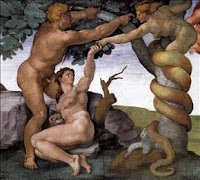 Until the day when everything went terribly wrong. We decided to run our lives apart from God and became self-centered. But there is no happiness apart from God. As a result, we seek our own good above others' and exploit natural resources in greed. Death, sorrow and sickness entered the world. The wonderful relationship with God, with each other and with nature was tragically broken.
Rescued By Grace
 But God loved the world too much to leave it that way so he came to our rescue in the person of Jesus. Not because of how good, humble or smart we are. He lived the perfect life of love that we should have lived. He died the sacrificial death that we should have died for our wrong doing. Through his death on the cross and coming back to life again, Jesus restored our relationship with God and broke down the walls of hatred that divide us from each other and the entire creation.
Renewed To Change Together
 The renewal of a “better world” that reached its climax in the death and resurrection of Jesus will be fully completed in the future. In the meantime, Jesus invites you and I to follow after Him and sends us out as His people of healing justice to transform relationships, social systems and environmental stewardship.
It's not about us or our selfish agenda.
It's all about God and His Kingdom for the world.
Where are you in this Story? Will you be part of this revolution of grace?
Darlene asked me to write something about God's Story for the new church plant website. (Yes, I would be part of a church planting effort in Puchong starting from March 2010 so TheAgora may be orphaned soon but we're still thinking thru how it might fit the young church... or maybe not!) This draft gospel presentation was inspired by the 'Four Circles' developed by James Choung. I tried to contextualize a tad for Msians so your feedbacks would be most welcome!
It’s easy to get really upset and angry about what’s wrong with the world. We all hope and yearn for a better world to live in.
If our hunger points to food and our thirst points to water, could our desire for a "better world" be a clue to something else? Perhaps we have forgotten how it once looked like.
Created For Good
 At the very beginning, God worked creatively to get the universe up and running. He also made people in His own likeness so that we could enjoy a loving relationship with God, with each other and be His partners in eco-management - caring and ruling the earth. It was designed to be a place of beauty, abundance and harmony.
 Broken By Evil
 Until the day when everything went terribly wrong. We decided to run our lives apart from God and became self-centered. But there is no happiness apart from God. As a result, we seek our own good above others' and exploit natural resources in greed. Death, sorrow and sickness entered the world. The wonderful relationship with God, with each other and with nature was tragically broken.
 Rescued By Grace
 But God loved the world too much to leave it that way so he came to our rescue in the person of Jesus. Not because of how good, humble or smart we are. He lived the perfect life of love that we should have lived. He died the sacrificial death that we should have died for our wrong doing. Through his death on the cross and coming back to life again, Jesus restored our relationship with God and broke down the walls of hatred that divide us from each other and the entire creation.
 Renewed To Change Together
 The renewal of a “better world” that reached its climax in the death and resurrection of Jesus will be fully completed in the future. In the meantime, Jesus invites you and I to follow after Him and sends us out as His people of healing justice to transform relationships, social systems and environmental stewardship.
 It's not about us or our selfish agenda.
It's all about God and His Kingdom for the world.
Where are you in this Story? Will you be part of this revolution of grace?
Darlene asked me to write something about God's Story for the new church plant website. (Yes, I would be part of a church planting effort in Puchong starting from March 2010 so TheAgora may be orphaned soon but we're still thinking thru how it might fit the young church... or maybe not!) This draft gospel presentation was inspired by the 'Four Circles' developed by James Choung. I tried to contextualize a tad for Msians so your feedbacks would be most welcome!
Saturday, January 09, 2010
Leaders of Metro Tabernacle Church forgive attackers
PETALING JAYA: Leaders of the Metro Tabernacle Church said they do not harbour any ill-feeling against the culprits who set fire to their church and are thankful that the Government has strongly condemn the arson attack.
The statement of forgiveness is made as Christian groups, lawyers of all faiths and politicians from Sarawak loudly protest against any acts done to throw the country into chaos.
Metro Tabernacle’s senior pastor Rev Ong Sek Leang said the church did not condone such acts but would forgive those responsible.
“We have a congregation of about 1,700 who are Godly and forgiving.
"It is a very sad day for Malaysia but a great day to know that most Malaysians do not think like that,” he said.
 The Christian Federation of Malaysia chairman Bishop Ng Moon Hin called on the Government and all peace-loving Malaysians not to give way to extremists wanting to throw the country into chaos.
The National Evangelical Christian Fellowship of Malaysia said these irresponsible actions would be a setback to the Prime Minister’s agenda of 1Malaysia and derail the country’s effort to move out of recession.
Bar Council Malaysia said any display of violence and bigotry against any faith was deplorable — and demonstrated a worrying trend towards extreme disrespect and prejudice.
“We call on the law enforcement agencies to take immediate steps to investigate these incidents and prosecute those responsible to the fullest extent of the law,” said its president Ragunath Kesavan.
The Malaysia Muslim Lawyers Association said it did not condone the act of arson against the churches, but the acts were proof that the usage of the word “Allah” was deemed as sensitive to the Muslim community.
Its president Zainul Rijal Abu Bakar urged the Muslim community to remain calm and not to participate in any act that might jeopardise the efforts of the Government and concerned parties to handle the issue in the best manner.
Kedah Gerakan Youth chief Tan Keng Liang called on the Government to take extra security precaution to protect the churches and all other places of worship.
In Miri, senior Iban leader Datuk Peter Nyarok Entrie said folks in the Land of the Hornbill — where mosques, churches and Chinese and Indian temples were built side-by-side — viewed the misunderstanding among fellow Malaysians living across the South China Sea as very worrying.
Parti Rakyat Sarawak president and state Minister Datuk Seri Dr James Masing said religious bodies of the different faiths should find a mutually acceptable way to resolve this controversy.
Assistant state minister Datuk Daud Abdul Rahman, from the Parti Pesaka Bumiputra Bersatu, said the state government had always practised tolerance and acceptance in handling issues of religious and racial nature.
Parti Keadilan Rakyat Sarawak chairman Baru Bian said the usage of Allah’s name was a non-issue in Sarawak despite the name widely used by all religions in the state for decades.
The statement of forgiveness is made as Christian groups, lawyers of all faiths and politicians from Sarawak loudly protest against any acts done to throw the country into chaos.
Metro Tabernacle’s senior pastor Rev Ong Sek Leang said the church did not condone such acts but would forgive those responsible.
“We have a congregation of about 1,700 who are Godly and forgiving.
"It is a very sad day for Malaysia but a great day to know that most Malaysians do not think like that,” he said.
 The Christian Federation of Malaysia chairman Bishop Ng Moon Hin called on the Government and all peace-loving Malaysians not to give way to extremists wanting to throw the country into chaos.
The National Evangelical Christian Fellowship of Malaysia said these irresponsible actions would be a setback to the Prime Minister’s agenda of 1Malaysia and derail the country’s effort to move out of recession.
Bar Council Malaysia said any display of violence and bigotry against any faith was deplorable — and demonstrated a worrying trend towards extreme disrespect and prejudice.
“We call on the law enforcement agencies to take immediate steps to investigate these incidents and prosecute those responsible to the fullest extent of the law,” said its president Ragunath Kesavan.
The Malaysia Muslim Lawyers Association said it did not condone the act of arson against the churches, but the acts were proof that the usage of the word “Allah” was deemed as sensitive to the Muslim community.
Its president Zainul Rijal Abu Bakar urged the Muslim community to remain calm and not to participate in any act that might jeopardise the efforts of the Government and concerned parties to handle the issue in the best manner.
Kedah Gerakan Youth chief Tan Keng Liang called on the Government to take extra security precaution to protect the churches and all other places of worship.
In Miri, senior Iban leader Datuk Peter Nyarok Entrie said folks in the Land of the Hornbill — where mosques, churches and Chinese and Indian temples were built side-by-side — viewed the misunderstanding among fellow Malaysians living across the South China Sea as very worrying.
Parti Rakyat Sarawak president and state Minister Datuk Seri Dr James Masing said religious bodies of the different faiths should find a mutually acceptable way to resolve this controversy.
Assistant state minister Datuk Daud Abdul Rahman, from the Parti Pesaka Bumiputra Bersatu, said the state government had always practised tolerance and acceptance in handling issues of religious and racial nature.
Parti Keadilan Rakyat Sarawak chairman Baru Bian said the usage of Allah’s name was a non-issue in Sarawak despite the name widely used by all religions in the state for decades.
Loving The Enemy
 (Matthew 5:43-48) 43"You have heard that it was said, 'Love your neighbor and hate your enemy.' 44But I tell you: Love your enemies and pray for those who persecute you, 45that you may be sons of your Father in heaven. He causes his sun to rise on the evil and the good, and sends rain on the righteous and the unrighteous. 46If you love those who love you, what reward will you get? Are not even the tax collectors doing that? 47And if you greet only your brothers, what are you doing more than others? Do not even pagans do that? Be perfect, therefore, as your heavenly Father is perfect.”
Sermon Audio on "Loving The Enemy" can be downloaded here with group discussion questions.
Salam 1Malaysia! We are continuing a series of sermons based on the Sermon on the Mount where Jesus spells out what it is like living as the people of God’s Kingdom, what it means to be a community that follows after Jesus as their King. He is challenging the kind of empty religion that looks good on the outside but is corrupted on the inside. Many people think, “I’m morally okay since I’m not a serial killer or I don’t sleep with someone else’s wife. When I swear in God’s name, I don’t break my oath. I’m basically quite a good person lah.” But Jesus goes deeper than the outward, external action. He zooms in to our inner hearts, our hidden motives and secret intentions. “No, that’s not good enough. You have heard that it was said that… But I tell you this…”
You should not commit murder in your heart with hatred. It is a sin to commit adultery in your heart with lust. Your word is your bond. Tell the truth in what you say. Don’t need to swear at all.
Again we see how radical Jesus’ message was to his original audience and to us today. He is not abolishing the Old Testament Law by lowering the standard. Instead He is fulfilling the purpose of the Law by going to the root of the problem. Sin must be dealt with radically in our heart. And this is the “righteousness that surpasses that of the Pharisees and the teachers of the law”. It’s not just following the letter of the law, but also keeping the spirit of the law. It is obedience that comes from the inside out.
In the passage we read just now, Jesus does the same thing again. You see, the commandment to love your neighbor as yourself is not something new. It’s also found in the Old Testament. In Leviticus 19:18, it says, “'Do not seek revenge or bear a grudge against one of your people, but love your neighbor as yourself.” But as time went by, the people in Israel began to limit love only to their fellow Israelites. Who is my neighbor? Only my own people. My relatives. Those who share my race and religion. So I’d love them exclusively. The rest are not my neighbors so I can hate them. Some folks (like the Qumran community famous for the Dead Sea Scrolls) would go around saying, 'Love your neighbor and hate your enemy'. But they heard it wrong. The part on ‘hating your enemy’ was not there in the biblical text.
 So Jesus sets the record straight: “Love your enemies and pray for those who persecute you, that you may be sons of your Father in heaven.” In that famous parable we call “The Good Samaritan,” an expert of the Law asked Jesus this very question: “Who is my neighbor?” Then Jesus told him this parable which most of us know by heart: “A man was robbed, stripped, beaten and left half dead. A priest happened to walk past, and when he saw the man, he quickly moved on. Then a Levite who works for the temple saw him but ignored his needs as well. Lastly, a Samaritan stopped and took pity on him. He took care of him and paid for his medical fees. Now who is a neighbor to that victim?”
In those days, the Jews did not associate with the Samaritans due to many racial, religious and political reasons. Hmm… If that sounds strangely familiar to us in Malaysia, it’s because we too have different ethnic and religious groups living side by side with each other but with precious little contact and understanding in between. By telling the parable, Jesus subversively expanded the definition of a ‘neighbor’ to go beyond friends and families and include even the Samaritans. A neighbor is anyone in need whom you can help.
So He broke down the walls of hate by including even outsiders as a neighbor to be loved as well. Instead of rejecting sinners, prostitutes and tax collectors, He ate with them in fellowship meals. This is how the Kingdom of God looks like. To those who think “I’m a loving person. I love my own people”, Jesus says “Your love is too narrow. It’s selective on who you want to love. Don’t pick and choose. Love your enemies also.”
But it’s so hard, almost impossible to love our enemies, right? Pray for those who persecute me? Are you serious? This is something that I struggle to learn as well.
On a personal level, there are people who purposely hurt us or anger us for no good reason. Some play office politics and give us an unfair deal. How can I love someone who offended me, betrayed me, insulted me and broke relationship with me? Do you know someone like that?
In certain societies, the decision to follow Jesus may mean losing your job, your loved ones and even your life. Persecution is the cost of discipleship. Although in Malaysia, it has not come to the point of martyrdom, we still experience milder forms of persecution like the destruction of church buildings, the ban on the word ‘Allah’ in our Bahasa literature, restrictions on the liberty of conscience for some Malaysians and so on. Sometimes persecution can come in the form of the insults, ridicule, false accusations and gossips.
So how should we respond when we experience things like that?
Do you remember that Star Wars movie called “Return of the Jedi”? I watched it as a kid and one of Soo Inn’s ecommentary uses it as a helpful analogy. In the movie, the hero Luke Skywalker tried to avoid fighting the bad guy Darth Vader, who was also his own father. But when Darth Vader threatened to turn Luke's sister to the Dark Side, Luke went crazy and chopped off Vader's mechanical right hand. Then the evil emperor, who was observing this duel, made a tempting offer: "Good! Your hate has made you powerful. Now, fulfill your destiny and take your father's place at my side!" (Finish him off!)
And the evil emperor is right – there is a kind of power that comes with fear, anger and hate. To those who have a tidak-apa attitude when it comes to suffering or injustice in the world, they may never get angry at anything. And if we are too engrossed with the comforts of life to care much for the suffering around us, then probably we need to be more concerned about what God cares about and be more aware of what’s happening out there.
But for some of us who care deeply about social justice, poverty, human rights… it is often easy to get angry, depressed and furious at unjust things happening in our country especially when those responsible often don’t pay for what they have done. And it’s tempting to surrender ourselves to rage and hatred. At first, our righteous anger is directed against real injustice… That righteous anger gives us motivation and power to fight evil. But when we are angry, it can also quickly lead to unrighteous anger and careless decisions… Soon we draw the line between good and evil along the lines of us against them… of one race against another (we are the good guys, they are the bad guys) when in reality, the line of good and evil cuts across every human heart. When hatred and anger consumes us, we are drawn towards the Dark side.
At the climax of that Star Wars movie, young Luke Skywalker refuses to choose the dark side. He refused to deliver the final blow. Instead, he threw away his light saber and chose to suffer and die for being true to the Light. Yet it is his very "weakness" that inspires his father Darth Vader himself to love once again and to reject the dark side in his final moments. The Jedi knight saved the galaxy through his weakness.
When Jesus says: Love your enemies, He didn’t ask us to do anything that He himself is not prepared to do first. And He already did it on the cross when He forgave and prayed for those who crucified him saying “Father, forgive them, for they know not what they do.” (Luke 23:34) Come to think of it, aren’t we all in fact sinners who have rebelled against God and we were once His enemies? Yet Christ died for us that we may be reconciled.
This does not mean that our Christian response to evil must be passive. In Romans 13, we know that the state is granted authority by God to bear the sword and punish the wicked. So Christians can and should use all legal means at our disposal to fight evil and corruption.
But we are not to repay evil with evil, but with good. Darkness cannot drive out darkness; only light can do that. Jesus is calling us to let go of our bitterness, vengefulness and personal vendetta. The path of the kingdom is love (even to our enemies), prayer for those who persecute us and the willingness to suffer for Christ.
 Dietrich Bonhoeffer, who suffered so much in Nazi Germany during World War 2, said "This is the supreme command. Through the medium of prayer, we go to our enemy, we stand by his side, and we plead to God for him."
 Still, this is not something easy to do. Where do we get the power to do the impossible? We cannot do it unless by the empowering grace of the Holy Spirit.
In the Bible passage today, I think we can find some powerful reasons or motivations for us to love our enemies. The first motivation is found in verse 45: “So that you may be sons of your Father in heaven.”
What does that mean? John Piper explains it this way (and I quote) “This does not mean we can earn our way into God's family by loving our enemies. Rather it means that when we love our enemies, we prove ourselves to be in God's family. If you love your enemies the way God loves his enemies, then you show that you ARE a child of God. You are seen to be a child of God… You can't earn the status of a child. You can be born into the family or you can be adopted into the family. You can't work your way into it. Jesus means that loving our enemies shows that God has already become our Father, and that the only reason we are able to love our enemies is because he loves us first...” End quote.
And how did we become part of God’s family in the first place? How did we get adopted as a child of the Father? It’s through forgiveness… By grace, God in Christ has forgiven us (His enemies) even though we don’t deserve it… When we look at the horror of our own sin and then look at the holiness of God, we see our utter hopelessness. But the good news is Christ has taken our punishment on the cross so that we can be reconciled with our Father and be adopted into His family. Our wrongs have been freely forgiven through faith in Christ.
Have we not experienced God’s forgiveness and grace? If we have been forgiven so abundantly by God, how can we not forgive others? If we have truly known God as our Father, surely this relationship ought to overflow in love for our enemies as well. How can we not forgive after having been forgiven so much?
The second reason or motivation to love our enemies is this: It’s because God causes his sun to rise on the evil and the good, and sends rain on the righteous and the unrighteous.
In other words, we are called to imitate our Father in Heaven who makes no distinction between the just and the unjust when sending good gifts of His creation. His kindness is lavished on both moral and immoral people. He sends rain and harvest to the padi farmers in Kedah, the farmers in Kelantan, the pineapple farmers in Sarawak – it doesn’t matter if they voted for Barisan Nasional or Pakatan Rakyat, it doesn’t matter what they believe or don’t believe.
So we love our enemies because that is how God treats His enemies. He causes his planet to rotate for the evil and the good, and produces oxygen for the righteous and the unrighteous. John Calvin describes it as a divine kindness that is common to all. Some people call it ‘common grace’. But this grace is not saving grace. It does not mean that God will not punish the wicked and reward the righteous one day. Of course, He will ultimately do that.
And it’s important to keep this in mind. Because what makes it so hard to let go of our anger is the overwhelming sense that the person who offended us does not deserve to be forgiven. If the hurt is deep and great injustice was committed against us, there is a valid sense of moral outrage. We feel that if we forgive this person, we trivialize the seriousness of that wrong he has committed. This evil must not be forgotten or ignored. So how do we resolve this tension of unconditional love on one hand and the cry for justice on the other?
Part of the answer is found in God’s promise of final judgment. Because God alone is the perfect Judge, we are freed from the personal craving for revenge. The question is: “Do you trust God to set things right? Do you believe He sees the issues and the offender’s motives far better than what we can see? His justice is purer and wiser than ours. We can’t improve on His judgment. And He has promised there will be a day of reckoning… Will you trust Him as the perfect Judge?”
Consider Romans 12:17-21 “Do not repay anyone evil for evil. Be careful to do what is right in the eyes of everybody. If it is possible, as far as it depends on you, live at peace with everyone. Do not take revenge, my friends, but leave room for God's wrath, for it is written: "It is mine to avenge; I will repay," says the Lord. On the contrary: "If your enemy is hungry, feed him; if he is thirsty, give him something to drink. In doing this, you will heap burning coals on his head." Do not be overcome by evil, but overcome evil with good.”
We don’t take justice into our own hands because the ultimate Punisher is God. Our motives are mixed at best. Our judgments are limited in perspective. But He sees all and His eyes are pure. So don’t take revenge, leave room for God to repay.
In fact, this is also the example of Christ Himself. 1 Peter 2:21-23 “When they hurled their insults at him, he did not retaliate; when he suffered, he made no threats. Instead, he entrusted himself to him who judges justly.”
So leave room for God’s wrath. Entrust yourself to God who judges fairly. Justice shall be served but in the meantime, we need to be set free from the craving for revenge. We do so by imitating God who shows His kindness to both the wicked and the righteous. We do so by trusting in God’s promise to deliver justice. Be perfect just as our heavenly Father is perfect. The word ‘perfect’ doesn’t mean we can be 100% without sin in this life. It actually means: Be “complete”, be “all embracing” in your love just as God is merciful and all-inclusive in His love.
The third motivation to love our enemies is this: If we love those who love us, how are we different from the tax collectors? And if we greet only our own brothers, do not even pagans do that?
Don Carson gives us some background on tax collectors: In those days, a Roman citizen can literally buy a territory in the Roman empire and he would have rights to collect taxes from that place. Then he can outsource the collection to the local “Ah Long” or ‘Mafia’ type of people. They in turn outsource to others to collect taxes from the rakyat. These tax collectors would have a quota to hit, and they can keep skim off the rest of the money for themselves. Corruption goes all the way up this multi-level tax ladder. As a result, tax collectors were despised as traitors of their own people.
But even tax collectors have friends. At least they can have lunch with other tax collectors. Despicable though they may be, they have their own ‘in’ group. Even the pagans (those who do not worship Yahweh) greet their own brothers, so how is the church any different if we only love and greet those who love us in return? It is when we love our enemies that people will see something peculiar in the church.
To be salt and light in the world, we must live as a radically different kind of people. If we only love people who are lovable and beautiful, how are we any different from everyone else?
Loving our enemies displays the distinctiveness of the Kingdom in a fallen world that has seen too much of violence, hatred and bloodshed. It’s a radical counter culture.
 OK fine – But is this Christian ideal of loving your enemy practical or not? Does it really work in a fallen world like ours? Chairman Mao Zedong once said (The Little Red Book, 1964): “Political power grows out of the barrel of a gun.” You want social change? Use force, violence and the will-to-power. So can this message of Jesus about loving our enemy really change the world?
 I think it can. Let me encourage you with the real life story of Dr Martin Luther King Jr. He was a pastor and civil rights activist who struggled against racial segregation and discrimination. Do you know that in the 1950s there was a custom in the southern parts of America that African-Americans had to sit at the back of a bus? On the 1st of December 1955, Mrs. Rosa Parks, an African-American woman was arrested by the police for refusing to stand and let a white bus rider take her seat. It would be the spark that lights up a revolution. Martin Luther King, a pastor in the city and other community leaders called a meeting and a big crowd came to the church. The decision was made to boycott the bus company in protest. For 381 days, they would walk or carpool to work instead of taking the bus. This is an example of civil disobedience.
In retaliation, his home was bombed by terrorists. His wife and their baby daughter escaped without injury. When he arrived home he found an angry crowd waiting to take revenge. But Dr. King told them to go home: "We must learn to meet hate with love".
Eventually in 1956 the Supreme Court declared that local laws for racial segregation on buses were illegal. The boycott was a success. As a symbol of reconciliation and victory, Dr. King and a white minister, Rev. Smiley, shared the front seat of a public bus together.
Throughout his career, he was jailed and beaten many times. In the end he was assasinated at the age of 39. Through it all, he did not retaliate with violence but with forgiveness. The legacy of his life transformed a whole nation without causing bloodshed and continued to inspire civil rights movements all over the world. This is not an idealistic pie in the sky … It can be done. It has been done.
Of course, his example is not perfect but I think we Malaysian Christians can learn a lot from his model of balancing the New Testament ideal of unconditional love with the prophetic justice of the Old Testament. It is not enough to just talk about love we need to also care deeply for justice. It is not enough to get angry over injustice we need to promote righteousness in a way that loves our enemies.
With this story in mind, listen to these famous words by Martin Luther King when he preached on the same Bible passage on loving our enemies. Listen for its prophetic relevance to how the church should live in Malaysia today.
 He said: “Love is the only force capable of transforming an enemy into a friend. We never get rid of an enemy by meeting hate with hate; we get rid of an enemy by getting rid of enmity. By its very nature, hate destroys and tears down; by its very nature, love creates and builds up. Love transforms with redemptive power.
 The relevance of what I have said to the crisis in race relations should be readily apparent. There will be no permanent solution to the race problem until oppressed men develop the capacity to love their enemies. The darkness of racial injustice will be dispelled only by the light of forgiving love. For more than three centuries American Negroes have been battered by the iron rod of oppression, frustrated by day and bewildered by night by unbearable injustice and burdened with the ugly weight of discrimination. Forced to live with these shameful conditions, we are tempted to become bitter and to retaliate with a corresponding hate. But if this happens, the new order we seek will be little more than a duplicate of the old order. We must in strength and humility meet hate with love… Time is cluttered with the wreckage of communities which surrendered to hatred and violence. For the salvation of our nation and the salvation of mankind, we must follow another way. (What is this other way?)
He goes on: While hating segregation, we shall love the segregationist. This is the only way to create the beloved community.
To our most bitter opponents we say: "We shall match your capacity to inflict suffering by our capacity to endure suffering. We shall meet your physical force with spiritual force. Do to us what you will, and we shall continue to love you. We cannot in all good conscience obey your unjust laws because non-cooperation with evil is as much a moral obligation as is cooperation with good. Throw us in jail and we shall still love you. Bomb our homes and threaten our children, and we shall still love you. Send your hooded perpetrators of violence into our community at the midnight hour and beat us and leave us half dead, and we shall still love you. But be ye assured that we will wear you down by our capacity to suffer. One day we shall win freedom but not only for ourselves. We shall so appeal to your heart and conscience that we shall win you in the process and our victory will be a double victory." End of Quote
This is the way of the cross. This is how we setup signposts of the Kingdom that points to a different way of being human. Not through hatred but through love for our enemies.
Bringing this closer to home, I wonder how can we apply this in our Malaysian context? Recently we hear of disturbing news of intolerance in our country like the famous cow-head incident. There was a protest against the proposed construction of a Hindu temple in Shah Alam where some irresponsible people stomped and spat at the head of a cow, a sacred animal for Hindus. It was a clearly provocative act, with threats of violence.
Or the recent case of two Muslim journalists who sneaked into a Catholic church as spies to take Holy Communion, then spit out the host (bread) and took photographs of it to be published some more. This is a sacrilegious act to Catholics who believe the host to be the real body of Christ. And the internet went on overdrive with angry condemnations.
For such a time as this, how should we as Christians respond?
 I don’t have any easy answers and this may sound naive but just wondering (and I invite you to imagine with me. Maybe you can come up with more creative and better ways of doing it). I wonder: What happens if the Church or individual Christians issue a calm statement that what these people have done is wrong, and relevant authorities should investigate and charge if any law is broken. But at the same time, we also say, “We forgive you for what you have done. You may have been manipulated by people with vested interests. We would like to meet you personally, sit down over coffee and listen to what you have to say and why you behave like that. Maybe we can find a win-win solution”. I wonder how the society would react when we respond in love and respect when insulted and provoked like that? Would it make Malaysians sit up and take notice: “These Christians are really out of this world lah”?
 For such a time as this, the world is watching. They are asking: “Which community has beliefs that make its members treat people in other communities with love and respect- to serve them and meet their needs? Which community's beliefs lead people to demonize and attack those who violate their boundaries?" (Keller) For such a time as this, the world is looking for answers.
When we encounter intolerance, fear and racial tension in our beloved country, may we also receive wisdom and courage from the Holy Spirit to find creative ways to love our enemies and pray for those who persecute us… This is the way of the cross.
Will you be part of this culture of peace in a time of racial polarization? Will you follow Him even if it costs a great deal?
Wednesday, January 06, 2010
Why is your Allah not my Allah?
By Erna Mahyuni
As an East Malaysian, I am neither surprised nor angry about Malay/Muslims being up in arms over the 'Allah' High Court ruling.
It was to be expected, really.
What does anger me is getting comments from West Malaysian Christians that it is 'silly' for Christians to lobby to use the word 'Allah'.
One rather un-enlightened Christian said that "Allah is also a word used to describe one particular god in a pagan religion...so for Christians to use 'Allah' is strange and silly."
The whole 'Allah' debacle highlights a bigger, more endemic problem in the Malaysian, or should I say West Malaysian mentality: General ignorance of how the 'others' or 'lain-lain' live.
It seems very hard for most West Malaysians to understand that:
•Not all bumiputeras are Malay.
•Not all bumiputeras are Muslim.
It isn't just West Malaysian Muslims who have a very limited worldview but Christians as well.
They don't understand that in East Malaysia, with its high population of indigenous Christians, Bahasa Malaysia is used in services.
Most of these Sabahan and Sarawakian Christians have spent their whole lives thinking, praying and referring to their God as Allah Bapa (Father God).
And now the government says they can't. That only Muslims can use the word 'Allah' when that isn't true in other countries.
Look at Indonesia, the country with the largest Muslim population in the world, which allows the printing and dissemination of bibles in Bahasa Indonesia that refer to God not as 'Tuhan' but as 'Allah'.
The Indonesian Muslims don't worry that their brethren will be 'confused' by these bibles. So why is our Home Ministry and all these religious groups up in arms?
The answer to that is politics. Religion is, unfortunately, something as mixed up with politics as is race. Political parties unabashedly use religion as a tool to win debates, with Umno often accused of trying to 'out-Islam' PAS.
Religion is not a private matter in this country and is, instead, aired like so much dirty laundry. What other Southeast Asian country has officially sanctioned civilian peeping Toms who consider it their civic duty to weed out fornication?
Malay is our language, too
Despite the many varied ethnicities in Sabah, they have managed to get along without bloodshed or May 13-like incidents.
How have we managed it when West Malaysia's three main races mostly give each other a wide berth? It's called tolerance, people.
All Sabahans speak a slightly modified version of Malay with the funny little suffix 'bah' tagged behind a lot of words or sentences.
In rural areas, this heavily-accented version of Malay is the only means for most people to communicate with each other. They speak, think, dream and yes, even pray in the language.
Sabahan Michelle Quek asks: "Is it more important to recognise that some Muslims lay claim to the word as being exclusive to their faith, or recognise that a practical need for the word exists for East Malaysian Christians?"
Her question embodies the difficult balancing act that Malaysia has in attempting to address the needs of its varied peoples as well as the gulf between East and West Malaysia.
Kavin Ch'ng, who is married to a Sabahan says that locally, for many generations, Malay-speaking Christians have always referred to Allah and Tuhan in the same breath.
"Why only now does the government kick up such a fuss?" he asks. What is important, Ch'ng says, is mutual respect.
"I think there is a way to co-exist - if only our government can actually wrap its head around the concept of context."
Sarawakian El'Bornean finds it disturbing that West Malaysians now want to dictate how one's personal faith is practiced.
"The true Malaysians are here in Sabah and Sarawak," he says, citing examples of his Muslim friends who have no qualms sitting with friends in non-halal stores and visiting churches.
Despite being surrounded by Christians, East Malaysian Muslims do not consider their faith easily shaken, he asserts.
Sabahan Dusun Zara Kahan has a humorous, if facetious, solution.
"If (some) Muslims insist on ownership of the term 'Allah' then Christians must do the same with the term 'Tuhan'. Do you know how many Hari Raya songs will be in jeopardy? End of issue!"
No, we don't want to convert you
In West Malaysia, technically Christian worship services in Malay are illegal. But Sabahan and Sarawakian students ask for them anyway.
Many of these Malay-speaking East Malaysians feel uncomfortable attending worship services in English because the terms are unfamiliar. Muslims often cite the 99 names of Allah and for Christians in East Malaysia as well as Lebanon and Syria, Allah is their name for God.
All this talk about 'confusion' is really the product of West Malaysians not mixing with their East Malaysian brethren.
If you visit the Dusuns in Ranau, you could well meet locals as fair as highland Chinese with slanted eyes who would greet you with the traditional Muslim salam.
Wander into an East Malaysian Chinese coffee shop and you would see tanned, Malay-looking locals happily digging into char siew or other pork dishes
In East Malaysia, you can't easily tell what faith someone professes or what race his forefathers were just by looking.
This is very disturbing to the West Malaysian psyche. I have met West Malaysians who get very agitated when I refuse to tell them either what religion I profess or what race I am.
They don't know what to do with me because they can't categorise me. I don't fit into their safe little boxes which decide how they will treat me.
What annoys me as well is this West Malaysian paranoia that Christians have a secret ongoing campaign to convert Muslims on the sly.
Let us be honest. If converting Muslims to Christianity was as easy as pouring holy water into your drinking water or putting the word 'Allah' in all available religious literature, the Pope would have sanctioned it years ago.
Christians don't get 'brownie points' by forcibly converting unwilling Muslims.
I suppose all the Malay-looking Christian East Malaysians really confuse the locals to the point they rabidly proclaim that churches are succeeding in their nefarious campaign to take over Muslim souls.
In East Malaysia, Christians and Muslims come in various sizes, shapes and colours. Even huge extended families often have different religions, sometimes staying under one roof.
It is not unusual for an East Malaysian to have not just Christian, but Buddhist, Muslim and animist relatives. A friend of mine says it is a convenient excuse to celebrate the many public holidays with more gusto.
When told that someone is marrying a person of another race, the common reaction is: "Oh, your kids will be cute!" No heated discussion about traditions or religious differences because the unspoken assumption is that the couple will work them out.
Because they do.
Be Malaysia, not 1Malaysia
A well-known comedian talked about the recent Al-Islam undercover foray into churches. Its so-called investigative journalists entered churches on false premises and desecrated the communion wafer.
Did the Christians protest? asked the comedian. Did they declare bloody war? Did they have angry sermons and plan noisy demonstrations outside churches on Sunday?
No. What did the Christians say? "Forgive them-lor. Pray for them-lor."
The comedian mused that the incident was actually excellent public relations for the church.
Despite our annoyance with West Malaysian intolerance, do you see East Malaysians picketing?
We gripe, we grumble, we send politely worded statements. Yet we still believe in the Malaysia that our Tourism Ministry tries to sell, but which seems to be a myth in West Malaysia.
Do you want to know why? Deep in the heart of most East Malaysians, we truly believe in tolerance. We believe in the ideals of Malaysia.
We don't have to give 'muhibbah' a name because we live it. Since 1963, we have lived as Malaysians, believing in true tolerance and that race or religion matters little.
We truly do believe that West Malaysians can and should get over us using 'Allah' to worship God. Isn't Allah the God of all mankind? Isn't your Malaysia our Malaysia too?
Erna Mahyuni, a Sabahan, is a Malaysiakini team member.
As an East Malaysian, I am neither surprised nor angry about Malay/Muslims being up in arms over the 'Allah' High Court ruling.
It was to be expected, really.
What does anger me is getting comments from West Malaysian Christians that it is 'silly' for Christians to lobby to use the word 'Allah'.
One rather un-enlightened Christian said that "Allah is also a word used to describe one particular god in a pagan religion...so for Christians to use 'Allah' is strange and silly."
The whole 'Allah' debacle highlights a bigger, more endemic problem in the Malaysian, or should I say West Malaysian mentality: General ignorance of how the 'others' or 'lain-lain' live.
It seems very hard for most West Malaysians to understand that:
•Not all bumiputeras are Malay.
•Not all bumiputeras are Muslim.
It isn't just West Malaysian Muslims who have a very limited worldview but Christians as well.
They don't understand that in East Malaysia, with its high population of indigenous Christians, Bahasa Malaysia is used in services.
Most of these Sabahan and Sarawakian Christians have spent their whole lives thinking, praying and referring to their God as Allah Bapa (Father God).
And now the government says they can't. That only Muslims can use the word 'Allah' when that isn't true in other countries.
Look at Indonesia, the country with the largest Muslim population in the world, which allows the printing and dissemination of bibles in Bahasa Indonesia that refer to God not as 'Tuhan' but as 'Allah'.
The Indonesian Muslims don't worry that their brethren will be 'confused' by these bibles. So why is our Home Ministry and all these religious groups up in arms?
The answer to that is politics. Religion is, unfortunately, something as mixed up with politics as is race. Political parties unabashedly use religion as a tool to win debates, with Umno often accused of trying to 'out-Islam' PAS.
Religion is not a private matter in this country and is, instead, aired like so much dirty laundry. What other Southeast Asian country has officially sanctioned civilian peeping Toms who consider it their civic duty to weed out fornication?
Malay is our language, too
Despite the many varied ethnicities in Sabah, they have managed to get along without bloodshed or May 13-like incidents.
How have we managed it when West Malaysia's three main races mostly give each other a wide berth? It's called tolerance, people.
All Sabahans speak a slightly modified version of Malay with the funny little suffix 'bah' tagged behind a lot of words or sentences.
In rural areas, this heavily-accented version of Malay is the only means for most people to communicate with each other. They speak, think, dream and yes, even pray in the language.
Sabahan Michelle Quek asks: "Is it more important to recognise that some Muslims lay claim to the word as being exclusive to their faith, or recognise that a practical need for the word exists for East Malaysian Christians?"
Her question embodies the difficult balancing act that Malaysia has in attempting to address the needs of its varied peoples as well as the gulf between East and West Malaysia.
Kavin Ch'ng, who is married to a Sabahan says that locally, for many generations, Malay-speaking Christians have always referred to Allah and Tuhan in the same breath.
"Why only now does the government kick up such a fuss?" he asks. What is important, Ch'ng says, is mutual respect.
"I think there is a way to co-exist - if only our government can actually wrap its head around the concept of context."
Sarawakian El'Bornean finds it disturbing that West Malaysians now want to dictate how one's personal faith is practiced.
"The true Malaysians are here in Sabah and Sarawak," he says, citing examples of his Muslim friends who have no qualms sitting with friends in non-halal stores and visiting churches.
Despite being surrounded by Christians, East Malaysian Muslims do not consider their faith easily shaken, he asserts.
Sabahan Dusun Zara Kahan has a humorous, if facetious, solution.
"If (some) Muslims insist on ownership of the term 'Allah' then Christians must do the same with the term 'Tuhan'. Do you know how many Hari Raya songs will be in jeopardy? End of issue!"
No, we don't want to convert you
In West Malaysia, technically Christian worship services in Malay are illegal. But Sabahan and Sarawakian students ask for them anyway.
Many of these Malay-speaking East Malaysians feel uncomfortable attending worship services in English because the terms are unfamiliar. Muslims often cite the 99 names of Allah and for Christians in East Malaysia as well as Lebanon and Syria, Allah is their name for God.
All this talk about 'confusion' is really the product of West Malaysians not mixing with their East Malaysian brethren.
If you visit the Dusuns in Ranau, you could well meet locals as fair as highland Chinese with slanted eyes who would greet you with the traditional Muslim salam.
Wander into an East Malaysian Chinese coffee shop and you would see tanned, Malay-looking locals happily digging into char siew or other pork dishes
In East Malaysia, you can't easily tell what faith someone professes or what race his forefathers were just by looking.
This is very disturbing to the West Malaysian psyche. I have met West Malaysians who get very agitated when I refuse to tell them either what religion I profess or what race I am.
They don't know what to do with me because they can't categorise me. I don't fit into their safe little boxes which decide how they will treat me.
What annoys me as well is this West Malaysian paranoia that Christians have a secret ongoing campaign to convert Muslims on the sly.
Let us be honest. If converting Muslims to Christianity was as easy as pouring holy water into your drinking water or putting the word 'Allah' in all available religious literature, the Pope would have sanctioned it years ago.
Christians don't get 'brownie points' by forcibly converting unwilling Muslims.
I suppose all the Malay-looking Christian East Malaysians really confuse the locals to the point they rabidly proclaim that churches are succeeding in their nefarious campaign to take over Muslim souls.
In East Malaysia, Christians and Muslims come in various sizes, shapes and colours. Even huge extended families often have different religions, sometimes staying under one roof.
It is not unusual for an East Malaysian to have not just Christian, but Buddhist, Muslim and animist relatives. A friend of mine says it is a convenient excuse to celebrate the many public holidays with more gusto.
When told that someone is marrying a person of another race, the common reaction is: "Oh, your kids will be cute!" No heated discussion about traditions or religious differences because the unspoken assumption is that the couple will work them out.
Because they do.
Be Malaysia, not 1Malaysia
A well-known comedian talked about the recent Al-Islam undercover foray into churches. Its so-called investigative journalists entered churches on false premises and desecrated the communion wafer.
Did the Christians protest? asked the comedian. Did they declare bloody war? Did they have angry sermons and plan noisy demonstrations outside churches on Sunday?
No. What did the Christians say? "Forgive them-lor. Pray for them-lor."
The comedian mused that the incident was actually excellent public relations for the church.
Despite our annoyance with West Malaysian intolerance, do you see East Malaysians picketing?
We gripe, we grumble, we send politely worded statements. Yet we still believe in the Malaysia that our Tourism Ministry tries to sell, but which seems to be a myth in West Malaysia.
Do you want to know why? Deep in the heart of most East Malaysians, we truly believe in tolerance. We believe in the ideals of Malaysia.
We don't have to give 'muhibbah' a name because we live it. Since 1963, we have lived as Malaysians, believing in true tolerance and that race or religion matters little.
We truly do believe that West Malaysians can and should get over us using 'Allah' to worship God. Isn't Allah the God of all mankind? Isn't your Malaysia our Malaysia too?
Erna Mahyuni, a Sabahan, is a Malaysiakini team member.
Thursday, December 31, 2009
Court declares 'Allah' ban invalid
 From Malaysiakini: In a landmark judgment, the Kuala Lumpur High Court presented the Catholic Church a belated Christmas present by ruling that the Home Ministry's blanket ban on the use of the word 'Allah' is illegal.
In making the decision to allow the motion by the Catholic Church to set aside the ban, High Court judge Lau Bee Lan stated that the minister's order is “illegal, null and void”.
She said that Catholic weekly The Herald can use the word 'Allah' and that the term is not exclusive to Islam.
This overturning of the Home Ministry's earlier ban will allow the Catholic weekly Herald and other non-Islamic publications to use the word 'Allah' as a direct translation for the word 'God' in the Malay language versions of their publications.
Justice Lau said that all Malaysians had the constitutional right to use the word 'Allah'.
However, given the implication of the case, it is likely that the Home Ministry will appeal against the decision to the higher courts.
The landmark case, which was supposed to be heard at the Jalan Duta court complex yesterday, had been postponed to today because Lau said she needed more time to consider her decision.
National security vs religious freedom
The Home Ministry had invoked concerns of national security and said that the ban was to avert any confusion that could ensue should non-Islamic publications use the word 'Allah' as a substitute for 'God'.
The ministry asserted that 'Allah' was exclusive to Islam as a term for the 'one true God'. Hence, other religions could not use it as a generic term.
The Catholic Church, in filing the judicial review, however disputed this and argued that the word 'Allah' predates Islam as a generic term for 'God' and has been in use in many places, even in the Middle East.
It said that in Malaysia, the term 'Allah' is widely used among indigenous Christian tribes in Sabah and Sarawak.
The church also argued that the ban goes against the principle of freedom of religion and religious practices as outlined in the federal constitution.
The Herald, circulated among the country's 850,000 Catholics, nearly lost its publishing licence last year for using the word 'Allah'. The paper is printed in four languages, with a circulation of 14,000 copies a week.
Monday, December 28, 2009
Bribery And Corruption In Asia
Bribery and Corruption Dear friends,
We are pleased to announce that we have an upcoming release, Bribery and Corruption: Biblical Reflections and Case Studies for the Marketplace in Asia by Hwa Yung, Bishop for the Methodist churches in Malaysia. More details about the book and how to order copies can be found in the attached pre-order flyer.
The book is due to be released in February 2010 and we are open for orders now.
For enquiries, you may contact Ms Bernice Lee at bernice@graceworks.com.sg.
Graceworks Private Limited
Promoting Spiritual Friendship In Church and Society
Website: www.graceworks.com.sg
Tel No.: 6464 6080
Fax No.: 6464 7040
We are pleased to announce that we have an upcoming release, Bribery and Corruption: Biblical Reflections and Case Studies for the Marketplace in Asia by Hwa Yung, Bishop for the Methodist churches in Malaysia. More details about the book and how to order copies can be found in the attached pre-order flyer.
The book is due to be released in February 2010 and we are open for orders now.
For enquiries, you may contact Ms Bernice Lee at bernice@graceworks.com.sg.
Graceworks Private Limited
Promoting Spiritual Friendship In Church and Society
Website: www.graceworks.com.sg
Tel No.: 6464 6080
Fax No.: 6464 7040
Saturday, December 19, 2009
Why On Earth Are We Here For?
Presented a talk on "Faith And Love" at Uniten Christian Fellowship or TECHFLOW on Wednesday with the transcript here.
Below is my assignment on "The Search For Meaning in Life", teasing out the relevance of Ecclesiastes in Malaysian society
“What is the point of living if everything ends in death? Why on earth we are here for?” These perennial questions about the purpose of life are often raised by most sensitive and reflective people around the world. But our socio-cultural context, in different degrees, influences how we answer that question. Many Malaysians of Chinese origin like my friend (let’s call him “Meng”) are descendants of immigrants who had risked the sea, worked hard and lived frugally to strive for a better future. Like many Malaysian Chinese who live in urban centers, Meng inherited his ancestors’ spirit of diligence and resilience. Wealth accumulation and education for his children (so that they in turn could have better opportunities to make a living) become top priorities since these factors provide a measure of security when he can hardly depend on anyone else for support.
 If religion is often a projection of human needs/fears as Freud suggested, then perhaps we can interpret the motivation behind his cultural beliefs like consulting feng shui consultants before setting up a business, the Ching Ming practice of burning paper money for the deceased or the Chinese New Year tradition of welcoming the god of prosperity. It may be observed that the functional god in his life is Money. The pursuit of wealth and the dream of striking a lottery jackpot provide his meaning for existing, sense of security and significance. “Seize the day (Carpe Diem)!” is his life slogan. He would say, “Since we will all ultimately end up in the grave, let’s live with gusto, work hard and play hard and squeeze all the fun and excitement out of the ride”.
The psychologist Viktor Frankl suggested that the will to fulfill a meaning in life is the primary motivational force in humanity. Those who lack a meaning worth living for and find an inner void within their hearts experience ‘existential vacuum’. This is a widespread phenomenon in a rampantly industrializing economy where traditional values are lost. Existential vacuum manifests itself in boredom, addiction (i.e. workaholic, alcoholic or substance abuse), despair, the will to money, apathy or unbridled sexual libido. That could be an apt description of many city dwellers like Meng. What relevance would Qoheleth, the writer of the biblical book of Ecclesiastes, have for people like him?
 I think Qoheleth would present an unpleasant challenge to those whose pursuits focus on earthly goals that we find ‘under the sun’. All these toils, projects and pleasure are ultimately transient, impermanent and ultimately profitless. Although wisdom, wealth and backpacking in exotic places have temporal benefits, we do not take any gain in life with us when we die. We come into this world alone and empty-handed, so shall we leave it. In the long run, there is no net gain. There is “a time to be born and a time to die” (3:2). “We all come to the end of our lives as naked and empty-handed as on the day we were born. We can’t take our riches with us” (5:15). It is like chasing after the wind. Vanity of vanities! Not only do we face the certainty of death, we also face the uncertainties of life. No one knows what would happen to his hard-earned wealth even in this lifetime since injustice (3:16) or bad investment (5:14) could overtake us anytime. The Chinese proverb “Wealth does not pass three generations” has often been proven correct with nepotism, poor management and power struggles occurring in Chinese family enterprises. Who can tell if his successor will not squander his wealth (2:18-23)? While all human needs (i.e. food, shelter, clothes) can be satisfied, human greed for money is inherently insatiable. When we try to fill up the vacuum in our hearts with material things, we end up consuming more with ever-decreasing joy with each additional purchase (5:10-11).
 But Meng may wonder, “Why should my worldly ambitions be profitless if it gives me a sense of worth and security? And why must life be eternal in order for it to be meaningful?” Atheist philosopher Thomas Nagel would probably agree that human life viewed as a whole is absurd apart from God but insist that we could still find life subjectively meaningful as long as we don’t wonder if it fits into some larger purpose. Entertaining such thoughts is a sign of taking ourselves too seriously. Existentialists like Sartre would probably urge us to create a self-customized meaning and define our own essence from our bare existence. Without God, there is no objective, cosmic meaning in life. But it also makes all sorts of subjective meanings possible.
Some may even argue that an infinite life would be meaningless because we will get tired of it eventually. Consider Karl Popper who said, “There are those who think that life is valueless because it comes to an end. They fail to see that the opposite argument might also be proposed: that if there were no end to life, life would have no value; that it is, in part, the ever-present danger of losing it which helps bring home to us the value of life.” Life is perceived to be worthwhile and significant only because mortality awaits us, bringing a sense of poignant urgency to our transitory lives. Albert Camus’ solution to the urgent question of “Why live and not commit suicide?” is basically a call to stoically face the tension of absurdity.
However, there remains a gnawing sense of dissatisfaction for most people in conceding that our lives are not connected to something bigger than ourselves. The significance of a movie snapshot depends on how it contributed to the conclusion of the whole story (of which the captured moment is a part). Only when we see that connection would we conclude the meaning of that picture as part of a comedy or a tragedy. Unless we know how the story ends, we do not know its significance or meaning. This existential vacuum becomes more acute when we consider the gross injustices that were committed and appeared unpunished in the lifetime of their perpetrators. Qoheleth rightly observed that “even in the courts of law, the very place where righteousness and justice are supposed to be guaranteed, wickedness may be present” (3:16). In this moral context, the demand for a cosmic meaning in life is not motivated not so much by hubris but by justice. The philosopher Immanuel Kant saw that ethics are practically meaningless without God and the afterlife. If death is an abyss of nothingness, then the victims who suffered for a righteous cause under oppressive regimes have ultimately faced a meaningless death. In contrast, Qoheleth offers the alternative of a solid confidence that God will “judge every deed under the sun, whether good or bad, hidden or not” (12:14).
Ethics and significance in life make sense only when we presuppose God.
For most people, there is an existential dissatisfaction with accepting that at the bottom of our lives, there is no purpose, no evil and no good, nothing but blind pitiless indifference. But the moment we look up and see if life as a whole makes sense, the question of ultimate meaning comes back to haunt us. No wonder we desperately seek escapism from confronting this horrible abyss of nothingness by drowning ourselves with subjective meanings like work, relationships, leisure and power. This ‘coping mechanism’ needs to be maintained diligently because God had “put eternity in their heart, yet so that man will not find out what God does from beginning to the end” (3:12). There is an internal God-given preoccupation (3:10) whereby human beings are able to transcend the present moment and survey the past and think of the future. Yet they were not able to find out or change what God had determined, and so, their sense of vanity is aggravated. For God so works that men should fear Him (3:14).
William Lane Craig put it like this: “If each individual person passes out of existence when he dies, then what ultimate meaning can be given to his life? Does it really matter whether he ever existed at all? It might be said that his life was important because it influenced others or affected the course of history. But this only shows a relative significance to his life, not an ultimate significance. His life may be important relative to certain other events, but what is the ultimate significance of any of those events? If all the events are meaningless, then what can be the ultimate meaning of influencing any of them? Ultimately, it makes no difference”. For Qoheleth, a transitory life is meaningful as we choose responsibly to live in the fear of God and to keep his commandments (12:13). This is a perspective on death that is not mere passive acceptance, but one which urges us to enjoy life each day that God has given as a gift (3:12-13, 22).
In 2:24-26 Qoheleth affirmed that the ability to have carefree enjoyment is “from the hand of God.” Only when we embrace the reality that life is transient would we be liberated from greed, lust and despair and turn to God as the source of our significance. Ironically, by fearing God and keeping His commandments on marital faithfulness, honest labor and wise living, we are empowered to enjoy these temporal blessings to the full while we live. Leong Tien Fock wrote, “Since we have no say over whether we could take with us what we have when we die, which can happen at any time and without prior notice, how can we say that we own the things we work for? We do not even own our very life! They are not allotted to us as such. What is allotted is only the enjoyment these things can give us while we still “own” them. To appreciate this reality we need to view this world the way a child views a child-care center full of toys. What is “allotted” to him is the enjoyment of whatever toys he gets to “own” while he is there, but he cannot take any of them with him when he leaves. It would be foolish of the child to spend the few hours he has at the center busy looking out for and gathering his favorite toys, and then guarding them, as if he could bring them home, and in the process miss the opportunity to enjoy any of them.” Instead of making temporal wealth, pleasure and wisdom our idols, we can worship the Giver and thereby, enjoy these gifts truly as we put them in the proper perspective.
Last but not least, it is true that a transient life evokes a certain poignant urgency as Popper says. For example, we appreciate our loved ones more if we know we will lose them for good one day. However, Christian theism goes beyond that to claim that such relationships and significant endeavors may not terminate in death. Would that really diminish the meaning of life? The notion that eternal life would be boring and meaningless is based on the unproven assumption that the joys of heaven would be exhaustible. But why should we assume that in order to advance a strawman argument? Christian theism actually affirms that apart from the joys of reunion with loved ones and fulfilling work that awaits us in the renewed creation, we will spend eternity in relationship with the inexhaustible God Himself.

Theologian John Piper put it this way: “God is infinite and wills to reveal himself to us for our enjoyment of his fullness forever. Yet we are finite and cannot at any time, or in any finite duration of time, comprehend the limitless, infinite fullness of God’s glory… Therefore the implication is that our union with God, in the all-satisfying experience of his glory, can never be complete, but must be increasing with intimacy and intensity forever and ever.” There will always be more of God to discover, learn and savor since finite creatures will never exhaustively know Him. Therefore, glorifying and enjoying God forever remains the meaningful purpose for humanity. From his grace, we can accept and enjoy the good gifts of His creation – be it challenging achievements, authentic relationships and beauty.
Pictures courtesy of Animal World and Stu's View and Philosophy @ Fort Hare and Ginside
Below is my assignment on "The Search For Meaning in Life", teasing out the relevance of Ecclesiastes in Malaysian society
“What is the point of living if everything ends in death? Why on earth we are here for?” These perennial questions about the purpose of life are often raised by most sensitive and reflective people around the world. But our socio-cultural context, in different degrees, influences how we answer that question. Many Malaysians of Chinese origin like my friend (let’s call him “Meng”) are descendants of immigrants who had risked the sea, worked hard and lived frugally to strive for a better future. Like many Malaysian Chinese who live in urban centers, Meng inherited his ancestors’ spirit of diligence and resilience. Wealth accumulation and education for his children (so that they in turn could have better opportunities to make a living) become top priorities since these factors provide a measure of security when he can hardly depend on anyone else for support.
 If religion is often a projection of human needs/fears as Freud suggested, then perhaps we can interpret the motivation behind his cultural beliefs like consulting feng shui consultants before setting up a business, the Ching Ming practice of burning paper money for the deceased or the Chinese New Year tradition of welcoming the god of prosperity. It may be observed that the functional god in his life is Money. The pursuit of wealth and the dream of striking a lottery jackpot provide his meaning for existing, sense of security and significance. “Seize the day (Carpe Diem)!” is his life slogan. He would say, “Since we will all ultimately end up in the grave, let’s live with gusto, work hard and play hard and squeeze all the fun and excitement out of the ride”.
 The psychologist Viktor Frankl suggested that the will to fulfill a meaning in life is the primary motivational force in humanity. Those who lack a meaning worth living for and find an inner void within their hearts experience ‘existential vacuum’. This is a widespread phenomenon in a rampantly industrializing economy where traditional values are lost. Existential vacuum manifests itself in boredom, addiction (i.e. workaholic, alcoholic or substance abuse), despair, the will to money, apathy or unbridled sexual libido. That could be an apt description of many city dwellers like Meng. What relevance would Qoheleth, the writer of the biblical book of Ecclesiastes, have for people like him?
 I think Qoheleth would present an unpleasant challenge to those whose pursuits focus on earthly goals that we find ‘under the sun’. All these toils, projects and pleasure are ultimately transient, impermanent and ultimately profitless. Although wisdom, wealth and backpacking in exotic places have temporal benefits, we do not take any gain in life with us when we die. We come into this world alone and empty-handed, so shall we leave it. In the long run, there is no net gain. There is “a time to be born and a time to die” (3:2). “We all come to the end of our lives as naked and empty-handed as on the day we were born. We can’t take our riches with us” (5:15). It is like chasing after the wind. Vanity of vanities! Not only do we face the certainty of death, we also face the uncertainties of life. No one knows what would happen to his hard-earned wealth even in this lifetime since injustice (3:16) or bad investment (5:14) could overtake us anytime. The Chinese proverb “Wealth does not pass three generations” has often been proven correct with nepotism, poor management and power struggles occurring in Chinese family enterprises. Who can tell if his successor will not squander his wealth (2:18-23)? While all human needs (i.e. food, shelter, clothes) can be satisfied, human greed for money is inherently insatiable. When we try to fill up the vacuum in our hearts with material things, we end up consuming more with ever-decreasing joy with each additional purchase (5:10-11).
 But Meng may wonder, “Why should my worldly ambitions be profitless if it gives me a sense of worth and security? And why must life be eternal in order for it to be meaningful?” Atheist philosopher Thomas Nagel would probably agree that human life viewed as a whole is absurd apart from God but insist that we could still find life subjectively meaningful as long as we don’t wonder if it fits into some larger purpose. Entertaining such thoughts is a sign of taking ourselves too seriously. Existentialists like Sartre would probably urge us to create a self-customized meaning and define our own essence from our bare existence. Without God, there is no objective, cosmic meaning in life. But it also makes all sorts of subjective meanings possible.
 Some may even argue that an infinite life would be meaningless because we will get tired of it eventually. Consider Karl Popper who said, “There are those who think that life is valueless because it comes to an end. They fail to see that the opposite argument might also be proposed: that if there were no end to life, life would have no value; that it is, in part, the ever-present danger of losing it which helps bring home to us the value of life.” Life is perceived to be worthwhile and significant only because mortality awaits us, bringing a sense of poignant urgency to our transitory lives. Albert Camus’ solution to the urgent question of “Why live and not commit suicide?” is basically a call to stoically face the tension of absurdity.
However, there remains a gnawing sense of dissatisfaction for most people in conceding that our lives are not connected to something bigger than ourselves. The significance of a movie snapshot depends on how it contributed to the conclusion of the whole story (of which the captured moment is a part). Only when we see that connection would we conclude the meaning of that picture as part of a comedy or a tragedy. Unless we know how the story ends, we do not know its significance or meaning. This existential vacuum becomes more acute when we consider the gross injustices that were committed and appeared unpunished in the lifetime of their perpetrators. Qoheleth rightly observed that “even in the courts of law, the very place where righteousness and justice are supposed to be guaranteed, wickedness may be present” (3:16). In this moral context, the demand for a cosmic meaning in life is not motivated not so much by hubris but by justice. The philosopher Immanuel Kant saw that ethics are practically meaningless without God and the afterlife. If death is an abyss of nothingness, then the victims who suffered for a righteous cause under oppressive regimes have ultimately faced a meaningless death. In contrast, Qoheleth offers the alternative of a solid confidence that God will “judge every deed under the sun, whether good or bad, hidden or not” (12:14).
Ethics and significance in life make sense only when we presuppose God.
For most people, there is an existential dissatisfaction with accepting that at the bottom of our lives, there is no purpose, no evil and no good, nothing but blind pitiless indifference. But the moment we look up and see if life as a whole makes sense, the question of ultimate meaning comes back to haunt us. No wonder we desperately seek escapism from confronting this horrible abyss of nothingness by drowning ourselves with subjective meanings like work, relationships, leisure and power. This ‘coping mechanism’ needs to be maintained diligently because God had “put eternity in their heart, yet so that man will not find out what God does from beginning to the end” (3:12). There is an internal God-given preoccupation (3:10) whereby human beings are able to transcend the present moment and survey the past and think of the future. Yet they were not able to find out or change what God had determined, and so, their sense of vanity is aggravated. For God so works that men should fear Him (3:14).
William Lane Craig put it like this: “If each individual person passes out of existence when he dies, then what ultimate meaning can be given to his life? Does it really matter whether he ever existed at all? It might be said that his life was important because it influenced others or affected the course of history. But this only shows a relative significance to his life, not an ultimate significance. His life may be important relative to certain other events, but what is the ultimate significance of any of those events? If all the events are meaningless, then what can be the ultimate meaning of influencing any of them? Ultimately, it makes no difference”. For Qoheleth, a transitory life is meaningful as we choose responsibly to live in the fear of God and to keep his commandments (12:13). This is a perspective on death that is not mere passive acceptance, but one which urges us to enjoy life each day that God has given as a gift (3:12-13, 22).
In 2:24-26 Qoheleth affirmed that the ability to have carefree enjoyment is “from the hand of God.” Only when we embrace the reality that life is transient would we be liberated from greed, lust and despair and turn to God as the source of our significance. Ironically, by fearing God and keeping His commandments on marital faithfulness, honest labor and wise living, we are empowered to enjoy these temporal blessings to the full while we live. Leong Tien Fock wrote, “Since we have no say over whether we could take with us what we have when we die, which can happen at any time and without prior notice, how can we say that we own the things we work for? We do not even own our very life! They are not allotted to us as such. What is allotted is only the enjoyment these things can give us while we still “own” them. To appreciate this reality we need to view this world the way a child views a child-care center full of toys. What is “allotted” to him is the enjoyment of whatever toys he gets to “own” while he is there, but he cannot take any of them with him when he leaves. It would be foolish of the child to spend the few hours he has at the center busy looking out for and gathering his favorite toys, and then guarding them, as if he could bring them home, and in the process miss the opportunity to enjoy any of them.” Instead of making temporal wealth, pleasure and wisdom our idols, we can worship the Giver and thereby, enjoy these gifts truly as we put them in the proper perspective.
Last but not least, it is true that a transient life evokes a certain poignant urgency as Popper says. For example, we appreciate our loved ones more if we know we will lose them for good one day. However, Christian theism goes beyond that to claim that such relationships and significant endeavors may not terminate in death. Would that really diminish the meaning of life? The notion that eternal life would be boring and meaningless is based on the unproven assumption that the joys of heaven would be exhaustible. But why should we assume that in order to advance a strawman argument? Christian theism actually affirms that apart from the joys of reunion with loved ones and fulfilling work that awaits us in the renewed creation, we will spend eternity in relationship with the inexhaustible God Himself.

Theologian John Piper put it this way: “God is infinite and wills to reveal himself to us for our enjoyment of his fullness forever. Yet we are finite and cannot at any time, or in any finite duration of time, comprehend the limitless, infinite fullness of God’s glory… Therefore the implication is that our union with God, in the all-satisfying experience of his glory, can never be complete, but must be increasing with intimacy and intensity forever and ever.” There will always be more of God to discover, learn and savor since finite creatures will never exhaustively know Him. Therefore, glorifying and enjoying God forever remains the meaningful purpose for humanity. From his grace, we can accept and enjoy the good gifts of His creation – be it challenging achievements, authentic relationships and beauty.
Pictures courtesy of Animal World and Stu's View and Philosophy @ Fort Hare and Ginside
Sunday, December 13, 2009
Book Review: Man Search for Meaning by Viktor Frankl

Questions about life’s meaning and suffering which were formerly handled by priests or rabbis are now increasingly confronted by psychiatrists and doctors. In his bestseller Man's Search for Meaning, Dr Victor Frankl highlighted the distinctive of logotherapy, also known as the “Third Viennese School of Psychotherapy”, as the idea that “the striving to find a meaning in one's life is the primary motivational force in man”. Therefore, for logotheraphy, the focus is on the will to meaning in contrast to the will to pleasure of Freudian psychoanalysis and the will to power stressed by Adlerian psychology. While Freud and Adler tried to discover primal drives latent in the past, Frankl focuses rather on the meanings one is called to fulfill in the future. In his moving autobiographical account of experiences in a Nazi concentration camp, he observed how prisoners who lost hope in the future would be subject to mental and physical decay.
According to Frankl, man’s search for meaning is not a derived projection from more basic instinctual drives or sublimations. Otherwise it would lose its ability to challenge or summon him to live or even die for these values. Unlike Sartre’s axiom that existence precedes essence, Frankl’s existentialism asserts that the meaning of our existence is not invented by ourselves but rather we discover it as ‘something confronting existence’. Those who lack a meaning worth living for and find an inner void within their hearts experience ‘existential vacuum’. This is a widespread phenomenon of the twentieth century due to the loss of traditional values and rampant industrialization, manifesting itself in boredom, addiction, the will to money, apathy or unbridled sexual libido.
As a Christian, I applaud Frankl’s critique of the determinism prevailing in much of psychoanalysis that reduced man to nothing but a victim of hereditary or environmental conditions. We share the hope that a ‘rehumanized psychiatry’ would replace the tendency to treat human minds as machines and focus on mere techniques. Indeed, Frankl’s view of man is biblical in the sense that man has both the potentials of behaving like a swine or a saint. Man’s dignity lies in him being created in the image of God and yet marred by the depravity of sin. However, Frankl has an overly optimistic view of human freedom in which even the most evil persons are ultimately self-determining. Through restricted by conditions, they are free to change their own destiny. In the Christian perspective, fallen man is in need of divine rescue and inner liberation before such a change is possible. As long as his basic orientation is self-centered, the outward change merely vacillates between hedonism and legalism. ‘Existential vacuum’ (and its symptoms) express in modern terms Augustine’s ancient prayer that our hearts are restless until they find fulfillment or satisfaction in God.
Read on for the rest of the article
Thursday, December 10, 2009
Meaning Of Life (Ecclesiastes)
 The major hermeneutical difficulty of Ecclesiastes is to understand its apparent internal contradictions. At times, Qoheleth seemed to be pessimistic or gloomy about everything in life (“All is vanity!”) while at other times, he admonished readers to enjoy their labor, eat well, live joyfully with one’s wife and receive with gladness what God has given. As a result, interpreters have conflicting descriptions of Qoheleth as a skeptic (R. B. Y. Scott) or an orthodox theist (Aalders, Leupold). Others have tried to resolve the tension by spiritualizing exegesis (Jewish Targum and medieval Christians), positing a dialogue between two differing speakers (Yeard, Eichhorn) or by presenting the futility of the world for evangelistic purposes so that readers will pursue the delights of heaven (the Puritans, Wesley). Eaton took issue with interpreters (Barton, McNeile and Podechard) who saw Ecclesiates as a basically skeptical work with glossatorial additions at the hands of orthodox editor(s) as it would entail a clumsy redactor who added conflicting comments to 'skeptical' passages in the same book. He could have more easily amended these passages altogether. But there is no textual support for such changes, the vocabulary of alleged insertions is remarkably similar to undisputed passages and no methodological necessity exists for such theories if an alternative exposition could reconcile these sections coherently.
 Michael Eaton attempted an approach that avoids the pitfalls of critical orthodoxy which downplayed the orthodox elements within Ecclesiastes and traditional orthodoxy which at times has ignored or allegorized its pessimism. “What, then, is the purpose of Ecclesiastes? It is an essay in apologetics. It defends the life of faith in a generous God by pointing to the grimness of the alternative.” He saw a heaven-earth dichotomy in which ‘God is in heaven and you upon earth’ (5:2). The recurring expressions like ‘under the sun’, ‘under heaven’ and ‘on earth’ described the futility of a barren life without reference to faith in God. Therefore, much of the book was blanketed by pessimism. When such terminologies fade away (2:24-26; 11:1-12:14), a more positive tone emerges with references to the ‘hand of God’ (2:24), the joy of man (2:25, 3:12. 5:18, 20, 9:7, 11:7-9), and the generosity of God (2:26, 3:13, 5:19). Qoheleth showed the inevitable bankruptcy of ‘secularism’ in order to drive us to God where life’s meaning can be fulfilled. “It is only to one seeking satisfaction in disregard of God that the Preacher’s message stops at ‘All is vanity’… When a perspective of faith is introduced ‘All is vanity’ is still true, but it is not the whole picture; ‘under the sun’ it is the whole truth.”
But what does the phrase ‘under the sun’ mean? Read on for the whole article
The Genesis Enigma

Professor Andrew Parker is one of those scientists who are Christians that do not see a dichotomy between science and religion. Presently he teaches at Green College at the University of Oxford and at the University of Sidney. He is also the Research Leader at The Natural History Museum in London. With his impeccable scientific background, Parker attempts to approach the first two chapters of Genesis - the Creation account. He takes pains to establish at the beginning of the book of his belief in the inerrancy of the Bible. However he takes issue with those who takes the first two chapters of Genesis literally. The first two chapters should be understood as an account on how life was established on earth as by one who narrates an event. Thus the 'days' are not literal 24 hours but periods of time.
Starting from the Big Bang and using the latest scientific discoveries, Parker relates the scientific account of evolution to the first two chapters of Genesis. In the first chapter of Genesis, there is twice when God said, "Let there be light" - verse 2 and verse 14. Parker attributes the first light (v.2) to be the event after the Big Bang when energy is converted to matter thereby forming atoms and later suns, galaxies, and planets. Then he shifted his focus to earth where in the hot, volcanic surface of the earth, complex molecules came together to form single cells organism. These cells became more complex by using photosynthesis to store energy. The first complex organisms to populate the land were plants thus agreeing with the Genesis account.
It is in the second account of light (v.14) that Parker proposes his bold assertion. He suggests that the second account is when eyes were evolved. These newly evolved organisms were better at survival because they can see (see the light?). This, Parker postulates, is the reason for the fantastic expansion of new species in the Cambrian Period in earth's history. This is his 'Light Switch Theory' which won him the 'Scientist of the Year' award by The Royal Institution (London) in 2000. It is the evolution of eyes that aided in the evolution of sea creatures, birds and land animals. Parker is convinced that the evolution theory is no longer a theory but established facts. Thus he implies that creationism and intelligent design is not rational.
The main thesis of this book is that there is no way the author/authors of the first two chapters of Genesis can know enough about the Big Bang and evolution to describe so accurately the order of events for the development of life on earth. This and the question of 'what is energy' before the Big Bang is the Genesis enigma. Parker suggests that the answer can only be God.
While the scientist in me cheered Parker on as he describes the various scientific processes in his book, however the theologian in me was troubled by the way he try to fit together the Genesis account and the theory of evolution. Parker's discovery of the development of the eye as the Big Bang of evolution is a major milestone in evolution theory. However I was not comfortable when he applied it to explain the second account of 'let here be light' (Gen.1:14).
This is an admirable attempt to reconcile the theory of evolution with the first two chapters of Genesis by an eminent scientist. However, like eminent theologian Friedrich Schleiermacher in the nineteenth century who tried to reconcile Christianity to the scientific worldview, it creates more questions than answers. There will always be gaps in our understanding of God and his handiwork.
This is a good book and I will recommend it to those who wants to know more about what happens after the Big Bang and how life appears on earth.
Now attend Dr Ron Choong's course on Genesis..
Monday, December 07, 2009
Some Thoughts on Theological Education in Asia
This is an article I wrote about a challenge to theological education in Asia. I have earlier blogged about some thoughts I have while researching for this article.
Are learning ancient languages useful for pastors?
Are our pastors adequately prepared for ministry?
Do theological education forms or deforms spiritual formation?
Here are some interesting comments on theological education made on blogs recently by an Asian student and a seminary lecturer.
Sze Zeng
Local theological study, church and the end of the first semester
Kar Yong
What my students think of us
Please read my article and let me know what you think.
.
Sunday, December 06, 2009
Thinking Things Through

SCIENCE & CHRISTIANITY
The doctrine of providence shows science as a gift from the God who reveals and desires that we know of Him through both nature and witness (Scriptures). In this seminar, we consider how we may reconcile our ancient faith with modern science.
WHAT DO CHRISTIANS REALLY BELIEVE?
Trust in God assumes a desire to learn more about God. A faith not nurtured by knowledge will remain immature and superficial, vulnerable to doubt and of little use in evangelism. In this seminar, we shall examine the 4 doctrines central to Christian belief – creation, alienation, reconciliation and decision (CARD).
UNDERSTANDING GENESIS 1-11: WHO WROTE WHAT, WHERE, WHEN AND WHY?
The first book in our Bible was not the first book written. Understanding its history and purpose will help us make sense of its curious stories. In this seminar, we shall ask who wrote Genesis 1-11, where and when they did it, and what their purpose was.
WHO?
Dr. Ron Choong
FOR?
Anyone interested in the above topics.
WHEN?
Saturday 16th January 2010
Topic 1 - 10:00am to 11:30am
Topic 2 - 11:30am to 1:00pm
Topic 3 - 2:00pm to 3:30pm
WHAT TIME?
starts 10:00am sharp
WHERE?
Community Baptist Church main sanctuary,
107 & 109A, Jln SS2/6,
47300 Petaling Jaya
(click for map)
HOW MUCH?
RM30 per person, registration is required by SATURDAY 9th January 2010. Limited to 200 participants only.
HOW TO REGISTER AND PAY?
To register, pls click here and follow the instructions to pay (you will be directed to Canaanland website for online payment). If you have any queries, please e-mail them to info@act-asia.org This e-mail address is being protected from spambots. You need JavaScript enabled to view it . Thank you.
What Are T3 Seminars?
T3 refers to 'Thinking Things Through'. Since we are what we believe, and we believe what we think, it makes sense to think carefully what we think about so that our thoughts may well be thought out.
ACT's signature T3 seminars provide a theological safe space to deal with sincere questions, as we doubt our way into beliefs. Register ahead of time, read the provided handouts and ask pertinent questions during the Q & A.
Saturday, December 05, 2009
Fare Thee Well

The certainty of death and uncertainties of life were themes that run through my mind as I read the book of Ecclesiastes and Dr Leong's online commentary. Only this week, I watched the bitter-sweet Japanese movie The Departures, after reading the review on Kairos magazine. A few weeks back, I drove a seminary classmate around Klang, looking for food and took a wrong turn that ended up at a funeral parlour. Cursing my mistake, I sensed at that moment a 'premonition' that death is near someone close to me.
7:2 It is better to go to the house of mourning
Than to the house of feasting,
Because this is the end of every man,
And the living will take it to heart.
7:3 Sorrow is better than laughter,
For when the face is sad the heart may be glad.
7:4 The heart of the wise is in the house of mourning,
While the heart of the fool is in the house of pleasure.
None of that prepared me for Tuesday when I received news that our dear friend and sister in Christ, Carol Rasiah, has been called home to be with the Lord. She was in coma after a road accident.
I count it a privilege to know Carol personally as a friend. She has a burning zest for life, fiercely independent and never afraid to speak her mind (Mom says she has a sharp and quick tongue). I didn't know she has touched many lives in this USJ forum until after she has passed on...
“Every man dies - Not every man really lives.”
(William Wallace in the movie Braveheart)
At the funeral at Klang Gospel Hall on Wednesday, Pastor Caleb shared that every physical move she made (getting down from wheel chair, cook, get on bed) is a veritable stunt act. He asked her "How did you do it?" (Her bones were brittle, and she suffered from painful multiple breaks on her arms before)
Her reply was, "Before I make any move, I pray"...
We miss her dearly and look forward to the day when she will be rejoicing in her brand new resurrected body in a renewed heaven/earth.
When I see her presence in CDPC, I thought something is just so right when the church reflects an inclusiveness that warmly embraces weak-but-precious persons like Carol to worship together with us.
She is a fighter since birth. Despite the many challenges she faces on a daily basis, pity is not a word in her lexicon. She lived life to the hilt and seemed to be everywhere as an activist for disabled people (check out her last email to YB Hannah Yeoh), care for animals, attending seminars/forums, writing, teaching English to children=neighbors at Angsana flats... last Christmas, my wife and I were at her apartment where she lived mostly on her own. She asked Grace to buy her a Chinese dictionary to pick up Mandarin! She has a vociferous appetite for books and often asked for my suggestions... She is a constant cheerleader for what the Agora tried to stand for.
I have never heard her complained about her lot in life. Never. She requested for prayers via sms when the pain is unbearable. She argued with God about cockroaches but deep down there exudes a confident and intimate trust in the goodness of a Father who took care of her. "Father, If I fall down flat, it's all Your fault". Some of us never lived as beautifully as that.
Here is a recent blog post Carol wrote: "
Sixth of November was a phenomenal day for me. I never realized it until I was with a group of people that night."
That day marked a significant assurance that though I’m appallingly disable and inadequately equipped to meet the challenges ahead single-handedly, my biblical knowledge assured me that God’s collateral was solid. This day marked my two years stay in Angsana alone.
As I laid alone on my new bed in Angsana flats on the first night, with unlocked wooden door. All kinds of asinine & impractical questions zoomed into my mind; it kept me awake for a few hours. I imagine that the biblical characters too must have experience this psychological phobia. They were human being too & God took care of it.
My past reflection are not totally eclipsed, they are fresh on my mind. As I type these words, scenes of it are rekindled, some are like a comedy and some are quite spectacle, like learning to kill a cockroach, how I loathed these crawlies, in fact God & I had a argument over it as I made a lot of fuss over it. The good news is I’ve have learned not to scream or hide in my bed when I see one!!!
Yes, it was not a smooth sailing; there was the emotional turmoil, the social fiasco & personal calamity. It was a unique way of appreciating the God given life.
Another prayer of hers was read out at her funeral
I did not go to church today. I do not feel guilty about it. There is something very ‘special’ in spending time alone with God who is my Heavenly Father, on a Sunday. It is too awesome for words!
God You are amazing. You have taken care of all my needs. I lack nothing at the moment, You have not deprived me of anything, neither have You starved me since the day I have decided to live alone. That why I say You are phenomenal, incredibly & influential.
Your ubiquitous Presence truly comforts me in my time of loneness. Even though it pains me sometimes – I am consoled from memory of Your word & biblical characters. You refresh my memory & soothe my emotions. I have no qualms of Your predominance. The past & present phenomenon’s displays the singularity of Your signature in my life.
Your indulgent to my shortcoming never fail to inspire me to do better in the future. Thank you for Your amazing perceptive.
Thursday, December 03, 2009
Wawasan Penabur

"Dia yang menyediakan benih bagi penabur, dan roti untuk dimakan, Dia juga yang akan menyediakan benih bagi kamu dan melipat-gandakannya dan menumbuhkan buah-buah kebenaranmu." 2 Korintus 9:10
Visi Kami
Menabur, menumbuh dan menyebarkan bahan sumber Bahasa Malaysia yang terbaik di kalangan penutur BM di Malaysia
Misi & Tujuan Kami
Menabur & Menanam dengan cara mengenalpasti, mengumpul, mengembang dan mengedar media sumber Kristian dalam BM
Menumbuh & Mengakar dengan cara bekerjasama dengan penulis, penterjemah, penerbit, pastor, ahli teologi dan pemimpin yang terlibat dalam pelayanan penguatan gereja
Menyebar & Menebar dengan cara berkongsi semua cabaran dan kesempatan dalam pelayanan BM kepada Tubuh Kristus di Malaysia
Disertai oleh beberapa orang pelayan daripada Semenanjung Malaysia dan penasihat-penasihat Injili seperti Rev. Wong Fong Yang, Ps. Alfred Tais dan Ps. Daniel Raut, kumpulan ini telah membuahkan usaha untuk mengumpul dan memperluaskan penerbitan Kristian dalam negara.
Apa Orang Lain Kata Tentang Kami"Inisiatif Wawasan Penabur untuk mengenalpasti, berkongsi dan menyebarkan bahan sumber Kristian dalam Bahasa Malaysia kepada kumpulan pribumi layak mendapat sokongan penuh daripada kita semua. Pelayanan ini sangat strategik dan merupakan keperluan yang terutama dalam masa kairos seperti sekarang. Hati nurani kita tidak membenarkan kita menutup sebelah mata terhadap keperluan mendesak satu kumpulan Kristian yang besar di negara ini. Gereja di Semenanjung sangat kaya dengan sumber. Kita boleh berkongsi dan bermurah hati sama seperti orang lain yang sudah berkongsi dan bermurah hati terhadap kita. Gereja di Malaysia akan melemah dan tidak dilengkapi tanpa sokongan kumpulan Kristian ini.”
Rev. Wong Fong Yang, Senior Pastor Gereja Presbyterian City Discipleship dan mantan Moderator Synod Presbyterian di Malaysia
"Enam daripada sepuluh orang Kristian di Malaysia menggunakan BM. Mereka merupakan tulang belakang Tubuh Kristus di Malaysia. Tetapi ramai daripada mereka mengatakan mereka kekurangan sumber dalam BM untuk membangun iman anak mereka, muda-mudi dan pemimpin gereja. Kita perlu membentuk satu kerjasama yang strategik dan kreatif, tanpa memandang denominasi dan bangsa, untuk mengembang bahan sumber BM yang terbaik untuk mereka yang sangat memerlukannya. Wawasan Penabur bertujuan untuk menggenapi visi ini. Doa dan harapan saya adalah supaya satu generasi Kristian yang baru akan bangkit, bersedia untuk menyumbang bakat, masa dan hati mereka untuk pelayanan BM di negara ini.”
Rev. Dr. Hwa Yung, Uskup Gereja Methodist di Malaysia
“ Gereja BM and OA perlu memberi sokongan kepada komitmen WP untuk melayani umat Kristian berbahasa Malaysia yang melintasi denominasi melalui penerbitan bahan-bahan bacaan dalam BM. Pertumbuhan iman tidak hanya terhad kepada secara lisan (khutbah) sahaja, tetapi juga melalui bahan-bahan bacaan, dan disalut i dengan tersedianya sumber pengajaran yang baik. Bahan sumber dalam Bahasa semakin susah kita dapatkan dari luar negara kerana sebab-sebab tertentu. Oleh itu usaha WP untuk mengumpul, menerbit dan menyebar bahan sumber dalam BM perlu diberi sokongan dan kerjasama dari gereja BM dan OA.“
Pr. Alfred R. Tais, Setiausaha Eksekutif Komisi Bahasa Malaysia National Evangelical Christian Fellowship
“Gereja di Malaysia masih belum terjaga untuk menyahut panggilan pelayanan BM secara serius. Sekarang adalah masa yang genting untuk kita menebus semua waktu yang terhilang. Kita perlu sedar bahawa Tubuh Kristus di Malaysia bukan terdiri dari gereja-gereja berbahasa Inggris dan Cina di bandar sahaja, tetapi juga sebahagian besar pribumi Kristian. Tidak dapat dinafikan lagi sekiranya umat Kristian mahu membuat satu impak jangka panjang di negara ini, kita harus mengambil satu langkah besar untuk menjawab keperluan mendesak dan yang strategik untuk pelayanan BM.”
Tan Hwee Yong, penterjemah dan penulis puluhan buku BM termasuklah Embun Pagi, Bayu Penghaparan dan Mabuk Sebelum Fajar Menyingsing.
Kunjungi laman web mereka di sini
Pautan lain :
Pusat Sumber Wawasan Penabur
Projek Pemuridan Belia Kristian
Kamus Istilah Kristian
Subscribe to:
Posts (Atom)


 Posts
Posts


