Friday, July 29, 2005

Orang Asli Ministry?

Mission is not only preaching, but also empowering the weak, alleviating suffering and social justice as a foretaste of the Kingdom come, and God's Will be done on earth as it is in heaven.

Claudia did a brave job in this Malaysiakini article... It reminds us of how, in contrast, Christian missional practice ought to be compassionate, respectful and authentic.

Religious official denies forced conversion of Orang Asli

Claudia Theophilus
Feb 4, 05 1:32pm

Claims of Islamisation of the Orang Asli in Gua Musang, Kelantan, by way of coercion, empty promises and even force in some cases may have merely been "a case of frustration", said a religious official at the state's Islamic and Malay Customary Council (MAIK).

Assistant propagation officer Ahmad Nordin said some Orang Asli may have been upset with MAIK for not giving any contribution during the recent Hari Raya Haji two weeks ago.

He also drew a distinction between donation and aid, saying that the former is occasional while the latter is fixed and on a more regular basis.

"Every year, we contribute in kind by giving them (registered converts) some Raya cookies, glutinous rice and other dry foodstuff for the Aidilfitri celebration," he explained.

"But we do not extend this to all festivals. Probably this is why they are now making such claims, which are totally untrue."

Yesterday, malaysiakini reported the allegations made by a group of indigenous people from various Orang Asli posts (administrative districts) in Gua Musang when met recently in Terengganu.

Force never used

Besides alleging forced conversion, the Orang Asli claimed that authorities were neglecting their welfare by failing to provide monetary assistance.

Firmly denying the allegations, Ahmad reiterated that MAIK has never used force in its propagation work.

Neither have counterparts in the Islamic Development Department (Jakim), the Malaysian Muslim Welfare Association (Perkim) or the Malaysian Muslim Youth Movement (Abim), he added.

"We ask the Orang Asli about their problems and then explain Islam to them before registering those who want to embrace this way of life."

He said that usually five officials would visit the Orang Asli community and stay over for two or three days in each village conducting religious talks and programmes.

"Sometimes, other agency officials tag along in an integrated propagation trip," he said, adding that there are more than 500 villages or 23 posts in Gua Musang alone.

"We have registered close to 4,000 Orang Asli adults and children in Gua Musang and Jeli (as Muslims) so far, out of the estimated 9,000 population in the former area."

As a follow up, Ahmad said a penggerak masyarakat (religious facilitator) is stationed in every village with some choosing to live nearby.

Promises of cash

"Besides the 26 ustaz posted by Jakim in the villages or Orang Asli administrative districts, a surau is also provided in each village."

Ahmad also related how some Christian groups, mainly from Raub and Cameron Highlands in Pahang, were also actively involved with the Orang Asli community.

"Since ours is a free country, anyone is free to say or do anything within the law."

According to the Orang Asli, he said, the Christian groups hold regular parties for them.

"There was even talk that promises were made to give each Orang Asli a token sum of between RM15,000 and RM20,000 but nothing was paid," he claimed.

In comparison, MAIK gives each Orang Asli a one-off 'cash gift' of RM400 upon conversion to be paid over two or four months.

"On top of that, we also provide emergency funds for hospitalisation and weddings to ease their burden," said Ahmad.

Several Orang Asli had told malaysiakini that concerns over forced conversion raised with the Orang Asli Affairs Department (JHEOA) had largely been ignored.

When contacted, JHEOA Director-General Fadzil Mahamud denied the department's involvement in any way with Islamic propagation exercises.

"We are not involved and cannot be seen to be so with religious activities among the Orang Asli. Our scope is to ensure the overall development and well-being of the indigenous community in Peninsular Malaysia regardless of their beliefs," he explained.

"We can't be seen to be promoting Islam. We also don't organise religious functions."

Assimilation

But he conceded that the JHEOA field trips do act as door-openers for Islamic propagation.

"We give full cooperation to agencies carrying out whatever programme in the Orang Asli areas but we ourselves stay out of it," he said, noting that allegations of forced conversion were quite common in areas like Pahang.

"We mainly organise awareness talks on health, education and motivational programmes aimed at bringing about a mindset or attitude change within the Orang Asli community.

"This is to enable them to assimilate with other Malaysians. I believe that it is unhealthy, even dangerous, for them to continue living in isolation."

On whether other religious groups have ventured into Orang Asli territory, he said several evangelists have written for permission but none have conducted registered conversions or joined the JHEOA on field trips.

"Islamisation of the Orang Asli is not done by us. There are government agencies to handle that. We only play host to their development," said Fadzil.

"The only constraint for us in implementing infrastructure or physical development is the limited budget, but we're managing the best we can by, for example, focusing more on the Orang Asli community in Perak and Pahang due to their population size.

A total of RM257 million was allocated for development, he added, covering an estimated 150,000 Orang Asli under the 8th Malaysia Plan, which five-year term ends this year.

Thursday, July 28, 2005

Unlocking Da Vinci Code

The Event/Book/Movie Everyone Is Talking About...

The Da Vinci Code Forum

Date: 20 August 2005 (Saturday)
Time: 8 pm
Venue: City Discipleship Presbyterian Church ( Location Map )

Panelists: Dr Ng Kam Weng ( Kairos Research Director)
Ps Wong Fong Yang ( CDPC Senior Pastor)
Dave (Fellow of The Agora Seminar?)

Some Clues: Dan Brown's novel has taken the world by storm! Not only is it an
intriquing page-turner, it also made some controversial claims!

All Fans Are Invited to Explore The Fact or Fiction Behind the
Bestseller!

Who are the Gnostics? Who was Mary Magdalene? Is there a
conspiracy theory to cover up the truth?

Will the real Jesus please stand up?

Come with your friends and find out more! There will be time for
Questions and Answers...


Monday, July 25, 2005

Science & God

Seminar is organized by COMMUNITY BAPTIST CHURCH, PETALING JAYA

Can a man of science believe in God and can a woman of faith rely on the sciences?
The easy answer to both questions is obviously yes, if only because they already exist.

Our topic today is not whether it is possible but why it is reasonable. More importantly we shall discuss why a Christian worldview makes for a better scientist and scientific (rather than scientistic) approach to the Bible makes for a wiser Christian.

We shall consider how an atheist scientist may be disadvantaged when compared to a believing scientist and how a person of faith who understands the wonderful gift of God we call science can enrich our understanding of God in ways that is otherwise not possible. One example is that science gives us the insight to realize that the Bible never claimed that the earth is flat. We did not need Col. Yuri Gagarin to tell us that he saw a round earth in space. On the other hand, it was Louis Pasteur's conviction that all things were created by god that led him to look for what we now call microbes, making milk safe to drink and curing all manner of ills.

Programme: Three segments
• 5 August 2005 – 8.30 pm to 10.00 pm
• 6 August 2005 – 10.30 am to 12.00 am & 1.30 pm to 3.00 pm

Venue:
Community Baptist Church, PJ
107 &109A, Jalan SS2/6, 47300 Petaling Jaya


SPEAKER’S PROFILE

Rev Ron Choong is an ordained minister from Malaysia and founding director of ACT. He read law, the sciences, international politics, the humanities and Christian theology at institutions in Malaysia, Great Britain and the United States. An evangelist in New York City since 1990, he serves a summer teaching ministry in Asia. Ron holds the BA, LLB Hons, MDiv, ThM, and STM degrees from Open, London and Yale Universities as well as Princeton Theological Seminary, where he is completing his PhD in philosophy of science and theology. His current research includes the emergence of human religious cognition & the implications of the doctrine of the imago Dei for philosophy and the natural sciences. He is married to, and fully aided and abetted by Lingmei, a clothing designer.

The Academy for Christian Thought (ACT) is a research and educational initiative founded by Ron Choong as a resource facility for the Christian Church. Its mission is to offer a responsible account of Christian belief in a scientific and pluralist world. This enables a response to the call of the Great Commission to disciple all nations. It also equips the church for effective and responsible apologetic witness in the marketplace of ideas. In response to the call of the Great Commission to disciple all nations, we encourage a transformation of the mind, to know Christ and make Him known. We seek to bridge the gaps between the academy, the workplace, and the church, by articulating a comprehensive Christian worldview through a five-fold ministry and equip the church by discipling the minds and hearts of a new generation of leaders.


To register, please email to office@cbcpj.org call 603-80608639 for further details. The cost of seminar materials of RM20.00

Emergency: Our Response

Before the world can recompose after the tremendous shock wrought by the Boxing Day Tsunami in 2004, we were once again shaken by another earthquake that happened the day after Easter 2005. Although the devastations caused by the second earthquake paled in comparison to the first, the world was again reminded of our helplessness, frailty and fragile mortality. The world, or at least we in South East Asia, was at once angry and baffled. We were outraged by the widespread destruction; a city was brought down to its knees and into oblivion, more than 200, 000 lives were consumed and hundreds of thousands more were gravely affected. And many of us were baffled, confused and were utterly lost at trying to grasp all that had happened. One might be able to explain the cruelty of a tyrant or a murderer, but the cruelty displayed in natural disasters is truly a challenge to our notion of justice. This part of world, being a region still very much holding on to the beliefs of the supernatural, began even to question the mercy of God or the gods. Nothing seemed to make sense when we attempt to reconcile the death of thousands and a loving Deity. Some even questioned whether God was in control. Perhaps He was as helpless as the mother who saw her own child being drowned and yet was not able to do anything.

For many Christians, even the rest of us who were fortunate enough to not taste the bitterness of the after-shock, this is both a genuine test of faith and a wake up call. As one quipped, “How do we make sense of God in times when all that had happened did not make sense?”

A group of Christian university students that meet regularly to put their thoughts over issues that matter, (called Christ Seminar) saw the timely need to respond to the challenging questions which arose thereafter, but at the same time; they realize that they should not attempt to bundle the answers in a neat and convenient package. Hence, a discussion was held, aptly titled,


Emergency: Our Response

The aims of the discussion were:

1. To have a clearer theological understanding of “Another Earthquake”
2. To discuss practical measures to take in response to the event
3. To produce a paper on the discussions and share the thoughts with others

So, is God in control?
For our God to be King of the universe, he must be king overall, exerting his sovereignty in every department of the Creation. Certainly there is not a single square inch of our lives that Christ does not claim, “That is mine!” (Abraham Kuyper). The Scripture has recorded for the assurance of our faith, in many many instances, that everything takes place by the permission of God. This is where we must begin our search, in fact this is the foundation of our faith, that our God is not frail, he is not helpless, he is not unable, he is not weak; our God, he must not at all be thought to be a small god. The sovereign and almighty God was, is and will always be in control.

And if God was in control and the earthquake did not take him by surprise.

Below is an excerpt from Dr. John Piper’s sermon “Tsunami, Sovereignty and Mercy”, laden with biblical evidences, which helped us to understand and grasp God’s sovereignty: -


God claims power over tsunamis in Job 38:8 when he asks Job rhetorically, “Who shut in the sea with doors when it burst out from the womb . . . and said, ‘Thus far shall you come, and no farther, and here shall your proud waves be stayed’?”

“O Lord . . . you rule the raging of the sea; when its waves rise, you still them.” Psalm 89:8-9

And Jesus himself has the same control today as he once did over the deadly threats of waves: “He . . . rebuked the wind and the raging waves, and they ceased, and there was a calm” Luke 8:24.

It is important to establish God’s power and involvement in the earthquakes as we must have a clear presupposition that God is ultimate, not Satan.

Why would God do such a thing?
God’s purpose is always good, though not always simple. No matter how great and horrible the suffering and death it seemed, God always meant it for good. Job, for instance; was a godly man and his miseries were not God’s punishment (Job 1:1, 8). Their design was purifying not punishment (Job 42:6). But we do not know the spiritual condition of Job’s children. Job was certainly concerned about them (Job 1:5). God may have taken their life in judgment. If that is true, then the same calamity proved in the end to be mercy for Job and judgment on his children. This is true of all calamities. They mingle judgment and mercy. They are both punishment and purification. Suffering, and even death, can be both judgment and mercy at the same time.

The clearest illustration of this is the death of Jesus. It was both judgment and mercy. It was judgment on Jesus because he bore our sins (not his own), and it was mercy toward us who trust him to bear our punishment (Galatians 3:13; 1 Peter 2:24) and be our righteousness (2 Corinthians 5:21). Another example is the curse that lies on this fallen earth. Those who do not believe in Christ experience it as judgment, but believers experience it as, merciful, though painful, preparation for glory. “The creation was subjected to futility, not willingly, but because of him who subjected it, in hope” (Romans 8:20). This is God’s subjection. This is why there are tsunamis.

Who suffers from this fallen world of natural disasters? All of us, Christians included: “Not only the creation, but we ourselves, who have the first fruits of the Spirit, groan inwardly as we wait eagerly for adoption as sons, the redemption of our bodies” (Romans 8:23). For those who cast themselves on the mercy of Christ these afflictions are “preparing for us an eternal weight of glory beyond all comparison” (2 Corinthians 4:17). And when death comes, it is a door to paradise. But for those who do not treasure Christ, suffering and death are God’s judgment. “It is time for judgment to begin at the household of God; and if it begins with us, what will be the outcome for those who do not obey the gospel of God?” (1 Peter 4:17)
John Piper, sermon titled “Tsunami, Sovereignty and Mercy”

However, we must also be careful not to give answers hastily and try to quickly rationalize the reason to why the earthquakes happened. It is fundamentally, the prerogative of the sovereign God. As we prepare ourselves to give theological response to those who enquire, we must also begin to “weep with those who weep" (Romans 12:15).


A Call to Wake Up
Two observations were made: -

1. Nobody was prepared to face the second earthquake which came in just 3 months after the first.

2. Both earthquakes happened a day after significant Christian events- namely the first, after Christmas and the second, after Easter.

See that you do not refuse him who is speaking. For if they did not escape when they refused him who warned them on earth, much less shall we escape if we reject him who warns from heaven. His voice then shook the earth; but now he has promised, "Yet once more I will shake not only the earth but also the heaven." This phrase, "Yet once more," indicates the removal of what is shaken, as of what has been made, in order that what cannot be shaken may remain. Therefore let us be grateful for receiving a kingdom that cannot be shaken, and thus let us offer to God acceptable worship, with reverence and awe; for our God is a consuming fire. Hebrews 12:25-29

Although we do not know precisely when the end times will arrive, we must take note that the Bible does contain prophecies concerning the end times.

Yet once more I will shake not only the earth but also the heaven.. Haggai 2:6

I will make the heavens tremble, and the earth will be shaken out of its place, at the wrath of the Lord of hosts in the day of his fierce anger. Isaiah 13:13

The foundations of the earth tremble. The earth is utterly broken, the earth is rent asunder, the earth is violently shaken. The earth staggers like a drunken man, it sways like a hut; its transgression lies heavy upon it, and it falls, and will not rise again. Isaiah 24:18-20

I looked and behold, there was a great earthquake; and the sun became black as sackcloth, the full moon became like blood . . . The sky vanished like a scroll that is rolled up, and every mountain and island was removed from its place. Then the kings of the earth and the great men and the generals and the rich and the strong, and every one, slave and free, hid in the caves and among the rocks of the mountains, calling to the mountains and rocks, 'Fall on us and hide us from the face of him who is seated on the throne, and from the wrath of the Lamb; for the great day of their wrath has come, and who can stand before it?’ Revelation 6:12-17

A loud voice came out of the temple, from the throne, saying, 'It is done!' And there were flashes of lightning, voices, peals of thunder, and a great earthquake such as had never been since men were on the earth, so great was that earthquake. The great city was split into three parts, and the cities of the nations fell, and God remembered great Babylon, to make her drain the cup of the fury of his wrath. Revelation 16:17-19

Now what you have here is a Biblical prophecy that there is coming a day in which there will be such a violent shaking in creation that the world as we know it will be removed. It will not be anymore. There will come a new heaven and a new earth on which righteousness dwells, but this world is going to come to a cataclysmic end some day and there will be a removal of the world as we know it and what cannot be shaken will remain; which is the Kingdom of God. John Piper


What then is the message for us Christians as we observed these events?

Repentance
In a world of uncertainty and unsettledness, we must be quick to listen and swift to respond to the warning signs that God has given to us. Instead of clinging to our worldly belongings, we must be prepared to forgo and leave everything that we have as we prepare our hearts for the second coming of Christ. This is a struggle to many, especially for Christians who, in their hearts have a clearer understanding of the magnitude of the Kingdom of God, yet find difficulty in parting with our worldly belongings due to our sinful nature. As one asked, “Do we ever think of running out of our homes with our Bible instead of cash?” There is a need to look at our inward selves before we reflect our responses to the world in times like this. Jesus said, “Remember Lot’s wife.” (Luke 17:32). We must, in the words of some, “constantly introspect and reexamine our values” and come before God in repentance. We must see God as our only security.

Biblical Literacy
At the same time, we see an urgent need to call for others to repent as well. The tragedies caused by the earthquakes served as an important platform for us to share the Gospel. For many of us who are usually timid, it is time that we gather courage to ask questions and get feedback from our family and friends who have yet to know Christ. This is also the time when we have to be equipped with the Word of God. We can no longer afford to slack if we are serious in evangelizing. In order for us to give theological responses to the world, we must first be prepared and thoroughly equipped; a greater degree of biblical literacy must be pursued. Perhaps, it is even timelier than ever that Christians should take more interests to study eschatology so to be able to understand the signs of time and educate and warn others.
Sharing the Gospel with Humility and Love
Indeed, sharing the Gospel we must, but let us also be mindful of the Scripture portion of “with meekness and fear”. Sharing the Gospel with our best intentions for the other person whom the Gospel is being shared to requires effective communication skills, which are both speaking and listening to each other. The communication is considered failed when we are more than willing to share and speak of our faith, but also just as unwilling to listen to what others have to say according to their beliefs respectively. All the more we must emphasize on not merely sharing the Gospel, but sharing the Gospel with humility and love. “With humility” means that we are willing to listen to other views and respond to the questions posed with high sensitivity towards the different belief systems that different people hold. To condemn and be too swift to pass judgments are unnecessary and unwise, even so would be a turn-off to people. We would then be shutting the doors of evangelism after us. It must come to our realization that people need the Lord just as much as we do, whether or not they are Indonesian Muslims, Thai Buddhists or Sri Lankan Hindus. And they will not know Him unless we extend our arms to reach out to them. For us to reach out to them, we must first demonstrate Christ’s love for them through our care and concern for them. In moments of distress, there is nothing as comforting as the touch of a hand, the words of encouragement spoken, the shoulder to cry and grief on and the warmth of an embrace from one to another. Being compassionate and loving one another is not merely a virtue, it is a commandment!

“A new commandment I give to you, that you love one another: just as I have loved you, you also are to love one another” John 13:34

And what greater love can we shower each other than by being there for our brothers and sisters, bringing them not only comfort but also hope in our Lord- through mission and relief. We do not hesitate to pray and give away our clothes or money and for that, we have much to be joyful of, but this is also the time when we begin to take that extra step forward by reaching out to them personally. Perhaps, having a taste of the realism that surround us when we are actually in the tragic scene itself would help us to fully realize how much the world needed God. It is during times like this, we see God’s mercies extended to Man comprehensively and His glory being manifested through the good works of people, Christians in particular.

Becoming World Christians
Even though not all will be called to be missionary or to serve in grief-stricken places hit by the earthquake or tsunami for that matter, we see the urgency for Christians to be a “World Christian”, as David Bryant had put it. One practical way to reach out to the people who are affected by the earthquake would be going to the place itself to provide assistance in translation, medical relief and clearing up. Certainly, there are many more ways to take action and help the victims. But the question is, what role do we play in helping them? We must reorder our lives so that we may live for God’s global cause. Our attitudes should not be confined in such a way that we appear to be “picking up passengers while on the way to our final destination”. It should not be a “by-the-way” approach when it comes to evangelizing, so to speak. We must not, in any manner; be indifferent to the calamities that fell around us. Therefore, Christians are not only to talk, but also walk that talk. We should be quick to lend a helping hand to the relief work in the affected areas, whether directly or indirectly. For instance, those who will and can go to the affected areas such as Acheh and now the Nias Islands shall go and provide assistance to the relief groups there while the rest, can provide funding and other supplies for the people in need. St. Francis of Assisi once said, “Preach the Gospel, if necessary; use words.” However, we should not take his words out of context. Though we must have compassion for these people, we must also be prepared to answer questions concerning our faith, as said in 1 Peter 3:15 “But sanctify the Lord God in your hearts, and always be ready to give a defense to everyone who asks you a reason for the hope that is in you, with meekness and fear”.

Giving God all the Glory
Indeed, God will not only be glorified through the words that we speak, but also the actions we make. Indeed, we should be quick to response, but fighting to be among the first relief organization to arrive at the affected areas does not indicate Christ-like manners. We must constantly ask ourselves, “How do my actions glorify God?” John Piper spoke in his sermon beautifully, “I exhorted you not to turn the sovereignty of God into a permission for passivity, but a reason to hope. Let the sovereignty of God make you hopeful that change is possible, not passive as if no change were necessary."

Perhaps, we should remind ourselves that “it is not I, but the grace of God that is with me.” (1 Corinthians 15: 10).

Without God, we can do absolutely nothing. Therefore, we should take heart that we are after all been bestowed with sovereign grace that we may be in missionary service to others.


Let us not take pride in ourselves even so as we serve others.
"

We pray for you always, that our God will . . . fulfill every desire for goodness and the work of faith with power, so that the name of our Lord Jesus will be glorified in you." 2 Thessalonians 1:11-12


Christ gets the glory when it is manifest that God enables us to fulfill our good resolves through him.

"Now the God of peace . . . equip you in every good thing to do His will, working in us that which is pleasing in His sight, through Jesus Christ, to whom be the glory forever and ever. Amen." Hebrews 13:20-21

Again, notice, since God enables us to do what is pleasing in his sight "through Jesus," it is Jesus who gets the glory, not us.
"Whoever . . . serves is to do so as one who is serving by the strength which God supplies; so that in all things God may be glorified through Jesus Christ, to whom belongs the glory and dominion forever and ever. Amen." 1 Peter 4:11

The giver gets the glory. Because God is the one who enables us to "serve" him, he gets the credit for the service.
"The fruit of the Spirit is love, joy, peace, patience, kindness, goodness, faithfulness, gentleness, self-control; against such things there is no law." Galatians 5:22-23

Christian attitudes and behaviors are the fruit of the Spirit, not ultimately the fruit of our own efforts. Our efforts are essential, but not finally decisive.

What About Our Own Backyard?
Evangelism should not be viewed as a mission to be done out our country only. What about our Muslim friends who live next to us or go to classes with us every day? Do we not see the need to share the Gospel with them as well? They are after all, the most unreached group of people in Malaysia. Do we think of packing our bags to preach the Gospel when there is an urgency to evangelize to people who are nearest to us? Of course, we always encourage Christians to evangelize to people in other countries but it has dawned to us that we should reconsider our ‘exclusivity’ of the Gospel to the Muslims in our country. With the trend of more inter-faith dialogues and discussions among other Muslims, God has indeed opened doors for us to “make disciples of all nations…”. (Matthew 28: 19).

Conclusion
The discussion was wrapped up with much meaningful words- “Naked I come from my mother’s womb, naked shall I go. The Lord gives and the lord takes away”. Even if we cannot make sense with the sufferings, we can make sense that God has revealed to us through Jesus Christ and that assurance is sufficient and we are confident and we choose to trust the Lord. We must realize that ultimately, we can only depend on God and that we need God. Even so due to what had happened, we need Him even more. Let this discussion spur us to act beyond words and to be a constant reminder for us to keep watch.

“Watch therefore, for you do not know what hour your Lord is coming” Matthew 24:42

However, there is reason for hope. Therefore, let us not be downcast as we look forward to the promise that He has given us through His sovereign grace that is to make us heirs of the world.

Romans 4:16-21
For this reason it is by faith, in order that it may be in accordance with grace, so that the promise will be guaranteed to all the descendants, not only to those who are of the Law, but also to those who are of the faith of Abraham, who is the father of us all, (as it is written, "A FATHER OF MANY NATIONS HAVE I MADE YOU") in the presence of Him whom he believed, even God, who gives life to the dead and calls into being that which does not exist. In hope against hope he believed, so that he might become a father of many nations according to that which had been spoken, "SO SHALL YOUR DESCENDANTS BE." Without becoming weak in faith he contemplated his own body, now as good as dead since he was about a hundred years old, and the deadness of Sarah's womb; yet, with respect to the promise of God, he did not waver in unbelief but grew strong in faith, giving glory to God, and being fully assured that what God had promised, He was able also to perform.

Reported by Yennie
30th March 2005

Tuesday, July 19, 2005

Dumped into Drums

Dumped into Drums
Christianity Today, July 2005

Dumped into Drums
bearing the cross

Eritrea ramps up brutal crackdown on Christians.
by Jeff M. Sellers | posted 07/18/2005 09:00 a.m.


In March, police in Eritrea arrested the pastor of a Full Gospel church on a busy boulevard in the capital city of Asmara. In his mid-50s and married with four children, Kidane Weldu was neither charged nor allowed outside contact.

'He is held incommunicado in the second police station in Asmara and is at risk of torture,' according to an Amnesty International report. 'Amnesty International considers him a prisoner of conscience, detained solely for the peaceful exercise of his right to freedom of religion.'

Compass Direct reports that Weldu is one of 16 pastors and 883 Christians overall in the East African nation jailed for their faith. The Eritrean government, while claiming that it allows freedom of religion has stepped up its arrests of Christians this year after outlawing independent churches in 2002. Security forces have jailed at least 240 Christians this year.

Many of those arrested are held in metal shipping containers. Sweltering in the daytime and cold at night, the containers have no sanitation. Infectious diseases and diarrhea are common.

In November of last year, the government also began arresting members of Roman Catholic and Evangelical Lutheran churches, as well as those in a renewal movement in the officially recognized Eritrean Orthodox church - the only legal faiths other than Islam.

Since May 2002 the government has denied or indefinitely prolonged church registration applications. It has also forbidden members from worshiping privately in their homes. Rights organizations report Eritrean"

Dumped into Drums
Read full article

Thursday, July 14, 2005

A Compelling Reason for Training the Mind

A Compelling Reason for Rigorous Training of the Mind

By Pastor John Piper

Thoughts on the Significance of Reading

July 13, 2005

I was reading and meditating on the book of Hebrews recently, when it hit me forcefully that a basic and compelling reason for education—the rigorous training of the mind—is so that a person can read the Bible with understanding.

This sounds too obvious to be useful or compelling. But that’s just because we take the preciousness of reading so for granted; or, even more, because we appreciate so little the kind of thinking that a complex Bible passage requires of us.

The book of Hebrews, for example, is an intellectually challenging argument from Old Testament texts. The points that the author makes hang on biblical observations that come only from rigorous reading, not light skimming. And the understanding of these Old Testament interpretations in the text of Hebrews requires rigorous thought and mental effort. The same could be said for the extended argumentation of Romans and Galatians and the other books of the Bible.

This is an overwhelming argument for giving our children a disciplined and rigorous training in how to think an author’s thoughts after him from a text—especially a biblical text. An alphabet must be learned, as well as vocabulary, grammar, syntax, the rudiments of logic, and the way meaning is imparted through sustained connections of sentences and paragraphs.

The reason Christians have always planted schools where they have planted churches is because we are a people of THE BOOK. It is true that THE BOOK will never have its proper effect without prayer and the Holy Spirit. It is not a textbook to be debated; it is a fountain for spiritual thirst, and food for the soul, and a revelation of God, and a living power, and a two-edged sword. But none of this changes the fact: apart from the discipline of reading, the Bible is as powerless as paper. Someone might have to read it for you; but without reading, the meaning and the power of it are locked up.

Is it not remarkable how often Jesus settled great issues with a reference to reading? For example, in the issue of the Sabbath he said, “Have you not read what David did?” (Matthew 12:3). In the issue of divorce and remarriage he said, “Have you not read that he who created them from the beginning made them male and female?” (Matthew 19:4). In the issue of true worship and praise he said, “Have you never read, ‘Out of the mouth of infants and nursing babes you have prepared praise for yourself’?” (Matthew 21:16). In the issue of the resurrection he said, “Did you never read in the Scriptures, ‘The stone which the builders rejected has become the chief cornerstone’?” (Matthew 21:42). And to the lawyer who queried him about eternal life he said, “What is written in the Law? How does it read to you?” (Luke 10:26).

The apostle Paul also gave reading a great place in the life of the church. For example, he said to the Corinthians, “We write nothing else to you than what you read and understand, and I hope you will understand until the end” (1 Corinthians 1:13). To the Ephesians he said, “When you read you can understand my insight into the mystery of Christ” (Ephesians 3:3). To the Colossians he said, “When this letter is read among you, have it also read in the church of the Laodiceans; and you, for your part read my letter that is coming from Laodicea” (Colossians 4:16). Reading the letters of Paul was so important that he commands it with an oath: “I adjure you by the Lord to have this letter read to all the brethren” (1 Thessalonians 5:27).

The ability to read does not come intuitively. It must be taught. And learning to read with understanding is a life-long labor. The implications for Christians are immense. Education of the mind in the rigorous discipline of thoughtful reading is a primary goal of school. The church of Jesus is debilitated when his people are lulled into thinking that it is humble or democratic or relevant to give a merely practical education that does not involve the rigorous training of the mind to think hard and to construe meaning from difficult texts.

The issue of earning a living is not nearly so important as whether the next generation has direct access to the meaning of the Word of God. We need an education that puts the highest premium under God on knowing the meaning of God’s Book, and growing in the abilities that will unlock its riches for a lifetime. It would be better to starve for lack of food than to fail to grasp the meaning of the book of Romans. Lord, let us not fail the next generation!

Monday, July 11, 2005

The PostLiberalism Of Brevard Childs

By Dr Leong Tien Fock

Postliberalism, originated by Hans Frei and George Lindbeck, is one postmodern approach to theology that has captured the attention, even appreciation, of a number of evangelicals. Is postliberalism consistent with evangelicalism? By evangelicalism I mean Christian orthodoxy minus propositionalism, the view held by many evangelicals, notably Carl Henry, that propositions alone are adequate to express theological truth revealed in the Scripture. Given that so much of Scripture is poetry and narrative evangelicalism cannot be faithful to Scripture if it has no room for the imagination to complement propositions to enhance and enrich our perception of theological truth.

Henry H. Knight III in his book A Future for Truth: Evangelical Theology in a Postmodern World presents a summary of Hans Frei’s view that:

the biblical narrative is quite close to history-writing in depicting a common public world. However, in clear distinction from history-writing, biblical narratives introduce supernatural causation and miraculous occurrences. Thus to insist on a rational demonstration that these narratives either are or are not historical is necessarily to misread them; it fails to read them literally, as narratives.

The reason this is so is that, in order to determine their historical accuracy, the narratives are no longer permitted to interpret our world; rather the criteria of Enlightenment modernity are used to evaluate the narratives (pp. 100-101).

One can raise the counter-charge that Frei’s assumption that biblical narratives are “history-like” but not history because they “introduce supernatural causation and miraculous occurrences” is resting on Enlightenment modernity. It is not our purpose to carry on a debate on postliberalism as presented by Frei or George Lindbeck, which has been ably done elsewhere by notable scholars. But the debate generally excludes Bible scholars and biblical theologians. To address this lack I hereby present a paper on Brevard Child’s canonical criticism originally written as a term paper for a graduate course on Old Testament Studies at Wheaton College Graduate School.

Read the rest of article...

Tuesday, July 05, 2005

Integrity

The Graduate Christian Fellowship together with OHMSI is co-organising for the 1st time in Malaysian history a National Congress on Integrity:

Corruption the Weakest Link. The conference is endorsed by NECF. We expect this 1 day high powered conference to be an opportunity for Christians and concerned citizens in Malaysia to take a stand regarding the issue of corruption in our country and to contribute towards helping shape the national conscience of our land.

We have invited the Prime Minister to give the key note address, failing which Max Ongkili will read the PM's message. We are hopeful that as an outcome all present will sign a pledge on integrity and good governance and that a propose agenda for change be submitted to the PM.

This is an excellent opprtunity for all of us to be involved in something that may be a catalyst to help shape the future of our nation. So do not miss this opportunity!!

How can you help? First pray with us that this conference will be a success.
Second, email this to others whom you think may be interested in this.
Third, come yourself and be part of the experience.
Fourth, sponsor someone whom you think would benefit from attending. The conference is inclusive and people of all faith are welcomed.

Hardcopy brochures and posters will be sent to the churches and christian orgainsations. If you can't access the attached softcopies, the salient information are below:

National Congress on integrity: Corruption the Weakest Link
Venue : Sunway Convention Centre, Sunway
Pyramid
Date : 16 July 1005
time : 9.00 - 6.00pm
Cost : RM100 for GCF/OHMSI members and
early birds
RM125 for regulars

National Congress on Integrity 2005
Corruption the Weakest Link

The National Congress on Integrity 2005 (NCI 2005) is an intense one-day look on t! he effects of corruption on national integrity. It provides a public platform for concerned hearts and minds to engage the issue of corruption in a timely, extensive and inclusive dialogue.

Christian leaders join public, private and third sector leaders to address key issues and explore avenues to effect change. Good case studies on integrity will also be highlighted and public discussions conducted to collate feedback for the Government on related issues.

CONGRESS HIGHLIGHT

9.00am - 9.30am:
Keynote address: Corruption and Its Impact on Nationhood
Speaker: YAB Dato' Seri Abdullah Ahmad Badawi, the Prime Minister of
Malaysia*

PLENARY SESSIONS

9.30am - 9.55am: Moral and Theological Reflections
Speaker: Rt Rev. Dr Paul Tan Chee Ing, Bishop of Malacca-Johore, Catholic
Church

9.55am - 10.20am: Corruption - the Legal Perspective
Speaker: Mr Chooi Mun Sou, Managing Partner, Chooi & Co


10.20 - 10.45am: A Nation in Crisis? Impact and Effect of Corruption on the
Malaysian Society
Speaker: Dr Denison Jayasooria, Executive Director, Yayasan Strategic Sosial

10.45 - 11.15am: Panel discussion and rebuttal
Panel : Dr Chandara Muzzaffar
: Dr Irene Fernandez
: YBhg Dato' Param Cumuraswamy

11.15 - 11.40am Tea Break

11.40 - 12.05pm: Private Sector Experience and Challenges
Speaker: Mr David Wong, Area Vice President, South East Asia and Managing
Director, Malaysia, Tupperware Corporation

12.05 - 12.30pm: Public Sector Experiences and Challenges
Speaker: YBhg Tan Sri Clifford Herbert, former Secretary General of the
Ministry of Finance Malaysia and present Chairman of Percetakan Nasional Bhd

12.30 - 1.00pm: Panel Discussion and rebuttal
Panel : Dr Chandara Muzzaffar
: Dr Irene Fernandez
: Dato' Param Cumuraswamy

1.00 - 2.00pm: Lunch

2.00 - 3.30 pm: Roun! dtable Discussion and Plenary Summing-up of Feedback
- What are the most pressing issues facing the country and what are
the recommendations for action?

3.30 - 3.50 pm: Tea Break

WORKSHOP SESSIONS

3.50 - 5.20 pm: Parallel Workshops on Practical Application and Workable
Alternatives

Workshop A: Citizen Watch by Mr Ernest Balasingam, Citizen Group for Ipoh

Workshop B: A Support System within the Local Church for Mutual
Accountability by Mr Wong Kim Kong, Secretary General, National Evangelical
Christian Fellowship

Workshop C: The Role of an Individual in Promoting Greater Transparency and
Integrity by Dr Denison Jayasooria, Executive Director, Yayasan Strategic
Sosial *

Workshop D: The Role of Corporate Leaders in Enhancing Corporate Governance,
Good Practices in Corporations and Businesses by
YBhg Dato Paul Low, Director of Malaysian Sheet Glass Berhad

Workshop E: The Role of the Ind! ividual Employee in Enhancing Good Behaviour
and Integrity in the Workplace by Mr Cheong Seng Gee, Executive Director,
POD & Exco member, Graduates Christian Fellowship Malaysia

Workshop F: Dealing with Corruption through Proper Channels - Practical Do's
and Don't's *

Workshop G: Transparency for Improved Effectiveness and Governance*

Workshop H: Ensuring Accountability and Efficient Public Spending*

5.20 - 5.45 pm: Pledge Signing Ceremony and Closing of the Congress

* awaiting speakers' confirmation

Thursday, June 23, 2005

Packer Gave Me An A-

eCOMMENTARY: Packer Gave Me An A-
GRACE@WORK MAIL 25/05

[June 24th 2005 Edition]


"Take these hands
Teach them what to carry
Take these hands
Don't make a fist
Take this mouth
So quick to criticize
Take this mouth
Give it a kiss

Yahweh, Yahweh
Always pain before a child is born
Yahweh, Yahweh
Still I'm waiting for the dawn"

[Yahweh, by U2]


"Holy, holy, holy, Lord God Almighty!
Early in the morning our song shall rise to thee.
Holy, holy, holy, merciful and mighty!
God in three Persons, blessed Trinity!'

[Holy, Holy, Holy Reginald Heber, John B. Dykes]


Ok. More confession time.
When I was studying in Regent College I had the privilege to do a number of courses under the venerable J. I. Packer. Thing is I received an A- for all my courses with him. I could never break through to get an A. I guess I should be grateful that I never slipped to a B either.

But as most of us discovered, no one in the churches ever bothers to ask what grades you received in bible college. In time you too forget much of the stuff you heard in the classroom lectures. (Hopefully a lot of it gets internalized.)

But there was a phrase that Dr Packer would mention from time to time, a personal theological mantra if you will, that few us will ever forget. Once in awhile Packer would remind us that "the purpose of theology is doxology."

Any true study of God must lead to an encounter that drives us to our knees in wonder and worship.

Trouble is, the study of theology is not very much in vogue these days.
The June 14 2005 issue of the Barna Update had this headline:

"Christians Say They Do Best At Relationships, Worst In Bible Knowledge."

This may merely be a symptom of the age we live in, a lonely time where people hunger for authentic relationships, but also a postmodern time where religion is privatized and experiential rather than historical and truth based.

Are you disturbed by this lack of knowledge of the basic beliefs of our faith? You should.

Christianity is a faith based on revelation.It is a faith that is built on the reality that God has spoken and that what He has spoken to us is contained in the words of the Bible.

However it is critical to bear in mind what theology is for. What happens when we honestly encounter God in the truth that He has revealed to us?

I believe all healthy study of biblical truth must lead to three results. A study of theology must be relational, transformational, and missional.

All true study of theology must be relational. It must draw us closer to God.
Moses had to learn about the true nature of God to be able to approach Him correctly (Exodus 3:1-6). In the end we discover that God is also the Waiting Father (Luke 15:11-32). Doxology indeed!

All true study of theology must be transformational. It must help us become more Christ like. As people of God we are to reflect His character (Matthew 5:43-48).
And it is by imbibing His Word that we grow to be like Him (1 Peter 2:1-3; Romans 12:1-2).


All true study of theology must be missional. It must both inspire and equip one to serve others in the name of Christ. Paul was able to comfort the grieving Christians at Thessalonica with proper theology (1 Thessalonians 4:13-18).
The true servant of God waits to hear a word from God so that he has something to offer to he weary (Isaiah 50:4).

Theology must be relational, transformational, and missional. This is my own mantra about the study of theology albeit a longer and less compact one than Packers', seeing that I don't have his packing skills.

But if the neglect of the study of theology is horrendously dangerous, the relegation of theology to some scholastic exercise that involves only the mind but does not issue forth in worship, Christ likeness and mission, is also dangerously askew.

Many laymen see the study of theology as an exercise of the mastery of certain facts and the jargon that go with it. No wonder they fear that they will be bored to death by theology.

There is the influence of the flesh in us that keeps us from the things of God. This requires repentance and a cry to God to make us hunger after Him. But there is also the need to rescue the study of theology from its academic prison.

Theologian is not a bad word.

Some of us will be called to study the discipline in depth. We will need some mastery of the required languages. We will need to know the history of the development of Christian doctrine. We will need to know the requisite technical terms. We must be aware of the key thinkers in the field. Theologians are specialist thinkers and teachers in service to the church.

But ALL of us need to know God and the things of God. It is sadly ironical that while many shy away from any serious study of the truths of God, many are hungry for a deeper relationship with Him. Many desire to be more like Him. Many are overwhelmed with the needs of the world and hunger for some answers in order to be of help.

We need to let our people know that the proper study of theology, a study with heart as well as mind, will go a long way in addressing their deepest needs. This may explain why Packer's KNOWING GOD continues to be a best seller year after year.

Theology is not some esoteric discipline for the intellectual few. It is God's word of life for all.

I like the way the Lion Handbook of Christian Belief puts it:

"No one lives without beliefs. We all believe something, have some view of what life means. And what we believe affects us deeply; in a real sense we are what we believe. So 'doctrine' and belief are not something to be left to the theorists or the experts. Our understanding of Christianity and our response to it, will be the most crucial thing in our whole lives."

And the true test of the study of theology is not what grades we get.
The true test of theology is what kind of people we become.
Do we become people who are passionately in love with God?
Are we people of holiness and deep compassion?
Do we serve a hurting world with His wisdom?

The people in the pews may be smarter than we think. Perhaps they already know the true test of theological study. They don't care what grades you received in seminary. They want to see what kind of people you are.

It's just that it would have been nice to have gotten an A from Packer just once.


Your brother,
Soo-Inn Tan
Write me!
At:sooinn@graceatwork.org


(If the ecommentaries have been helpful please consider donating to the work. Details below.)
=====================================================================
*Did you find this ecommentary useful?
Forward it to your friends!

*Would you like to join the Grace@Work mailing list to receive future ecommentaries?

Send a blank email to:
graceatwork-subscribe@yahoogroups.com

*Do you need help signing up and/or would you like to write us?
Write us at: sooinn@graceatwork.org

*Would you like to contribute towards the ministry of Grace@Work?

Make cheques/drafts out to:

GRACE AT WORK
and send them to:
Grace@Work,
20M, SS 21/35,
Damansara Utama,
47400 Selangor,
Malaysia

Previous editions of the ecommentaries are archived on the Grace@Work
website at: ( Grace@Work )
Grace@Work: "transforming lives through friendship and scripture"

Tuesday, June 14, 2005

Peel off the Skin of Mistrust

Kian Ming co-writes a column in the NST entitled Chisel and Stone.
2:54pm Wed Aug 21st, 2002

I am a ‘banana’. Yellow (Chinese) on the outside but white (Anglophile) on the inside.

This was not the way it was supposed to be. I would have gone to SRJK (C) Kuen Cheng in KL but an unforeseen turn of events saw me being enrolled in La Salle PJ primary school which was much closer to home. I was packed off to ‘angmoh’ (“Anglophile” in Hokkien) Singapore after Form 3 and then left for the UK for my undergraduate studies.

If not for my parents who spoke Mandarin to me at home and my love for Jackie Cheng songs and Stephen Chow movies, I would probably not understand a single word of Cantonese or Mandarin. As it is, my Mandarin and Cantonese are passable enough for me to order food at hawker stalls and Chinese restaurants.

Because of my schooling history the whole issue of the Chinese medium schools and the political controversies surrounding them totally baffled and mystified me.

If preserving the Chinese language and culture was the main reason behind the Chinese school movement, that rationale didn’t seem to make sense. Singapore, where
I studied for four years, taught only one subject in Chinese in six years of primary education and four years of secondary education — and that was Chinese. Yet, the Chinese language and culture are still alive and well there.

Channel 8, the Chinese television channel, was still popular. Many of my Singaporean friends were fluent and conversant in Mandarin. The sale of Chinese books
and kung-fu comics were strong and steady. Qingming performances were as popular as ever. And this despite the country being ruled for much of its post-independence history by a supposedly ‘Anglophile’ prime minister who studied in Cambridge, England.

Thinking that I should find out more about the history of the Chinese education movement in Malaysia before I ignore their views, I decided to read a book entitled
The Protean Saga by Dr Kua Kia Soong, human rights activist, former member of parliament for PJ Utara and now the principal of the New Era College in Kuala
Lumpur. I must thank Dr Kua immensely for writing this book on the history of the Chinese education movement in Malaysia in English for the benefit of bananas like
myself.

I found it a fascinating read. I found out that some of the baggage which Chinese educationist organisations like the Dong Jiao Zong has is because
of their past experiences.

I found out about the struggles of Chinese educationist Lim Lian Geok whose very name would evoke tremendous emotion among the Chinese community, and how he was denied Malaysian citizenship because of his championing for the cause of Chinese education in Malaysia.

I found out about the trials surrounding the attempt to establish a private Chinese university in Malaysia, the Merdeka University, and how that attempt failed.

I found out about the conversion of the Chinese medium secondary schools into national schools and how the promises to the Chinese educationists were not kept.

I found out about how the Chinese educationist movement and its supporters managed to run and fund the small number of independent Chinese secondary schools still in existence in Malaysia which includes famous names like Chung Ling in Penang and Chung Hwa in KL.

That gave a context for many of the current happenings in the field of Chinese education. I began to understand why the SRJK (C) Damansara issue was such a
subject of controversy. I began to understand why the Chinese educationists objected to the establishment of vision schools (Something which I couldn’t, before;
after all, it has the laudable aim of trying to get children from different races to mix together, doesn’t it?).

More recently, I began to see the point of view of the Chinese educationists in terms of their objections to the teaching of Math and Science in English.

That movement has been burnt in the past and the lack of trust prevents them from working and cooperating with the government in the present.

Reconciliatory steps

I believe that both sides should take reconciliatory steps to build up again the level of trust and to improve their relations.

For example, the Chinese educationist movement needs to understand the government’s urgency in trying to improve the standard of English in Malaysian schools.

Even if they do not object to this aim but the methods because of fears that it might decrease the high standards of Math and Science in Chinese medium schools, they must provide concrete alternatives on how the standards of English can be improved in these schools.

They must understand that despite the relatively high passing rate for English in these schools (approximately 70 percent), the fact that many Chinese students from a new village setting have only limited exposure to English in their school life.

The government on its part should give assurances that the vernacular schools in the proposed vision schools would not be converted into national schools. They
must give assurances that it has enough teachers or in the process of training teachers to teach Math and Science in English effectively.

In fact, they could even consider leaving the Chinese (and the Tamil) schools out of the initial exercise to teach Math and Science in English.

If this programme does show an improvement in the standard of English in national schools and succeed in attracting a large number of Chinese (and Indian)
students into them, then the Chinese educationists would have less fear in following suit (and less reason not to as well).

Knowing the history behind the Chinese educationists in Malaysia is important. However, knowing how to overcome the baggage left by history is even more
fundamental to progress into the future.

Standing Up For Jesus

Lai Tak Ming of Graduate Christian Fellowship sums up what the kind of Christianity that is needed in Malaysia in this article

... and the kind of engaging, warm and informed Christians the Agora seeks to raise.

"The church in Malaysia seems to be growing and expanding and thriving with increasing attendance, bigger churches and mega churches mushrooming...

And yet…this growth does not appear to have a proportionate impact on the society at large. The moderating influence as salt and the beacon of hope as light to the world does not seem to have made much of a dent to our Malaysian society. WHY NOT?

Could it be that we, the church, the representative of the Kingdom of God in Malaysia are too preoccupied with our `other world' pursuits that we have neglected our `current world' obligations?

Could it be that we are too parochial in our outlook, too inward looking and too concerned only with personal piety and forms of religiosity? An anecdotal example was shared to me by a friend about how during a Sunday sermon, the pastor talked about the need to spend more time in fellowship with the brothers and sisters and not with our non Christian friends less we become `polluted' by them.

How, I wonder, are we going to be true to our calling to be `salt and light' if we are reluctant to be engaged with the world and to be involved with the lives of those in need of a `physician' as the Lord puts it? Jesus did not ask us to look at him in heaven and be saved. He came into our midst and walked with us and lived our lives to present us the logos of life.

In Amos, God made it very clear what is of greater concern to him. It is not our worship services and beautiful music (and mind you, some of our services have gotten quite sophisticated), or the acts of Christian piety (more bumper stickers and wall posters, tracts and other symbolism of religiosity). It is about justice and righteous living that God wants to see without sacrificing the others. Check out what Jesus said to the Pharisees in Matt 23:23.

So where are we, fellow Christians? Are we making a difference for God in our respective corners of our world? Will Malaysia become a better place because we are here? I commend those of us who have the courage to stand up and be counted, who have decided to walk into the furnace of corruption and wickedness to, with God's help, become beacons of light for the world and the rest of us laggards. I commend the Chun Wais, the Seng Koks, the Ron Tans, the Nehemiahs, the Denisons and many others who dare stand up in the marketplace to make a difference for God.

A sign of our times.

Christians Say They Do Best At Relationships, Worst In Bible Knowledge

A sign of our times.

Monday, June 13, 2005

Vision Statement


The Agora: Vision Statement

"The Agora Ministry seeks to inspire & train laypeople in the marketplace to live out and proclaim the lordship of Christ over every domain of their life."

Mission

As a grassroots movement, the Agora seeks to encourage Christians in Malaysia to develop a robust and biblical worldview in which we fulfill our different vocations in the public square.

The church in Malaysia faces contemporary challenges to her life and mission in areas such as ethics, modern science, religious pluralism, church-state relations, culture, relativism, economics etc.

It is our conviction that the great challenge for the Church today is the call to engage contemporary culture in a constructive and critical manner through a biblically faithful vision.

Unless we do so, the Church’s witness for Christ suffers.

Vision

We seek to establish these values in our life, family and community

1. Thinking After God’s Thoughts – to think through the issues of life, faith and culture with a mind submitted to the Word of God. To integrate our minds, emotions, wills and strength in holistic worship of God and discerning His purpose for our times.

2. Learning Community – to learn and live in context of community, fellowship and accountability with other believers to benefit from each other in teaching, correction, and training in righteousness, that we may be equipped for every good work.

3. Mission in The Marketplace – To be accurately informed, winsome and wise ambassadors for Christ within our various callings and places in the marketplace as ‘little platoons’ of mercy and truth.

Values And Convictions

We are evangelical in that we believe the Bible is trustworthy and reliable, and Jesus is the only way for sinners to be reconciled with God.

We welcome discerning laypeople to work together in a multidisciplinary sharing to cross-pollinate ideas and contribute towards loving the Lord with all our hearts and minds. We are not scholars so we may not have all the answers. To the best of our abilities, we seek to diligently draw upon scholarly resources.

We have a bias towards using simple, understandable language in our conversations. But we also seek to grow together in our understanding of God’s word and God’s world.

We have a bias towards evangelism and translating theology into practice (praxis).
We do not issue 'fatwas', but we do hope to bring out issues into open dialogue, even debate, in a spirit of love and respect.

Sunday, June 05, 2005

The Police Commission

What has the Police Commission got to do with the Great Commission?

As a Christian citizen of Malaysia, how shall we respond to the findings and recommendations of the recent Police Commission report?

The entire nation awaits the fruits of its labour to push for accountability and transparency. But the interim report of the Police Commission was made public at the cost of RM100

This round, Meng Wai would present his findings on the Police Commission report, and suggest ways in which we can support its efforts (i.e. write to the authorities). He has been an inspiring model to me, having been active in Suaram, counselling, theological studies and calligraphy.

I look forward to learn more from him, and put into action our theology of engagement with the world, not just a privatized faith. :)

Date: 26 June 2005
Time: 1.30 pm
Venue: CDPC

Tuesday, May 31, 2005

Da Vinci Code

The "Da Vinci Code" forum will be held tentatively on

Date: 20 August 2005 (Saturday)
Venue: City Discipleship Presbyterian Church (www.cdpc.org.my)

Stand To Reason

14 June 2005 - The Agora made a trip to the beautiful historical city of Melaka. Thanks to Julie and gang, who volunteered to be our 'guinea pigs' for our experiments with "Ambassadors For Christ" materials Han Meng bought.

Maybe I'm biased, but in comparison with dakwa' training CDs, these stuffs are head and shoulders more advanced to produce ambassadors who are accurately informed, winsome in character and wise in approach.

Here is a teaser:
"There is a fine line between protecting your children and isolating them. Isolation is not protection. Instead of isolating them from error, we should teach them the error enough to “inoculate” them against it."

(Excellent advice for students going overseas, if u ask me. Rev Wong mentioned how many children of godly leaders lost their faith abroad)

We had fun, prompting questions and discussing the lesson as a group.

Our Malaccan hosts prepared a sumptuous lunch (can't forget the fried chicken, mangoes and satay celup for dinner, yummy!)

I made a mistake by selecting the toughest syllabus "Any Old God Won't Do" after lunch... the subjects were ready to fall asleep cos' it's quite a challenging dose on pluralism. (I thought that it would be something practical they could use right away, but seems like I was too ambitious or need to tweak the materials a bit)

Later in the evening, I had the pleasure to meet a friend whom I've only met online. A bright, scientist-Carl Sagan fan with whom I had some conversation here:

http://groups.yahoo.com/group/God-chat/

Finally, we get to meet face to face and connected right away through... Star Wars! Both of us love movies so we chatted away... It was great to know him on a more personal basis, hopefully develop a friendship. We steered clear from apologetics! :)

Reached home at 1 am, after making a trip to Kajang prison :D but I felt very much alive, and feeling God's pleasure. The Force is strong in some of the Younglings, I have hope for the church yet.

Thursday, May 12, 2005

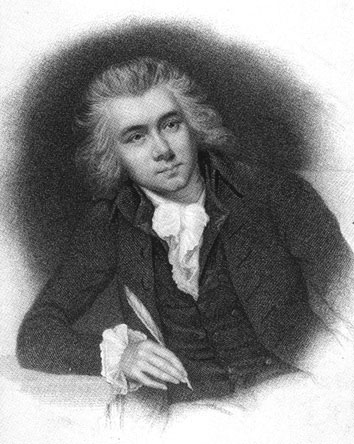
William Wilberforce and his friends


As we talked about William Wilberforce at the last Agora, here is an encouraging story on his circle of friends that I hope inspires us at the Agora to emulate by the grace of God,

"Throughout history groups of men and women have banded together for the purpose of promoting what they believed to be critical causes. With the defeat of his motion for the abolition in 1789, Wilberforce and his closest friend, Henry Thornton, called together such a group around themselves. The common bond that held this 'Clapham Sect' together was the desire to apply their faith in Jesus Christ to personal, social, political, national and international matters. The group made no claim to be theologians, yet they were people who regarded prayer and Bible study as serious matters. The Clapham group believed that they were representatives of God's kingdom on earth and the faithful stewards of all God had given them. Together, this Clapham fellowship sought to make the British Empire an instrument of social and moral welfare to all people. Throughout their time together, they remained remarkably committed to these goals. The labels 'Clapham Sect' and the 'Saints' were given to them by others, the latter by members of Parliament. No indication of any desire to give themselves a name was reflected in the correspondence and literature of members of the group. The term 'Clapham Sect' was not used until later, when the phrase was coined in an 1844 essay by Sir James Stephen. The name originated from the London suburb, Clapham, where many of the group members chose to live."

Read the full story here...

John Piper has his own summary on this issue, and this is a great point that I hope we don't miss. He points out that the burden of Wilberforce’ book “A Practical View of Christianity” was that “true Christianity, which consists in these new, indomitable spiritual affections for Christ, is rooted in the great doctrines of the Bible about Sin and Christ and Faith.”. So Wilberforce’s driving force in his life was those "great doctrines of the gospel" and not merely a social conscience.

Read John Piper’s full article here…

Thursday, May 05, 2005

Politics, Why Bother?

Why and How Christians Should be Involved in Politics

A. Basis for Involvement

What is Politics?

- Broad definition: denotes the life of the city (polis) and the responsibilities of the citizen – concerned with the whole of life in human society.
- Narrow definition: the science of government – gaining power for social change.
- Politics is concerned with the proper ordering of society for the collective good of its members.
- Policy decisions by the governing authorities affect our lives.

Government as a God-ordained Institution

- Government is one of the three God-ordained institutions besides the family and the church. (Rom 13)
- Purpose: to promote order, freedom and justice.
- Question: Must Christians always obey and submit to the government? What if the government abuses its power and acts contrary to the law and infringes religious freedom? (1 Peter 2:13-17; cf. Rev 13, Acts 5: 29)

Socio-Political Involvement Part of the Cultural Mandate

- The Christian Cultural Mandate (based on Gen 1:26-28) – to exercise dominion over all the earth and redeem every sphere of human endeavour for Christ.
- If we see Christianity as a worldview and believes that it is able to provide real answers and solutions to a wide spectrum of human problems, then we must be involved in life in all its venues: social, scientific, economic, medical, artistic, academic and political.
- Moreover, we have been called to be salt and light, to love our neighbour as ourselves and to seek the common good.
- Jesus’ example: In his public ministry, he went about “teaching and preaching” (Matthew 4:23) and “doing good and healing” (Acts 10:38). There is a socio-political dimension to Jesus’ ministry (Luke 4:18-19) – preach good news to the poor, proclaim freedom for the prisoners and recovery of sight for the blind, release the oppressed.
- In Matthew 25, Jesus speaks of the hungry, the homeless, the stranger, prisoners and the sick and promises He will challenge all His followers on Judgment Day with these words, “As you have done to the least of these, you have done to me.”
- Case study: John Wesley and the Evangelical Revival in Britain in the 17th century. Wesley was both a preacher of the gospel and a prophet of social righteousness. The movement was instrumental in the abolishment of slavery and reforming society – improving working conditions, humanising the prison system, making education available to the poor, etc.

Evangelism and Social Concern Go Hand-in-hand

- Section 5 (Christian Social Responsibility) of The Lausanne Covenant, endorsed by the International Congress on World Evangelisation in Lausanne, Switzerland in 1974, states: “We express penitence for our neglect and for having sometimes regarded evan elism and social concern as mutually exclusive. Although reconciliation with man is not reconciliation with God, nor is social action evangelism, nor is political liberation salvation, nevertheless, we affirm that evangelism and socio-political involvement are both part of our Christian duty. For both are necessary expressions of our doctrines of God and man, our love of neighbour and our obedience to Jesus Christ.”

- Paul B. Henry, in his book Politics for Evangelicals, expressed that: “The Christian community must learn to recognise that civic involvement is in itself a legitimate form of Christian service. To deny this is to suggest a truncated Christianity which arbitrarily separates the sacred from the secular.”

- On another occasion, Paul Henry said: “We are called to seek justice, to let our lights shine, to be the salt of the earth. Involvement in the political process is one of many ways in which the Christian community can be faithful to the redemptive power of the gospel… Our democratic institutions afford us the opportunity to effect change and promote wholeness within our society and between the nations. To forsake this opportunity is to bear responsibility for the consequences of our inaction, as well as to leave the public sector solely in the hands of those who may not be sensitive to Christian values.”

- Prophetic religion always presses the question of the common good.
“The loss of religion’s prophetic vocation is terribly dangerous for any society. Who will uphold the dignity of economic and political outcasts? Who will question the self-righteousness of nations and their leaders? Who will question the recourse to violence and the rush to wars, long before any last resort has been unequivocally proven? Who will not allow God’s name to be used to simply justify ourselves, instead of calling us to accountability? And who will love the people enough to challenge their worst habits, coarser entertainments and selfish neglects?” Jim Wallis in God’s Politics (Wallis is a social activist and editor and founder of Sojourners: Christians for Justice and Peace – www.sojo.net)

- Ronald J. Sider, President of Evangelicals for Social Action, in his book Rich Christians in An Age of Hunger, asks the disturbing question why Christians are not doing enough for the poor despite the fact that they collectively possess the greatest wealth at any time in history.

Social Service and Social Action

-Social concern necessary involves both social service and social action.
Social Service Social Action
Relieving human need
Philanthropic activity
Seeking to minister to individuals and families
Works of mercy Removing the causes of human need
Political and economic activity
Seeking to transform the structures of society
The quest for justice

Why Get Involved when the Ship is Sinking?

- The ship may be sinking, i.e. the world that we live in is decaying, but we do not know how long the ship will take before it finally sinks! While we are still on board this ship, we must keep it in a state of good repair.
- We must not dichotomise the Christian life into the now and later. We are both citizens of heaven as well as citizens of earth (St. Augustine, City of God)
- Being salt of the earth – to slow down the process of decay.
- John Stott: “The world is the arena in which we are to live and love, witness and serve, suffer and die for Christ.”

How Does the Malaysian Church Fare?

-The following table shows the involvement of our churches in the community:

Activity Percentage of Christians Involved in the Activity
Social Care Activities for the Needy:
- Visitations to hospitals or prisons 60%
- Care services for the aged, sick, handicapped, mentally retarded, drug addicts, etc.
36%
- Uplifting welfare of the underprivileged like tuition classes 26%
- Relief assistance like food, clothing and medicine for the needy 25%
- Accommodation for the needy like nursing homes, hostel for orphans etc.
21%
Poverty Alleviation Programmes: 6%
Other Forms of “Good Works” to Society:
- Counselling services for the public such as marriage counselling, parenting programmes etc.
20%
- Community development projects such as gotong-royong 14-17%
- Taking some action on a public issue or contacting a Member of Parliament
2%
- Environment protection activities 2%
- Involvement in justice or political activities 1%

Source: NECF Survey of Churches, Pastors and Christians 2001

- The survey also showed that:
• 80% of pastors agree that the church must demonstrate to society a holistic mission as Jesus did, compared with 52% of Christians who felt the same way.
• 75% of pastors believe that in view of the increase in social ills, the church should be more involved in society, compared with 65% of Christians who felt the same way.
• 57% of pastors believe our churches are too inward looking, compared with 27% of Christians who felt the same way.
• The one most significant activity that pastors would like NECF to focus more on is engagement with the Government and public advocacy for the churches (32%).


B. Ways of Involvement

- The ideal Christian citizen: Karl Barth’s image of a person holding a Bible in one hand and a newspaper in the other.
- Malaysia’s democratic (albeit limited) form of governance allows for participation in the political process.
- Reinhold Neibuhr: “Man’s capacity for justice makes democracy possible, but man’s inclination for injustice makes democracy necessary.”
- Lord Acton: “Power corrupts and absolute power corrupts absolutely.”
- In a fallen world where sin abounds, power must be decentralised from the hands of the few to the hands of the many.
- How can we bring our Christian values to bear on the country’s social and political landscape as citizens in a democratic society?
- Individually, Christians can engage in the political process through the following:
• Vote in the elections
• Be informed about contemporary issues
• Pray for the governing authorities: the King, the Government, the Opposition and NGOs (1 Tim 2:1-2)
• Write to the press or relevant government authority on a public issue of concern
• Lobby your elected rep to champion an important issue of public interest
• Take part in peaceful protests/demonstrations
• Take an active part in your neighbourhood residents association.
• Join a political party or non-governmental organisation
• Run for political office

- Collectively, Christians who share particular and moral social concerns can form groups to study the issue deeper and take appropriate action
- The Church (through its umbrella bodies such as NECF, CCM and CFM) should speak out on issues of public interests from the Christian viewpoint and inculcate greater awareness among its members about the importance of socio-political engagement.

Examples of Christian politicians

- Christians can bring a qualitative difference in our social engagements.
- The following are some famous Christian political leaders:
Abraham Kuyper (theologian and Prime Minister of Holland)
Martin Luther King Jr. (American civil rights leader)
William Wilberforce (British parliamentarian and anti-slavery advocate)
Jimmy Carter (US President, Nobel Peace Prize Laureate and human rights advocate)
Pope John Paul II (used his religious office to effect socio-political changes)
- In the Old Testament, we have figures like King David, Joseph, Daniel, etc. who held political office.

- In Malaysia, some prominent Christian politicians include:
The late Tan Chee Khoon (former Opposition Leader)
Tan Kee Kwong (MP for Segambut, Gerakan)
Dr Maximus Ongkili (Minister in the PM’s Department, PBS)
Teresa Kok (MP for Seputeh, DAP)
Ngeh Koo Ham (ADUN for Setiawan, Perak Opposition Leader, DAP)
Lee Hwa Beng (ADUN for Subang Jaya, MCA)

- There are also Christians actively involved in NGOs:
Irene Fernandez (Executive Director, Tenaganita)
Ivy Josiah (Women Aid Organisation)
Dr Denison Jayasooria (Executive Director, Yayasan Strategik Sosial - MIC’s social arm)
Joseph Roy (Amnesty International)
Malaysian CARE

- Advice for aspiring politicians: “The Christian who enters politics must do so with the aim of achieving public justice…He learns to make the needs of his neighbour his own. In so doing, his search for justice becomes an act of sacrificial love.” – Paul Henry, Politics for Evangelicals

The Malaysian context

- Some issues that Christians can be concerned about/pray for:
• Strengthen our democratic institutions – Parliament, Judiciary, Anti-Corruption Agency, Elections Commission, the Police etc. – to ensure vital checks and balances
• Push for a freer press – freedom of information (RSF’s World Press Freedom Index 2004 ranked Malaysia 122nd out of 167 countries surveyed. In 2003, Malaysia was ranked 104th)
• Combat corruption in the system (structural evil/sins) and protection for whistle-blowers (Malaysia was ranked 37th in Transparency International’s Corruption Perception Index 2004 compared to 35th in 2003)
• Call for the abolishment of unjust laws that restricts freedom and undermines civil liberties
• Legislate a minimum wage for low-income workers
• Ensure that the civil service has a more balanced racial composition
• Arrest the brain drain by abolishing discriminatory policies that do not promote meritocracy and fair competition
• Affirmative policies must extend to all races
• Revolutionise our education system
• Ensure proper tendering of government contracts
• Call for election of local councillors, senators
• Work towards the eradication of rural and urban poverty amongst all races (UNDP reported that Malaysia has the highest income disparity gap between the rich and the poor in South East Asia; About 35% of Malaysian households have a monthly income below RM1,500)
• Forge a united Malaysian race (bumiputra and non-bumiputra divide a barrier?)

- Issues specific to the Christian/religious community:
• Difficulty in getting approval for the construction of churches/places of worship
• “Ban” on the Malay-language Bible and Malay-language Christian literature
• Response to Malaysia as an Islamic State/Islam Hadhari/Islamisation process
• Formation of an Inter-Faith Commission

References

1. Charles Colson & Nancy Pearcey, How Now Shall We Live (Tyndale, 1999)
2. Jim Wallis, God’s Politics (Harper Collins, 2004)
3. John Stott, Issues Facing Christians Today (Marshall, Morgan & Scott, 1984)
4. NECF, Watchmen’s Forum 3 (NECF Research Commission, 2002)
5. Paul B. Henry, Politics for Evangelicals (Valley Forge, 1974)
6. Timothy J. Demy & Gary P. Stewart, Politics and Public Policy: A Christian Response (Kregel, 2000)

Prepared by John Chung for Agora Ministry, CDPC

Monday, April 25, 2005

Update: Christian & Muslim dialogues - is there a future for it?

ISLAM HADHARI Statement by the Malaysian Government

This is the official presentation we keep hearing again and again, and we are told that this is the season for inter-faith dialogues.

Our prime minister said in his response to forgo the idea of a Malaysia Interfaith Panel
said: "Focus on inter-racial and inter-faith dialogues. This will be better as we need to maintain peace and harmony among people of diverse religions,"

But then we hit a snag last week when we suddenly heard of a ban on the Malay bible as announced by Dato’ Seri Mohamed Nazri bin Abdul Aziz in a parliament session. Christians were shocked, for the Malay Bible does serve a role in some Malay speaking congregations in Malaysia.

This was cleared up promptly by a statement from the Prime Minister. I don’t know if you noticed, but suddenly it became an issue of Malays getting converted by reading the bible (of which this Islamic evangelist has some interesting comments, though I don’t appreciate his derogatory language used with reference to our government).

The question I ask (and Kit Siang has his own take not to be missed) at the tail end of this controversy is, how are we supposed to have genuine interfaith dialogues if a Muslim is not allowed to read the Bible? I have a Quran, and I am not scared of it, why should they be of the Bible? I dream of a Malaysia with Ideological Capitalism, where all the ideas get their air play in the marketplace, and people can choose for themselves the ones they think best correspond to reality.