A journey of faith through the jungle of steel and concrete
by Nehemiah Lee
Twelve years ago, I founded Nehemiah Reinforced Soil Sdn Bhd. It is a construction company. The mission is to make a decent living without having to get involved in corrupt practice. The mission seemed naive.
It seemed like an impossible task because the construction industry is rife with corruption. It is a jungle out there made of steel and concrete inhabited by unscrupulous players we called 'the cowboys'. The rule of the game is to do everything and anything possible -- whether corrupt or otherwise -- in order to win, i.e. in order to so-called 'survive'.
As a new low capital start-up with peanut financing from mum and pop, cash flow was extremely tight. All suppliers wanted cash terms from us and all our customers wanted credit terms. Bankers would only lend us umbrellas when our cash position was proven to be sunny.
One of the earliest challenges came from a quantity surveyor whose job was to certify our progress claims. He hinted that if we greased his palm, our claims would be certified much quicker without any hassle.
We would get our money much earlier so that we could pay our suppliers and workers. After all, all the other sub-contractors were doing likewise. We pretended to be stupid, ie., did not take the hint. Sure enough, our claims remained uncertified. Each time we called up, we
were told that there was something wrong with our claims. We had to re-submit time and again. Considering the tight cash flow situation we were in, the pressure to give in was tremendous. I am glad to report that we did not buckle under the pressure; we did get our claims
certified eventually. Somehow, money came in from other sources to help ease our cash flow. We also had understanding suppliers who were sympathetic and supportive.
Another incident demonstrated the challenge we faced as the promoter of a new proprietary retaining wall system. We were bidding for a fairly big project. All technical submissions and clarification had been presented and accepted in principle. But the official refused to
release a letter of approval. We were privately told, "Why should your company be helped?" It was understood that some inducement would resolve the problem. We politely declined to oblige although we needed the project badly. Our faith that divine help would intervene was
severely tested. After some agonizing weeks of silent impasse, miraculously the official relented.
The approval letter was released unconditionally.
Not all cases however ended up well whereby we collected money due to us or we got the projects we needed. For example, we had to take a hair cut because we did not oblige our paymaster by providing the necessary fictitious invoice for him to avoid tax. He was a Dato', by
the way, and a very young one. We lost projects because we refused to pay the 'commission'. We lost a certain competition because the project manager was bribed by our competitor.
The question is how we managed to survive despite our disadvantaged position due to our commitment to the mission. In fact, not only did we survive, we have been doing fairly well by industry standards. Many apparently valid reasons could be forwarded to explain why we are
still around today. For example, we worked very hard. We have good, clean and honorable friends in the right places who helped us without asking for favors in return. We were lucky.
Somehow, we are at the right place at the right time. The market somehow turned in our
favour. And many more valid reasons. But we believe the bottom line is divine intervention. We have received undeserved favour called grace from the Holy One above. Our faith and trust in the Almighty One has been vindicated. We are saved by grace through faith.
The next question is, "Does it get easier now compared to earlier days?"
The answer is, "Yes and no".
Yes, because we are more established now, we have stronger financial footing and we enjoy a good reputation or brand recognition.
No, because the corrupt practices are still quite rampant in the construction industry.
Click here to continue
Wednesday, March 29, 2006


Tuesday, March 28, 2006
Pluralism & Jazz
I wished I could say that life's a bed of roses; or when I'm driving on the dirty streets of KL, that there were only smooth traffic flow as opposed to gridlocked, deadlocked traffic jams.
Or ponder on that, that the world moves along and operates like a well-oiled, tune clockwork. Yet the 2nd law of Thermodynamics and the Anthropic Principle keeps throwing a dent into that kind of utopian belief.
(So, ok where am I heading with this?)
It has to do with a certain visit to a new jazz establishment, whom I shall refer to by the acronym TTR@TH. It felt really, really good for a jazz purist at heart, like me to be able to really, enjoy some true jazz - finally!
Although, I am not one of the variety that believes that real jazz ended somewhere in the 1950s and that I do enjoy the occasional forays into fusion, latin in its many theophanies of form; afro cuban, bossa nova, samba etc., yet it is arguably justifiable to state that when really knowledgeable ones talks about jazz, the picture is not that of Kenny G puffing a soprano saxophone like a cigarette stuck in his mouth playing pop.
To borrow an element from negative theology, let me define jazz by stating what jazz is not: It is not R&B, rock, pop, reggae and ska. Jazz is NOT simply anything that simply comes to mind whenever one sees a picture of the saxophone, or contrabass (that's double bass) or percussions.
Simply put I do not believe in the popular notion of relativism or pluralism in jazz.
Read full article here
Or ponder on that, that the world moves along and operates like a well-oiled, tune clockwork. Yet the 2nd law of Thermodynamics and the Anthropic Principle keeps throwing a dent into that kind of utopian belief.
(So, ok where am I heading with this?)
It has to do with a certain visit to a new jazz establishment, whom I shall refer to by the acronym TTR@TH. It felt really, really good for a jazz purist at heart, like me to be able to really, enjoy some true jazz - finally!
Although, I am not one of the variety that believes that real jazz ended somewhere in the 1950s and that I do enjoy the occasional forays into fusion, latin in its many theophanies of form; afro cuban, bossa nova, samba etc., yet it is arguably justifiable to state that when really knowledgeable ones talks about jazz, the picture is not that of Kenny G puffing a soprano saxophone like a cigarette stuck in his mouth playing pop.
To borrow an element from negative theology, let me define jazz by stating what jazz is not: It is not R&B, rock, pop, reggae and ska. Jazz is NOT simply anything that simply comes to mind whenever one sees a picture of the saxophone, or contrabass (that's double bass) or percussions.
Simply put I do not believe in the popular notion of relativism or pluralism in jazz.
Read full article here
Interview With LT
Come for a personal conversation with LT Jeyachandran from Ravi Zacharias International Ministry tis coming Sunday....
An Interview With LT
Wat is the topic about?
In the light of islamic resurgence and interfaith dialogues, LT will share his experience and thinking together on the new paradigm of apologetics...
From an Asian leader who has been having dialogues with Hinduism and Islam in pluralistic India...
Date: Sunday (2 April)
Time: 1.30 pm
Venue: TOUCH COMMUNITY CENTER (Community Baptist Church, SS2)
No 14A, Jalan SS 2/10,
(same row as KAYU restaurant, and the center is just above the Claypot n Pan Restaurant)
For details contact Hedonese - 019 3356095
An Interview With LT
Wat is the topic about?
In the light of islamic resurgence and interfaith dialogues, LT will share his experience and thinking together on the new paradigm of apologetics...
From an Asian leader who has been having dialogues with Hinduism and Islam in pluralistic India...
Date: Sunday (2 April)
Time: 1.30 pm
Venue: TOUCH COMMUNITY CENTER (Community Baptist Church, SS2)
No 14A, Jalan SS 2/10,
(same row as KAYU restaurant, and the center is just above the Claypot n Pan Restaurant)
For details contact Hedonese - 019 3356095
Sunday, March 26, 2006
Islam must honour human rights
The Abdul Rahman case is a real eye opener for the world as we struggle to understand Islam in this post 9/11 world.
Mark Steyn writes in his excellent article -Will We Stick Our Necks Out for His Faith?
"If Islam is a religion one can only convert to, not from, then in the long run it is a threat to every free person on the planet."
I think this is real a catalyst now for the struggle of human rights – is Islam going to honour the convictions of the global community, or ignore them. If it does ignore, and agrees with an Osama Bin Laden type of philosophy that power is the ultimate purpose and justification for anything;
"When people see a strong horse and a weak horse, by nature they will like the strong horse."
If they take this path, they disqualify themselves from complaining about any injustice, from the invasion of Iraq, to the alleged injustices of Israel against the Palestinians and the Danish insults of the founder. But if they don’t agree with Osama, then its time for them to voice out loud and clear their adherence to the standards of human rights – that mankind deserves the freedom of religion and that Abdul Rahman’s choice must be honoured. The choice has to be made by Muslim leaders all over the world, they cant be progressive and live in the global community and not honour basic human rights.
Mark Steyn writes in his excellent article -Will We Stick Our Necks Out for His Faith?
"If Islam is a religion one can only convert to, not from, then in the long run it is a threat to every free person on the planet."
I think this is real a catalyst now for the struggle of human rights – is Islam going to honour the convictions of the global community, or ignore them. If it does ignore, and agrees with an Osama Bin Laden type of philosophy that power is the ultimate purpose and justification for anything;
"When people see a strong horse and a weak horse, by nature they will like the strong horse."
If they take this path, they disqualify themselves from complaining about any injustice, from the invasion of Iraq, to the alleged injustices of Israel against the Palestinians and the Danish insults of the founder. But if they don’t agree with Osama, then its time for them to voice out loud and clear their adherence to the standards of human rights – that mankind deserves the freedom of religion and that Abdul Rahman’s choice must be honoured. The choice has to be made by Muslim leaders all over the world, they cant be progressive and live in the global community and not honour basic human rights.
Wednesday, March 22, 2006
Jesus And Logic
The Agora is in the process of developing a training course that teaches logical thinking and how to detect baloneys by using the Jesus' example in the Gospels.
If you have any examples of Jesus employing logical forms in his teachings, please share with us. :)
Bernard Ramm makes a striking observation on Christ's appeal to logic:
The Pattern of Authority, Eerdmans, 1957, page 51
If you have any examples of Jesus employing logical forms in his teachings, please share with us. :)
Bernard Ramm makes a striking observation on Christ's appeal to logic:
"With reference to logical forms our Lord used analogy, Luke 11:13; reductio ad absurdum, Matthew 12:26; excluded middle, Matthew 12:30; a fortiori, Matt 12:1-8; implication, Matthew 12:28; and law of non-contradiction, Luke 6:39"
The Pattern of Authority, Eerdmans, 1957, page 51
Cartoon Chaos - Christianity Today Magazine
Cartoon Chaos
Muslims aren't the only ones guilty of acting out inappropriately.
A Christianity Today editorial | posted 03/14/2006 09:30 a.m.
The riots were as inexplicable as they were deadly. Outraged youths marched through the streets, armed with guns, machetes, and nail-laden boards. They destroyed houses of worship and businesses owned by religious minorities. At roadblocks, they demanded to know the religion of each passerby. Those who answered incorrectly were beaten to death, then decapitated, dismembered, and burned in the streets. The victims—more than 100—had nothing to do with what had supposedly sparked the outrage. They were just in the wrong place at the wrong time.
Muslims rioting over the publication of Muhammad caricatures? Sadly, no. These were Nigerian Christians rioting over the riots. Muslim riots over the cartoons earlier in the week had left about 50 Christians dead and several churches ruined in northern Nigeria, where Christians are a minority. So in the south, where Christians are safely in the majority, revenge attacks against local Muslims tripled the body count.
Read full article here
Muslims aren't the only ones guilty of acting out inappropriately.
A Christianity Today editorial | posted 03/14/2006 09:30 a.m.
The riots were as inexplicable as they were deadly. Outraged youths marched through the streets, armed with guns, machetes, and nail-laden boards. They destroyed houses of worship and businesses owned by religious minorities. At roadblocks, they demanded to know the religion of each passerby. Those who answered incorrectly were beaten to death, then decapitated, dismembered, and burned in the streets. The victims—more than 100—had nothing to do with what had supposedly sparked the outrage. They were just in the wrong place at the wrong time.
Muslims rioting over the publication of Muhammad caricatures? Sadly, no. These were Nigerian Christians rioting over the riots. Muslim riots over the cartoons earlier in the week had left about 50 Christians dead and several churches ruined in northern Nigeria, where Christians are a minority. So in the south, where Christians are safely in the majority, revenge attacks against local Muslims tripled the body count.
Read full article here
Monday, March 20, 2006
Discovering Mark Driscoll
Mark Driscoll, pastor of The Mars Hill, an a very interesting theological hybrid. Adrian Warnock describes him well;
"Mars Hill (his church) is one of those unique churches that is probably too emerging for some evangelicals to cope with, much too traditional for the emerging folks, too charismatic for the reformed folks and too reformed for the average Charismatic. It’s a wonder anyone likes the church! Actually, the more I read of Mark the more he sounds like he is making his home in the same kind of centre ground that my own church tries to occupy."
Read Adrian's full article here
"Mars Hill (his church) is one of those unique churches that is probably too emerging for some evangelicals to cope with, much too traditional for the emerging folks, too charismatic for the reformed folks and too reformed for the average Charismatic. It’s a wonder anyone likes the church! Actually, the more I read of Mark the more he sounds like he is making his home in the same kind of centre ground that my own church tries to occupy."
Read Adrian's full article here
Friday, March 17, 2006
Alexa's blog is now up
A review on The Challenge of Jesus
Too often we have been guilty of interpreting our social responsibilities in terms only of helping the casualties of our deteriorating society but do not see the need to change the structures which cause the casualties. Just as doctors are not only concerned with treating a patient but also with providing preventive measures, we should also involve ourselves with preventive social medicine
Thursday, March 16, 2006
The Art of Apologising
I was roped in as 'substitute speaker' yesterday at the MMU Melaka christian fellowship.
Finished work at 5pm, the car heated up at Sg Besi hiway but thank God, arrive safely at about 7.30 pm... It was quite tiring but I never felt so 'alive'. Sharing on this topic close to my heart with such a group of energetic and warm students is what I've always enjoyed doing.
Here are some notes from the sharing... I promised to show you guys this article on Asking Questions didn't I?
Apologetics aims to give seekers or critics a reason for the faith we have in Christ. It could involve removing obstacles to faith, ‘taking the roof off’ (2 Cor 10:5) and give positive evidences.
Examples of Jesus’ chat with Samaritan woman/Sadducees and Paul in Athens… It should involve reasons of the heart also, not just intellectual arguments.
Why is it important?
1) “Faith is believing what you know ain’t true?” (Oscar Wilde) If there are reasons or proofs, where is the room for faith? If got faith, why need reasons?
Biblical faith is beyond reason, but not against reason. It is not blind faith or intellectual suicide. Faith involves knowledge, agreement and personal trust/commitment.
2) Avoid a privately engaging, publicly irrelevant religion
Is the gospel otherworldly? Or does it speak to all of life? Is it relevant to every dimension of human existence – spirit, mind, body, economics, politics etc?
When was the last time you were encouraged to think Christianly as a student of law, business, information technology or education? Demonstrate the Lordship of Christ in all things.
How To Do It?
1) Doing it in conversations. Rethinking evangelism as offering propositional facts only.
Don’t be an answering machine. Ask good questions like Jesus. Be a good listener.
2) Doing it in the context of trust, relationships and demonstration of the gospel.
The ultimate apologetics is love. Be sensitive to the real concern behind the question.
3) Three characteristics of a great ambassador for Christ universities and churches in
Malaysia today - informed, wise/tactful and winsome. Use the power of stories.
4) Seek common grounds or point of contact. Paul approvingly cites pagan philosophers!
How much do we know about Islam or Buddhism or Hinduism or atheism? How do bank workers recognize counterfeits?
Some Possible Objections
1) “See to it that no one takes you captive through hollow and deceptive philosophy…” (Col 2:8) It’s a warning against false philosophy. The cure is good philosophy, not ‘no philosophy’.
2) Only the Holy Spirit could touch a person’s heart to believe, not arguments.
Apologetics is not a competitor of God’s work of illumination, but a way in which the Holy Spirit could use in opening peoples’ eyes. It’s like the ministry of transportation, bringing someone to a ‘place’ where they can hear the gospel.
3) Faith like a child? Jesus is talking about humility and dependence of a child, not the ignorance of a toddler.
4) The gospel is the foolishness of God… I come not with persuasive words of wisdom (1 Corinthian 1-2)
But Paul used arguments and reasoning in Acts. He is condemning the false, prideful use of reason, not against reason itself. The crucifixion is offensive to human pride. The Greek sophists spend all their time to improve speaking skills and seek to persuade people by rhetoric, not substance.
Finished work at 5pm, the car heated up at Sg Besi hiway but thank God, arrive safely at about 7.30 pm... It was quite tiring but I never felt so 'alive'. Sharing on this topic close to my heart with such a group of energetic and warm students is what I've always enjoyed doing.
Here are some notes from the sharing... I promised to show you guys this article on Asking Questions didn't I?
1 Peter 3:15-16 “But in your hearts set apart Christ as Lord. Always be prepared to give an answer to everyone who asks you to give the reason for the hope that you have. But do this with gentleness and respect, keeping a clear conscience, so that those who speak maliciously against your good behavior in Christ may be ashamed of their slander.”
Apologetics aims to give seekers or critics a reason for the faith we have in Christ. It could involve removing obstacles to faith, ‘taking the roof off’ (2 Cor 10:5) and give positive evidences.
Examples of Jesus’ chat with Samaritan woman/Sadducees and Paul in Athens… It should involve reasons of the heart also, not just intellectual arguments.
Why is it important?
1) “Faith is believing what you know ain’t true?” (Oscar Wilde) If there are reasons or proofs, where is the room for faith? If got faith, why need reasons?
Biblical faith is beyond reason, but not against reason. It is not blind faith or intellectual suicide. Faith involves knowledge, agreement and personal trust/commitment.
2) Avoid a privately engaging, publicly irrelevant religion
Is the gospel otherworldly? Or does it speak to all of life? Is it relevant to every dimension of human existence – spirit, mind, body, economics, politics etc?
When was the last time you were encouraged to think Christianly as a student of law, business, information technology or education? Demonstrate the Lordship of Christ in all things.
How To Do It?
1) Doing it in conversations. Rethinking evangelism as offering propositional facts only.
Don’t be an answering machine. Ask good questions like Jesus. Be a good listener.
2) Doing it in the context of trust, relationships and demonstration of the gospel.
The ultimate apologetics is love. Be sensitive to the real concern behind the question.
3) Three characteristics of a great ambassador for Christ universities and churches in
Malaysia today - informed, wise/tactful and winsome. Use the power of stories.
4) Seek common grounds or point of contact. Paul approvingly cites pagan philosophers!
How much do we know about Islam or Buddhism or Hinduism or atheism? How do bank workers recognize counterfeits?
Some Possible Objections
1) “See to it that no one takes you captive through hollow and deceptive philosophy…” (Col 2:8) It’s a warning against false philosophy. The cure is good philosophy, not ‘no philosophy’.
2) Only the Holy Spirit could touch a person’s heart to believe, not arguments.
Apologetics is not a competitor of God’s work of illumination, but a way in which the Holy Spirit could use in opening peoples’ eyes. It’s like the ministry of transportation, bringing someone to a ‘place’ where they can hear the gospel.
3) Faith like a child? Jesus is talking about humility and dependence of a child, not the ignorance of a toddler.
4) The gospel is the foolishness of God… I come not with persuasive words of wisdom (1 Corinthian 1-2)
But Paul used arguments and reasoning in Acts. He is condemning the false, prideful use of reason, not against reason itself. The crucifixion is offensive to human pride. The Greek sophists spend all their time to improve speaking skills and seek to persuade people by rhetoric, not substance.
Tuesday, March 14, 2006
Davinci Code: The Dialogue
 * 40 Million copies in print
* #1 On the bestseller list
* A blockbuster movie on the way...
How will you respond?
Davinci Code: The Dialogue
Thoughts from the Interfaith Dialogue in UM Part 1
Thoughts from the Interfaith Dialogue in UM Part 1
Three things that I observed from listening to the speakers representing Islam, Hinduism, Buddhism & Christianity at this dialogue, here they are;
1. Every religion must contend with the sinfulness of man
2. This sinfulness is proven in the splits in the religion
3. Every religion is influenced by the spirit of the age
Read my full post here
Three things that I observed from listening to the speakers representing Islam, Hinduism, Buddhism & Christianity at this dialogue, here they are;
1. Every religion must contend with the sinfulness of man
2. This sinfulness is proven in the splits in the religion
3. Every religion is influenced by the spirit of the age
Read my full post here
Monday, March 13, 2006
The roots of Karma & Dualism?
I believe that much of man’s religions, contain truths that he has picked up existentially from the reality of this world. Thus, at the root of some believes are truths that people have observed along the way, then modified and fit into a worldview.
I see Karma as one of this, at its root, Karma is a conviction that there is justice and a reckoning for our behavior and there is a provision for this to take place, so that, whatever a man sows, he will reap.
Read the full article
I see Karma as one of this, at its root, Karma is a conviction that there is justice and a reckoning for our behavior and there is a provision for this to take place, so that, whatever a man sows, he will reap.
Read the full article
Monday, March 06, 2006
Holy Scripture
The third and final round of the interfaith dialogue will be held at the following:
Date: 10 March 2006 (Friday)
Time: 7.30pm
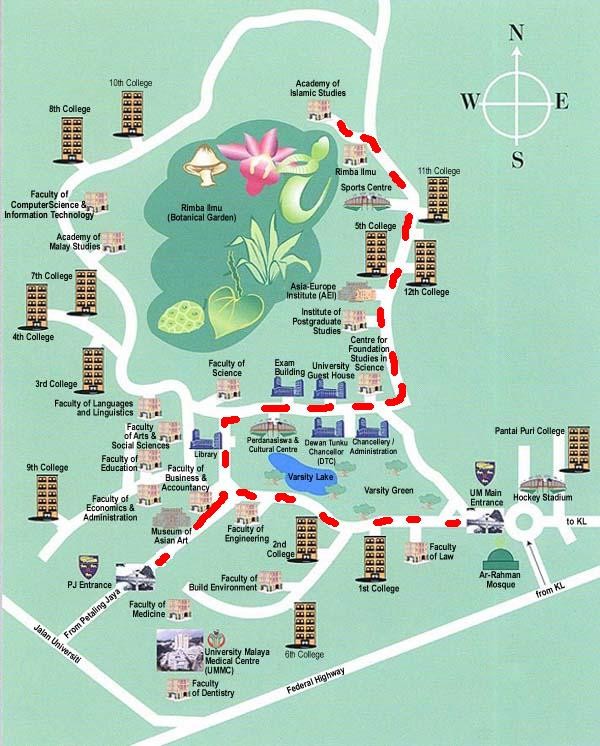
Venue: Dewan Kuliah Utama, Islamic Studies Centre (see map)
Topic: Holy Scriptures
Contact me for any inquiries at e_nerv@yahoo.co.uk

Date: 10 March 2006 (Friday)
Time: 7.30pm
Venue: Dewan Kuliah Utama, Islamic Studies Centre (see map)
Topic: Holy Scriptures
Contact me for any inquiries at e_nerv@yahoo.co.uk
Monday, February 27, 2006
Federal Constitution: Protection for All
Article 11 in collaboration with the Bar Council invites you to attend a public forum
"Federal Constitution: Protection for All".
The forum addresses the recent court cases involving Nyonya Tahir, Moorthy and Shamala that highlight the problem of jurisdiction and underscore the need for a judicial system that will protect everyone.
Date:12 March 2006
Time: 9 a.m.-1.00 p.m.
Venue: Crystal Crown Hotel, Petaling Jaya.
Speakers
Ivy Josiah
Prof. Shad Saleem Faruqi
Dato Dr. Cyrus Das
Malik Imtiaz Sarwar
Dato Zaid Ibrahim
Places are limited and registration is a must. To register (name, telephone and email) or make enquiries contact Lojini 03-20321715; 03 20261313 (fax) or email
"Federal Constitution: Protection for All".
The forum addresses the recent court cases involving Nyonya Tahir, Moorthy and Shamala that highlight the problem of jurisdiction and underscore the need for a judicial system that will protect everyone.
Date:12 March 2006
Time: 9 a.m.-1.00 p.m.
Venue: Crystal Crown Hotel, Petaling Jaya.
Speakers
Ivy Josiah
Prof. Shad Saleem Faruqi
Dato Dr. Cyrus Das
Malik Imtiaz Sarwar
Dato Zaid Ibrahim
Places are limited and registration is a must. To register (name, telephone and email) or make enquiries contact Lojini 03-20321715; 03 20261313 (fax) or email
Sunday, February 26, 2006
Hermann Samuel Reimarus
Far from the prying of the pious, and occasionally polite, Church in the East, and in a time still further from our own, Hermann Samuel Reimarus (1694 – 1768; Hamburg, Germany) was conjuring quite a storm in the cauldron of New Testament scholarship. He was a curious man, but one of his most curious works was only available to the wider audience a good six years after his death, perhaps an indication of his cautiousness of the vengenceful sensitivity of the 18th century Christianity. Albert Schweitzer's high regard on Reimarus can be read in the opening lines of the second chapter of Schweitzer’s The Quest of The Historical Jesus,
“Before Reimarus, no one had attempted to form a historical conception of the life of Jesus” (emphasis mine)
“Before Reimarus, no one had attempted to form a historical conception of the life of Jesus” (emphasis mine)
Click on title to read on.
Saturday, February 25, 2006
Googling God's Will
For those who missed the last Agora forum by Soo Inn on discerning God's will (is it a pagan idea?) here it is in a nutshell
eCOMMENTARY: Googling for God's Will.
"Why doesn't God just gave me a straightforward answer when I ask Him for His will?"
Invariably someone will ask this when I run a seminar on "Finding God's Will."
The logic of this question is even clearer in an Google age.
After all when I need to know something I just Google and there are the answers.
Why on earth doesn't God set up a similar search engine?
Or maybe a 1-800 number. 1-800-Godspeaks?
There are many ways I can answer this question.
Often I remind folks that God only answers when we are ready to obey. He doesn't entertain approaches that go "you tell me the answer first God and then I decide if I will obey."
If we are to hear from God we are to approach Him in the fear of the Lord, which essentially means with a will in submission to Him.
Or I remind them that probably their life is so noisy that God's still small voice just gets drowned out. And impatience is so loud.
In the words of Emilie Griffin:
In truth I do not know for sure why God doesn't simply answer every time I have a query for Him. But my strong suspicion is that it has something to do with this:
When I was in primary school (grades 1-6) I had a friend who told me that he and his brothers used to go to the cemetery at night to ask the spirits for "numbers", i.e. the winning numbers of upcoming lotteries. I forget the steps involved.
It had something to do with impaling a grave with a bamboo stick at midnight, saying the right spells and offering the right food offerings, some form of DIY shamanism.
 The focus of such exercises was not the spirit, nor even those asking. The focus of the exercise was the information required. I feel the modern approach to questions hasn't moved too far beyond such a culture. We all want information on all sorts of issues. Of course that includes the critical ones like marriage partners and job choices.
But how many of us are interested in knowing what God is truly like? How many of us want to go deeper in our relationship with Him?
And how many of us have "growing in Christlikeness" as life priority one?
The temptation is that we are not really that interested in knowing God more. And essentially we want to live our lives with minimal reference from the Big Guy. Until we need something from Him, like answers.
This temptation finds fertile ground in an age so enamoured with technique and the technical.
Here is Quentin Schultze's warning:
If our primary focus is on the right technique to get God to speak, how different then are we from those who are basically bosses of their own fates until they need
something from the Big Guy? Then its time to visit the temple. Or the right holy men. And once we get the desired answers its back to life as usual, which is essentially life lived with little consciousness of God.
Evangelicals are quick to answer that God's primary means of communicating His Mind to us is the bible. And they are right. The bible properly interpreted should be our primary means to discern what God desires (Psalm 119:105). My only fear is that we reduce God to a book and depersonalize our exercise of knowing His mind.
Therefore we note that God also guides us through His Spirit. God Himself comes to us to guide us but often He does that by bringing to our minds the words of the Lord
that apply to a given situation (John 16:12-15).
The centrality of God's written Word in any exercise in knowing His will presupposes that we are on an ongoing journey of knowing His Word, and a journey of being known by His Word as we allow the Word to reveal who we truly are (James 1:22-25) and to shape us to what we should become.
That this is God's primary approach to knowing His mind is something that the Word itself teaches.
"I appeal to you therefore, brothers and sisters, by the mercies of God, to present your bodies as a living sacrifice, holy and acceptable to God, which is your
spiritual worship. Do not be conformed to this world, but be transformed by the renewing of your minds, so that you may discern what is the will of God–what is good and acceptable and perfect."
Romans 12:1-2 NRSV
This then is the tension of modern life. Our lives are fast.
We need answers quickly. So much of modern life exists to support such a pace and the focus is on doing things quickly rather then wisely. And we approach hearing God in the same way.
The trouble is God refuses to play our game. He sticks to His divine agenda, which is to build a new humanity, a transformed people who will bear His image in the world. He knows that in the long run, a transformed people will be able to know His heart accurately, in fast times or in slow.
And so He refuses to give us a 1-800 number. Or allow us to Google His will.
Basically He asks us, "Do you want Me or do you just want information?"
If it is just information we want, there is Bloomberg.
If it is God we desire, we switch off the cell phones, unplug, and enter into a posture of worship.
Your brother,
Soo-Inn Tan (sooinn@graceatwork.org)
eCOMMENTARY: Googling for God's Will.
"Why doesn't God just gave me a straightforward answer when I ask Him for His will?"
Invariably someone will ask this when I run a seminar on "Finding God's Will."
The logic of this question is even clearer in an Google age.
After all when I need to know something I just Google and there are the answers.
Why on earth doesn't God set up a similar search engine?
Or maybe a 1-800 number. 1-800-Godspeaks?
There are many ways I can answer this question.
Often I remind folks that God only answers when we are ready to obey. He doesn't entertain approaches that go "you tell me the answer first God and then I decide if I will obey."
If we are to hear from God we are to approach Him in the fear of the Lord, which essentially means with a will in submission to Him.
Or I remind them that probably their life is so noisy that God's still small voice just gets drowned out. And impatience is so loud.
In the words of Emilie Griffin:
"We are so busy with our complaints and our requests that we hardly stop to listen for the voice of God...how can the voice be heard, unless we listen? Sometimes God can hardly get a word in edgewise."
In truth I do not know for sure why God doesn't simply answer every time I have a query for Him. But my strong suspicion is that it has something to do with this:
That God's primary concern is that we grow in maturity. And that is something that is unlikely to happen if He gives us some technique to get Him to speak.
When I was in primary school (grades 1-6) I had a friend who told me that he and his brothers used to go to the cemetery at night to ask the spirits for "numbers", i.e. the winning numbers of upcoming lotteries. I forget the steps involved.
It had something to do with impaling a grave with a bamboo stick at midnight, saying the right spells and offering the right food offerings, some form of DIY shamanism.
 The focus of such exercises was not the spirit, nor even those asking. The focus of the exercise was the information required. I feel the modern approach to questions hasn't moved too far beyond such a culture. We all want information on all sorts of issues. Of course that includes the critical ones like marriage partners and job choices.
 But how many of us are interested in knowing what God is truly like? How many of us want to go deeper in our relationship with Him?
And how many of us have "growing in Christlikeness" as life priority one?
The temptation is that we are not really that interested in knowing God more. And essentially we want to live our lives with minimal reference from the Big Guy. Until we need something from Him, like answers.
This temptation finds fertile ground in an age so enamoured with technique and the technical.
Here is Quentin Schultze's warning:
"If we are not careful , even prayer can become just another instrumental technology to employ when everyday modes of control do not work. Prayer slips into machine logic, a means for manipulating God and neighbor to produce our desired results."
If our primary focus is on the right technique to get God to speak, how different then are we from those who are basically bosses of their own fates until they need
something from the Big Guy? Then its time to visit the temple. Or the right holy men. And once we get the desired answers its back to life as usual, which is essentially life lived with little consciousness of God.
Evangelicals are quick to answer that God's primary means of communicating His Mind to us is the bible. And they are right. The bible properly interpreted should be our primary means to discern what God desires (Psalm 119:105). My only fear is that we reduce God to a book and depersonalize our exercise of knowing His mind.
Therefore we note that God also guides us through His Spirit. God Himself comes to us to guide us but often He does that by bringing to our minds the words of the Lord
that apply to a given situation (John 16:12-15).
The centrality of God's written Word in any exercise in knowing His will presupposes that we are on an ongoing journey of knowing His Word, and a journey of being known by His Word as we allow the Word to reveal who we truly are (James 1:22-25) and to shape us to what we should become.
That this is God's primary approach to knowing His mind is something that the Word itself teaches.
"I appeal to you therefore, brothers and sisters, by the mercies of God, to present your bodies as a living sacrifice, holy and acceptable to God, which is your
spiritual worship. Do not be conformed to this world, but be transformed by the renewing of your minds, so that you may discern what is the will of God–what is good and acceptable and perfect."
Romans 12:1-2 NRSV
This then is the tension of modern life. Our lives are fast.
We need answers quickly. So much of modern life exists to support such a pace and the focus is on doing things quickly rather then wisely. And we approach hearing God in the same way.
The trouble is God refuses to play our game. He sticks to His divine agenda, which is to build a new humanity, a transformed people who will bear His image in the world. He knows that in the long run, a transformed people will be able to know His heart accurately, in fast times or in slow.
And so He refuses to give us a 1-800 number. Or allow us to Google His will.
Basically He asks us, "Do you want Me or do you just want information?"
If it is just information we want, there is Bloomberg.
If it is God we desire, we switch off the cell phones, unplug, and enter into a posture of worship.
Your brother,
Soo-Inn Tan (sooinn@graceatwork.org)
Friday, February 24, 2006
Cognitive Science V.S Darwinism
William Dembski posted an email exchange between two high profile evolutionalists: Michael Ruse and Daniel Denette.
Check it out here:
http://www.uncommondescent.com/index.php/archives/844
Check it out here:
http://www.uncommondescent.com/index.php/archives/844
Thursday, February 23, 2006
The Bold And Beautiful
Christian And The Arts
A theology for artistry (Why the need for artistry? Is it important to God?)
- The function of the artist (The various roles an artist can play)
- A Christian worldview for artistic expression (What kind of artistic expression is acceptable/valid in God's eyes? Does our artistic expression always have to be about our faith for God to accept it?)
- The Bible and the arts (A survey of the whole Bible as a case-study to see God's perspective on artistic expression and to draw principles for our own artistic expression)
This workshop is targeted at older teens and adults
Date: 12 March 06 (Sunday)
Time: 1.45 pm
Venue: City Discipleship Presbyterian Church (Map available)
Presenter: Colin Kirton (Footstool Players)
Colin trained and performed in professional theatre at Rosebud School of the Arts and Rosebud Theatre in Canada. He now regularly teaches on issues pertaining to the arts and faith, directs creative projects and conducts practical theatre skills workshops towards equipping and encouraging the Malaysian church in using the creative arts as a medium for worship, teaching and evangelism. Colin also freelances in the local arts and entertainment scene as an actor, director, trainer, musician, singer, host/emcee and voiceover talent. He worships in Subang Jaya Gospel Centre.
A theology for artistry (Why the need for artistry? Is it important to God?)
- The function of the artist (The various roles an artist can play)
- A Christian worldview for artistic expression (What kind of artistic expression is acceptable/valid in God's eyes? Does our artistic expression always have to be about our faith for God to accept it?)
- The Bible and the arts (A survey of the whole Bible as a case-study to see God's perspective on artistic expression and to draw principles for our own artistic expression)
This workshop is targeted at older teens and adults
Date: 12 March 06 (Sunday)
Time: 1.45 pm
Venue: City Discipleship Presbyterian Church (Map available)
Presenter: Colin Kirton (Footstool Players)
Colin trained and performed in professional theatre at Rosebud School of the Arts and Rosebud Theatre in Canada. He now regularly teaches on issues pertaining to the arts and faith, directs creative projects and conducts practical theatre skills workshops towards equipping and encouraging the Malaysian church in using the creative arts as a medium for worship, teaching and evangelism. Colin also freelances in the local arts and entertainment scene as an actor, director, trainer, musician, singer, host/emcee and voiceover talent. He worships in Subang Jaya Gospel Centre.
Friday, February 17, 2006
An Evangelical Declaration on the Care of Creation
An Evangelical Declaration on the Care of Creation
by the >Evangelical Environmental Network
An Evangelical Declaration on the Care of Creation
The Earth is the Lord's, and the fulness thereof - Psalm 24:1
As followers of Jesus Christ, committed to the full authority of the Scriptures, and aware of the ways we have degraded creation, we believe that biblical faith is essential to the solution of our ecological problems.
Because we worship and honor the Creator, we seek to cherish and care for the creation.
Because we have sinned, we have failed in our stewardship of creation. Therefore we repent of the way we have polluted, distorted, or destroyed so much of the Creator's work.
Read the full article here
by the >Evangelical Environmental Network
An Evangelical Declaration on the Care of Creation
The Earth is the Lord's, and the fulness thereof - Psalm 24:1
As followers of Jesus Christ, committed to the full authority of the Scriptures, and aware of the ways we have degraded creation, we believe that biblical faith is essential to the solution of our ecological problems.
Because we worship and honor the Creator, we seek to cherish and care for the creation.
Because we have sinned, we have failed in our stewardship of creation. Therefore we repent of the way we have polluted, distorted, or destroyed so much of the Creator's work.
Read the full article here
Sunday, February 12, 2006
CHRISTIAN DECISION MAKING
A. Some preliminary considerations.
1. A practical outworking of the doctrine of the Lordship of Christ. (Matthew 7:21-23)
2. Even more needed in an age of choices.
3. Must take into consideration the bigness of God and the diversity of His people.
B. A six-stage model.
(Based on Bruce Waltke’s approach in Finding God's Will: Is It A Pagan Notion?)
1. Read your Bible. (Consider biblical teaching on the matter.)
(Psalm 1: 1-6)
2. Develop a heart for God and listen to it. (Let God sanctify your desires and then go for it.)
(Psalm 37:4)
3. Seek wise counsel. (The critical place of community in Christian decision-making.)
(Proverbs 12:15; 15:22)
4. Look for God’s providential control of circumstances. (God is guiding through all the details of your life.)
(Ruth; Genesis 45: 1-9)
5. Use sanctified common sense. (Use our minds to think God’s thoughts after Him.)
(Mark 12:29-31;1 Corinthians 2:16)
6. Be open for God’s special leading. (There are times when God leads through special indicators.)
(Acts 16: 6-10)
C. As in all things, live your lives in faith, not in fear.
(Psalm 37: 23-24)
Tan Soo Inn
E Mail: sooinn@graceatwork.org
Web site: www.graceatwork.org
1. A practical outworking of the doctrine of the Lordship of Christ. (Matthew 7:21-23)
2. Even more needed in an age of choices.
3. Must take into consideration the bigness of God and the diversity of His people.
B. A six-stage model.
(Based on Bruce Waltke’s approach in Finding God's Will: Is It A Pagan Notion?)
1. Read your Bible. (Consider biblical teaching on the matter.)
(Psalm 1: 1-6)
2. Develop a heart for God and listen to it. (Let God sanctify your desires and then go for it.)
(Psalm 37:4)
3. Seek wise counsel. (The critical place of community in Christian decision-making.)
(Proverbs 12:15; 15:22)
4. Look for God’s providential control of circumstances. (God is guiding through all the details of your life.)(Ruth; Genesis 45: 1-9)
5. Use sanctified common sense. (Use our minds to think God’s thoughts after Him.)
(Mark 12:29-31;1 Corinthians 2:16)
6. Be open for God’s special leading. (There are times when God leads through special indicators.)
(Acts 16: 6-10)
C. As in all things, live your lives in faith, not in fear.
(Psalm 37: 23-24)
Tan Soo Inn
E Mail: sooinn@graceatwork.org
Web site: www.graceatwork.org
Subscribe to:
Posts (Atom)


 Posts
Posts


