Thursday, December 29, 2005

Theology For Community

Learning as a group enables us to leverage on each other's insights and perspectives. It is also more fun and allow us to bounce off ideas.

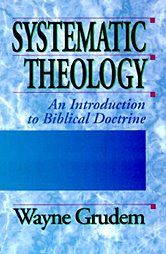
This is in keeping with one of Agora goals next year - "Learning as a Community" to equip ourselves with some basic, foundational lessons in theology. As a group, we found Wayne Grudem's accessible volume on Systematic Theology to be readable and it provides the emphasis on worship and Christian living that we look for.

We'd be starting our discussion on "What is systematic theology? Why study it? And how?" Normally a conducive study group should not be too large so we are limiting the number of participants. But dun worry, there's always the 2006 'workshops' starting in February...

Date: January 22, 2006 (Sunday)
Time: 1.40 pm

Tuesday, December 27, 2005

How Do Free-Thinkers Think When They Think They are Thinking Freely?

We do not think in a vacuum.
Even free-thinkers are not as free as they think they are when they are thinking, or when they think they are thinking.
This is because thinking is an active exercise of the will. More importantly, all thinking begins with prior beliefs. We call these foundational assumptions control beliefs.

1 DATA, THEORY, AND CONVICTIONS

The quest for human knowledge is shaped by decisions about what is worth investigating and what presuppositions to hold in order to direct the available economic and intellectual resources for the maximum payoff. In the preface to his Reason Within the Bounds of Religion, Nicholas Wolterstorff identified two issues that all scholars face: (i) which matters to investigate and (ii) which views to hold. He develops a research program by which theory building is based on the three parameters of (i) data, (ii) theory and (iii) control beliefs.
Control beliefs (CB) may take the form of methodological, philosophical or ontological convictions. It is used to weigh theories and doctrines in science and theology. If a theory or doctrine does not fit the CB, it has to be either revised or discarded. The test is ultimately probabilistic, i.e., whatever seems to be more likely than not the case. Most of the conflicts between science and theology occur at the level of control beliefs.
Our structures of beliefs form the filter by which we determine what data can be trusted as knowledge. We all build up a set of control beliefs (CB) that anchor all other derivative beliefs (DB). In time, such beliefs become entrenched in our confessions, our public expression of our private beliefs. One may confess that God exists. Such a confession may arise from a conviction that this is so even if it cannot be proven. When challenged, we may make a commitment to buttress our convictions by making more public confessions.

2 CHRISTIAN BELIEF

Christian belief is no different from all other kinds of belief. It possesses control beliefs by which to evaluate other sources of data. Information that becomes adopted as authoritative acquires the status of knowledge. Although knowledge may be tested and challenged, sometimes even losing its status if contrary information undermines it, control beliefs are rarely toppled.
In Christian belief, the stakes are as high as they can possibly get. It extends beyond the most precious possession we all have, biological existence. For the Christian, belief in and about God concerns everlasting life. Such belief shapes our knowledge of reality and should be evident in our decisions and behavior. Unlike mere intellectual assent, the issues are live and the outcome must be consistent with the commitments.

3 FAITH AND BELIEF

3.1 Can people of faith change their beliefs?
What is fidelity to divine revelation? It is fashionable to believe that faithfulness, say; to the teachings of the Bible means our understanding of what it teaches does not change with time. If this was so, today's Christians would not need to buy new books offering fresh insights, scholars and researchers need not spend time clarifying difficult passages and preachers and missionaries need not work at studying the Bible. It would also mean that all the changes throughout church history are acts of infidelity. The Reformers would be accused of faithlessness.

Such a static view of human understanding also presumes that
(i) Knowledge of God through the Scriptures and the saints are perfect for all time
(ii) Our ancestors had intelligence that cannot or need not be surpassed
(iii) Their interpretations are perfect and need no correction, and
(iv) Correction of human interpretations of our knowledge of God is undesirable
In practice, the church does not act like this. We conduct all sorts of programs to better educate ourselves and increase our powers of understanding just as the Lord encouraged us to. Understanding is a progressive and cumulative act. God is not angry at imperfect understanding but for willful misunderstanding leading to disobedience. Our faith should be steadfast with regard to God, not to our understanding about God.
The most dangerous type of religious believers are those who stop thinking, or renewing their minds. Indeed, most heresies or wrong beliefs arise from a stubborn resistance to fresh understanding of the old data. Knowledge depends not only on data but also on the interpretation of it. Many biblical characters and leaders of the church change their understanding on learning curves. Prophets had to unlearn what they thought were correct views about God. Most regarded themselves as faithful to God when in fact they were faithful to their understanding of God. Thus Abram changed his view of God many times when he was corrected from his ways; David certainly had his share of missing God's point and Solomon continued in his father's missteps; Peter had to be stopped from undermining God's salvation plan; Paul thought he was doing God a favor by persecuting Christians; and the Corinthian church believed they were exercising freedom in Christ by endorsing 'free-love'.
It is the height of arrogance to suppose that we in this generation have no inherent mistakes regarding our understanding of God. The history intellectual progress is nothing more than discoveries of errors to be corrected until the correction itself becomes corrected. This does not mean that what we think we know about God is wrong. But it does mean that, like children, our powers of achieving understanding about God increases with learning and correction. Our approximations of knowledge get better with each passing generation, as it should. While we should not be unnecessarily ashamed of past errors, we should also not be arrogant about recent gains in understanding.

3.2. The role of extra-biblical knowledge
Christian belief and faith welcomes extra-biblical resources to complete our understanding of reality (e.g. The Pilot Syndrome: On a plane, even a priest prefers a qualified pilot to one who shares his theological views. We need more than knowledge from the Bible to survive.) The Bible is not a comprehensive guidebook for everything we need for living. It is a special message from God with frameworks by which to build a worldview to assess how we are doing. While the Bible is a special inheritance from believers who came before us, it is a relatively recent resource. Most of the people who worshipped God had no access to the Bible. Less than two thousand years ago, no one in the world had the New Testament. Before the public ministry of Jesus, no one had his teachings to go by. Before Moses was called into service, there would have been no mosaic teachings and laws from God. The faithful at the time of Abraham, and Isaac, and Jacob and Joseph, did not have the Old Testament. St. Augustine wrote De Doctrina Christiana that Christians ought to seek legitimate uses of extra-biblical sources because all knowledge ultimately comes from God. This is not to diminish the value of the Bible, but to draw attention to the fact that unlike the Muslims, we are not really “People of the Book”. We are “People of the God who gave us the Book”.

4 CONTROLLING CONTROL BELIEFS
(Renewing our minds)

Can control beliefs change? Yes. Romans 12: 1-2 speaks of the renewal of our minds. Paul refers to the shaping of our control beliefs so that it is subservient to God's will. In this passage, Paul does not say we are to conform to God's will because God is more powerful. Rather, when we reflect deeply and honestly by renewing our minds back to the state when we first gave our hearts (minds) to God, we can test and discern the perfect will of God.
Christians have the privilege of having the help of the Holy Spirit as our personal trainer. The Spirit's primary function with regard to Christians stated in John 16: 13, is to sustain the fidelity of our (control) beliefs by guiding us into all truth and declare to us “the things that are to come”. In John 16: 8, Jesus taught that the Helper (Advocate) will come to convict the world of sin, of righteousness, and of judgment. It is this convicting power of the Holy Spirit which will safeguard Christian control beliefs if we let it. It is with this divine promise that we dare to confront the excesses of postmodern uncertainty. Yet the paradox of free will given to us means we can undermine our own advantage by refusing to submit to the Spirit. It is only by voluntarily and intentionally permitting the Holy Spirit to control our control beliefs can we begin our quest for a Christian mind.
Monday, December 19, 2005

Symposium: The Truth About Torture?

Symposium: The Truth About Torture?

“Torture is not always impermissible,” argues Charles Krauthammer in “The Truth About Torture", his provocative essay in The Weekly Standard. “However rare the cases, there are circumstances in which, by any rational moral calculus, torture not only would be permissible but would be required (to acquire life-saving information). And once you've established the principle, to paraphrase George Bernard Shaw, all that's left to haggle about is the price. In the case of torture, that means that the argument is not whether torture is ever permissible, but when--i.e., under what obviously stringent circumstances: how big, how imminent, how preventable the ticking time bomb.”

American Christians discuss the Christian position and response to the hot issue of torture. Participating in the debate are Darrell Cole, John Jefferson Davis, Daniel Heimbach, Mark Liederbach, Kenneth Magnuson, Albert Mohler, Richard John Neuhaus & Robert Vischer.

Read the full article and their individual essays here

Monday, December 12, 2005

The beautiful doctor and the foreign maid

The beautiful doctor and the foreign maid

I don’t have a foreign maid and am thinking of getting one in the future, but if I ever do, it will be with careful apprehension not to become like this slave driver or this inhumane maid abuser who victimized poor Nirmala Bonat till she looked like till she was battered and burned (follow the previous link for the disturbing details).

Now this case is very extreme, and the evil of it is obvious to me, but what about the normal questions, like will I treat her as a human with rights? Can I give her time out to rest, after all, humans need rest? Will I deny her friendship and contact with her people just because I run the risk of her running away and loosing my deposit and installments, not realizing that she has become more of an asset to me than a complex human being?

Do you see the complications? Can we balance our self interest and being Christian to a human being at the same time? I wish pastors and churches would preach sermons on how to be a Christian foreign maid employer, and the church would legislate in its laws, discipline for maid abusers. MCA attempts to answer these questions here, and they even ask the question that I think we modern city people don’t want to face, “is this a form of modern slavery?”, and they document one of the practices by these cruel maid agencies;

----------------------------------------------
“Modern day slavery?

It has become standard practice in most maid agencies that the salaries of foreign servants will not be paid for between 4 ~ 6 months as reimbursement for the latter’s advance airfares and medical reports initially borne by the agency.

While some sympathetic families may give a token sum to their maid at the end of the month, this act is discouraged by the agencies. The reason given is that it will “pamper” or “soften” the maid.

Newly arrived maids have also reported that before being employed in homes, they are given no rest in that, they are made to work continuously, cleaning away the agency’s premises or agent’s house.

Similarly, if the maid is sacked after the three or six month trial-and-replacement period, all her savings or monies earned since would be confiscated by the agents as compensation to the agency. She may even be sent back to her home country without a single sen at all. Returned maids are also allegedly beaten and/or slapped in the face for being given back to their agency.”
----------------------------------------------


Now amidst the darkness that looms over this issue, the light (of Christ in general or special grace I don’t know) of kindness and goodness shines – and this man, Dr. Raymond Yuen is worthy of our honor and highest esteem. The Star newspaper carried this beautiful story of his love and kindness to his Sri Lankan maid and her family, and he has display not just a basic kindness and respect for his maid as a human being, but an interest in her and her well being, in a Christ-like fashion. I cannot help but wonder if he is a Christian, though the article tells us that his maid is. So here is a tribute to the good doctor, who has set the standard for us all in being an employer.

And I know there will be even Christians who would read this story of this good doctor and scoff “but he is spoiling her, and she will repay his goodness with abuse” – take heed if you react this way, are you hiding self interest and defiance to Christ’s commandment to love your neighbour as yourself behind that excuse! Wouldn’t you want to have friends with your own people in a strange land, to have time out in a day, and on weekends, and to be able to be friendly with the people you have to live with everyday? Is that too much to ask? If it is, do the kingdom of God a favour and don’t get a maid, you aren’t mature enough to handle it.

Friday, December 09, 2005

Narnia: Non-Spoilers

C.S. Lewis demanded that a person should not believe in Christianity before being convinced of its truthfulness. He once described himself by saying “I am an empirical Christian, I came to Christ through induction.”

Appeal to Imagination

But Lewis was not all argument, logic, and evidences. Another side of Lewis the apologist exists – the imaginative Lewis – which sets him apart in the genre of apologetics. Lewis believed that while apologists might reach people through argument, Christianity can also be conveyed imaginatively. He contended that our great need is not “more little books on Christianity, but more little books by Christians on other subjects – with their Christianity latent.” If the writer presents a story with Christianity providing its underlying meaning instead of relativism, hedonism, and materialism as its primary interpretive framework, the reader would be challenged to think of all things differently.


Here is a history of Narnia. Narnia story as evangelistic resource.

More on Narnia from David Tan, Justin, Colson, BK and Leon

Sexual health conference to be held in Malaysia

Pauline Puah
Aug 23, 05 5:25pm
Malaysiakini.com


An Asia Pacific-level conference on reproductive and sexual health will be held in Malaysia this year.

Among the issues to be discussed include sex education in schools, transexuality and homosexuality.

Local organising committee chairperson Dr Kamaruzaman Ali said society must be more compassionate in helping marginalised groups such as ethnic minorities, disabled people, migrant workers, refugees and sexual minorities.

“We always have negative perceptions about the transsexual gender who are working as prostitutes. But we must understand how this came about,” he told a press conference in Petaling Jaya today.

With the theme ‘Expanded and Comprehensive Response in Sexual and Reproductive Health and Rights for all Communities”, the 3rd Asia Pacific Conference on Reproductive and Sexual Health (APCRSH) will be held from Nov 17 to 21 in Petaling Jaya.

The event is organised by the Federation of Family Planning Associations of Malaysia (FFPAM), International Planned Parenthood Federation, East, South East Asia and Oceania Region (IPPF-ESEAOR).

It is also supported by the Ministry of Women, Family and Community Development and Ministry of Health.

Review and re-strategise

Kamaruzaman said the conference will provide a platform for the region, in particular policy makers, donors, academicians, professionals, service providers, community workers and volunteers to review, re-strategise and reaffirm their commitment to reach out to all communities through an expanded and comprehensive response.

He also urged all parties to discuss issues on reproduction and sexual health objectively instead of emotionally.

“We need to think and address the issues globally as the global problems will reach our doorstep...This is the reality of life. We cannot sweep them under the carpet. We must be more open and address them,” he said.

He said the organiser will also compile proceedings of the conference and subsequently submit them to the ministry concerned.

Meanwhile, Dr Raj Karim, regional director of IPPF-ESEAOR said the conference is a framework for people to voice their opinions about sexual health which all this while has been kept under wraps.

It is better late than never. We can’t just talk and discuss about it but we need action. Issues are catching up with us.

“We allow participants from the civil society, non-governmental organisations, governments and international organisations to talk about these issues,” she added.

From Malaysia Kini

Monday, December 05, 2005

NECF Malaysia's Response to Transsexuality

NECF Research Commission

Title: Transsexuality-An Evangelical Christian Response
Author: Research Department

NECF Malaysia respects individual rights and diverse perspectives on transsexuality, but remains steadfast in Biblical principles. We affirm God's love and concern for all humanity, and believe that God creates human beings as either male or female. Authentic change from a person's birth sex is not possible and an ongoing transsexual lifestyle is incompatible with God's will as revealed in Scripture and in creation. After careful consideration, we affirm and recommend the following:

1. We recognise that all of us are sinners, and that the only real hope for sinful people, whether heterosexual, homosexual or transsexual, is for wholeness that is found only in Jesus Christ.

2. We deeply regret any hurt caused to transsexuals by any unwelcoming or rejecting attitudes on the part of the Church. We call upon evangelical congregations to genuinely welcome and accept transsexuals, while acknowledging the need for parallel teaching, wisdom and discernment.

3. We affirm that monogamous heterosexual marriage is the form of partnership uniquely intended by God for sexual relationship between men and women. We would resist church service for the marriage or blessing of transsexual partnerships on scriptural grounds.

4. We appeal to the medical and psychiatric professions to prioritize research into the root psychological, social, spiritual and physical causes of ‘transsexuality' for the purpose of holistic treatment

5. We commend and encourage transsexuals who have determined to restore their birth sex identity as a result of biblical conviction, and/or who have decided to resist gender reassignment surgery. We would seek prayerfully to support their reorientation through the grace of God.

6. We prayerfully affirm and encourage those family members who are subjected to the impact of transsexuality and would seek to support them pastorally.

7. We commend the work of those organisations, pastoral workers and churches that seek to help and support transsexuals.

8. We in principle are opposed to civil discrimination against transsexuals, for example in respect of human rights and employment.

Read the full article here

John Chung delivered a presentation on homosexuality, which was fruitful in getting the church to discussly openly an issue that has been 'hidden' for too long. Those who missed the forum may download some snippets here.

Wednesday, November 30, 2005

The Da Vinci Code Movie

Sony Pictures presents The Da Vinci Code Movie


It's here! The Tsunami comes and we are prepared! It debuts in Malaysia on 18th of May 2006, so we have time for a few more forums? I wonder if we should do it before or after the movie?

The silly trailer says;

"No matter what you read
No matter what you believe..."

and then ends there! I was waiting for a conclusion that never came.

Sunday, November 27, 2005

Comparative Religion Dialogues?

Our good friend is in the news, be prepared for more 'peace and harmony' in the planned dialogues...

The Star, Monday November 21, 2005

Foundation plans more interfaith talks

KUALA LUMPUR: The Islamic Information and Services Foundation (IIS) plans to conduct more interfaith dialogues with non-Muslim religious groups to better understand their views involving Muslims to promote peace and harmony.

IIS Dakwah officer in comparative religion Shah Kirit Kakulal Govindji said the foundation was already having closed door dialogues to discuss issues pertaining to Islam and other religions.

“We are now planning to have a public forum with other religious organisations. I am of the opinion that these dialogues help us have a better understanding of other religions and to promote the true meaning of Islam to non-Muslims,” he said during a talk entitled “Islam ... A Backward Religion?” at a hotel here yesterday.

More than 300 people of various faiths attended the hour-long talk on the basis of Islam and why the religion was misunderstood after the Sept 11 terrorist attack in the United States.

Thursday, November 24, 2005

C. S. Lewis Superstar

C. S. Lewis Superstar


"Clive Staples Lewis was anything but a classic evangelical, socially or theologically. He smoked cigarettes and a pipe, and he regularly visited pubs to drink beer with friends. Though he shared basic Christian beliefs with evangelicals, he didn't subscribe to biblical inerrancy or penal substitution. He believed in purgatory and baptismal regeneration. How did someone with such a checkered pedigree come to be a theological Elvis Presley, adored by evangelicals?"

Read the full article on Christianity Today

Wednesday, November 23, 2005

Agora: December

Topic: Can Man Live Without God?

An overview on atheism. Why it is attractive? How do we engage our friends who struggle with God's existence in meaningful dialogues?

Presenter: Lee Han Meng
Date: 4 Dec 2005 (Sun)
Time: 1.45 pm
Location: CDPC

Topic: Postmodernism

An overview on postmodernism and the modernism of which it is 'post'.
What are the challenges/opportunities to Christian mission in this brave new world?

Presenter: David Chong
Date: 10 Dec 2005 (Sat)
Time: 2 p.m.
Location: CDPC

Monday, November 21, 2005

Mission For the Glory of God: A Reflection

An old entry somewhere in the dusty archive:

Mission exists where worship does not, John Piper reminds us that mission, contrary to what many many of us seemed to be taking it to be, is not the ultimate, God is...

[click on title for full post-outside this web]

Friday, November 18, 2005

What On Earth Am I here For?

Will I Miss God's Wonderful Plan(s) For My Life?
Why Is Finding God's Will So Hard?
How Do I Discern My Calling In Life?
Is My Work A Curse Than A Gift?
When Will We Liberate the Laity?


We spend only one day in church, while the other 6 days are spent in the workplace. But we don't hear it being discussed much in church.

"Oh, we talk about it all right. But usually our talk consists of complaints about our current job or the search for a new job. Work occupies an ambiguous place in our Christian lives." (Marvin Wong, Between Friends)

Do you see your work as a missionfield or you mission in life?
Come find out how you can discover the vocation(s) which God has placed you here to be and do.

Discover more about the way you have been made and the path to which the Creator of your life is leading: the invitation of God to live and work wholeheartedly and fruitfully.

Speaker: Paul Stevens
Date: 3 December 2005 (Saturday)
Time: 8 pm
Venue: City Discipleship Presbyterian Church

Jointly sponsored by Grace@Work & The Agora.

Wednesday, November 16, 2005

Sex Change

If you have a friend who derives excitement from amputating his own leg and ask for your blessing to carry out that operation, what is the most loving thing for you to do in that situation?


Allow him to amputate his own leg or tell him that there is something wrong with his thoughts?


Any normal person would have chosen the latter, and so would I.


So these 3 churches, Bountiful Harvest, Shepherd's Centre and Assembly of Love, that blessed the wedding of Joshua Beh and Jess Chung, do they really think that they have done something very loving, allowing and condoning a sex change (and then marriage) when the deeper problem lies not with the sex but the depravity of the mind?


The media is trumpeting the fact that those who backed this wedding are "loving, open and understanding". But you don't love a person with toothache by giving him sweets when he ask for it. You love him by bringing him to a dentist.


To be open and understanding, let's look at the facts. I recommend this article by Paul McHugh, a psychiatrist-in-chief at John Hopkins Hospital - Surgical Sex. I quote him:


"We saw the results as demonstrating that just as these men enjoyed cross-dressing as women before the operation so they enjoyed cross-living after it. But they were no better in their psychological integration or any easier to live with. With these facts in hand I concluded that Hopkins was fundamentally cooperating with a mental illness. We psychiatrists, I thought, would do better to concentrate on trying to fix their minds and not their genitalia."


Isn't this exactly what the Bible also teaches:


"For although they knew God, they did not honor him as God or give thanks to him, but they became futile in their thinking, and their foolish hearts were darkened. Claiming to be wise, they became fools, and exchanged the glory of the immortal God for images resembling mortal man and birds and animals and reptiles." (Romans 1:21-23)


"For this reason God gave them up to dishonorable passions. For their women exchanged natural relations for those that are contrary to nature; and the men likewise gave up natural relations with women and were consumed with passion for one another, men committing shameless acts with men and receiving in themselves the due penalty for their error." (Romans 1:26-27)


On what grounds, if not on the authority of Scripture, that these 3 churches decide to bless this union of same sex? (Notice I still use same sex because I don't think going through a sex-change operation means a person's sex is changed. You can remove the gonads, but not replace them. Read here)


NECF has responded by saying:


“It’s clearly stated in the Bible. There is no such thing as creation of half-half. Therefore, biologically and genetically, there is only male and female. Therefore, there is no chance it (the marriage) will be condoned by the Christian church. As a religious group, we have to follow the religion based on the Bible.”


IMHO, I think this calls for a certain measure of Christian discipline on the 3 churches by the community of Christians in Malaysia if they continue to stick with their wayward beliefs.


Any thoughts?

Sunday, November 13, 2005

RC Sproul dreams of a modern reformation

R.C. Sproul's vision of believers applying truth to every sphere of their lives. "I dream of a new reformation," he says, "a reformation that is not simply a renewal of life but a new vision of life: a vision that yields new forms and structures in society and culture. As long as Christians restrict their Christianity to a religion, a faith that is compartmentalized and isolated from life, they can have revival but never, ever reformation. We need to hear and do the Word of God in all of our lives."

Wednesday, November 09, 2005

Mauvaise foi is french for Bad Faith

The French Existentialist Jean Paul Sartre coined the term ‘Mauvaise foi’ which is translated “bad faith”, defined as the culpable self deception involved in declining to accept responsibility for one’s choices. He used it in the context of refuting Christianity’s concept of original sin, claiming it violence to human responsibility and free will [1].

But this concept has evolved over time, and bad faith has come to mean a lot more, one popular theme is the idea of cognitive dissidence which is best summed up as;

“Cognitive dissonance is a condition first proposed by the psychologist Leon Festinger in 1956, relating to his hypothesis of cognitive consistency. Cognitive dissonance is a state of opposition between cognitions. For the purpose of cognitive consistency theory, cognitions are defined as being an attitude, emotion, belief or value, although more recent theories, such as ecological cognition suggest that they can also be a goal, plan, or an interest. In brief, the theory of cognitive dissonance holds that contradicting cognitions serve as a driving force that compels the human mind to acquire or invent new thoughts or beliefs, or to modify existing beliefs, so as to minimize the amount of dissonance (conflict) between cognitions.”

Source: The Wikipedia

So the person with this bad faith, deceives himself, and mitigates any threats to their framework, believes, so that they are not vulnerable. I have seen this illustrated before in situations like;

Example 1

I remember listening to CNN news, a few weeks after the 9/11 terrorist attacks on the world trade centre, an American journalist was in Afghanistan, interviewing a Taliban man who was exporting illegal narcotics from Afghanistan, and when he was asked if this was wrong, he agreed that it was. And so the reporter retorted, “If its wrong to sell these drugs, why are you doing it” to which he promptly responded “As long as we don’t sell it to Muslims, its fine”.

Example 2

DA Carson tells of a man, that woke up one morning convinced he was dead. His wife did everything she could to try and convince him he was still alive, but he refused to accept it. Finally she calls the family physician, and he comes over and reasons with the man. Two hours later, he realizes its futile, the man remained convinced that he was dead, and so the doctor got an idea and said to the man, “Do dead people bleed?”. The man said, “I don’t think so” and so the doctor gave him a 30 minute scientific explanation to prove that one dead as long as he has been, could not possibly bleed. So the man conceded “yes, dead people cannot bleed”, and the doctor reached into his bag and pulled out a needle. He then went over to the man, and pricked his hand, and a drop of blood appeared and soon turned into light bleeding. The doctor said to him, “see, do you know what this means?” and to this the man exclaimed, “yes, I suppose that dead people do bleed!”.

So this is a condition that we Christians must avoid at all cost, we must strive, not to build our empires of ideologies, then make and modify truth to conform to it, but to seek to follow truth, to where ever it, and He, may lead us.

----------------------------------------------
[1] Sartre's French term for "bad faith," the culpable self-deception involved in declining to accept responsibility for one's choices. Recommended Reading: Jean-Paul Sartre, Being and Nothingness: A Phenomenological Essay on Ontology, tr. by Hazel E. Barnes (Washington Square, 1993) {at Amazon.com}; Joseph S. Catalano, A Commentary on Jean-Paul Sartre's 'Being and Nothingness' (Chicago, 1985) {at Amazon.com}; and Ronald E. Santoni,

Bad Faith, Good Faith, and Authenticity in Sartre's Early Philosophy (Temple, 1995) {at Amazon.com} bad faith {Fr. mauvaise foi} In the philosophy of Sartre, an effort to avoid anxiety by denying the full extent of one's own freedom. Bad faith, on this view, is an especially harmful variety of self-deception, since it forestalls authentic appropriation of responsibility for ourselves. Recommended Reading: Jean-Paul Sartre, Being and Nothingness, tr. by Hazel E. Barnes (Washington Square, 1993) {at Amazon.com} and Ronald E. Santoni, Bad Faith, Good Faith, and Authenticity in Sartre's Early Philosophy (Temple, 1995) {at Amazon.com}.

Sunday, November 06, 2005

The Living Room

Rev Wong and Dave will be in the hot seats of the Living Room, a young adult ministry in SIB that addresses marketplace issues... So far, the ministry dealt with gender issues, reverse-culture shock etc.

The Topic: Da Vinci Code forum
Date: Nov 11 (Friday)

Please pray for us... Ian, the energetic end-time financial consultant, reminds me of Larry King :) and hilarious as David Letterman could be... hehehe... Suspect it would be fun.

But more importantly, i hope it's informative and prepare Christians to engage culture in an intelligent, calm and sensible manner.

Movies can work for us (Narnia) or against us (Da Vinci Code).

La Shawn Barber was right on the money when she wrote:

"Unbelievers (and not a few Christians) may scoff at us for taking The Da Vinci Code phenomenon so seriously. But pop culture is powerful, and although we surely have more productive things to do, setting the record straight and offering a reasoned defense of the faith and correcting historical inaccuracies are also important, even when the subject is fiction.

Christian bloggers can create a blog swarm around the upcoming movie...

Commit to studying your Bible if you’re not doing so already, read early church history (see articles) and articles on The Da Vinci Code written by other Christians, and start publicly defending what you believe."

Saturday, November 05, 2005

THE AGORA PROJECT

A non Christian version of the Agora

"The Agora Project is a non-profit co-operative organization of young professionals with the mission of fostering an informed, creative, and engaged generation of independent leaders through the free expression of ideas, community development opportunities, and social activities"

Sunday, October 30, 2005

Three Christian teenage girls were beheaded in Indonesia

Three Christian teenage girls were beheaded in Indonesia

Time is GMT + 8 hours
Posted: 30 October 2005 0725 hrs


Three teenage schoolgirls beheaded in Indonesia

JAKARTA - Three Christian teenage girls were beheaded Saturday, police said, in an assault that marks an escalation of the violence against non-Muslims in Indonesia's Central Sulawesi province.

The three high school students were found with their heads severed early Saturday in the sectarian-divided town of Poso, said provincial police spokesman Rais Adam.

The girls were believed to have been murdered while they walked to school, Adam said.

He said two of the victims' heads were found near a police post while the third was discovered outside a Christian church in Poso.

Read the full story from Channel News Asia

Friday, October 28, 2005

OpinionJournal Extra : The Future of Tradition

OpinionJournal Extra : The Future of Tradition

Can it withstand the onslaught of abstract reasoning?

BY LEE HARRIS
Friday, July 22, 2005 12:01 a.m. EDT


America has been in the midst of a culture war for some time and will probably remain so for some time longer. But culture war is not peculiar to this country. Indeed, there have been at least three great culture wars fought in the course of Western history, including one contemporaneous with the rise of the Sophists in ancient Greece, the epoch identified with the French Enlightenment and the German Aufkl�rung, and our own current battle. The first two ended in disaster for the societies in which they occurred--and the outcome of the third is still pending.

Each of these wars has its own particular antagonists, each its own weapons of combat, each its own battlefield. But the essential nature of a culture war is invariant: A set of traditional values comes under attack by those who, like the Greek Sophist, the French philosophe and the American intellectual, make their living by their superior proficiency in handling abstract ideas, and promote a radically new and revolutionary set of values. This is precisely what one would expect from those who excel in dispute and argumentation. "

Read the full article