Tuesday, August 22, 2006

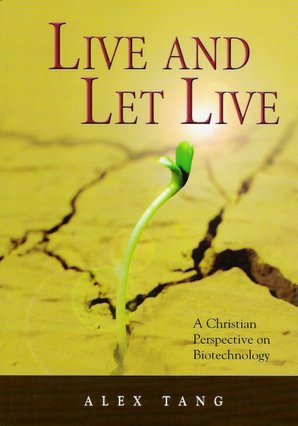
Live and Let Live: A Christian Perspective on Biotechnology

Posted by Picasa

This is the age of cutting edge biotechnology. With the completion of the mapping of the human genome in 2000, we are poised for a great leap in life-changing biotechnological discoveries and innovations. Some of the many issues Christians shall face at the dawning of the 21st Century are:

• When does a human life begin?
• Is abortion allowed?
• Should Christian couples consider In Vitro Fertilisation (IVF) or ‘test tube babies’ for their infertility problem?
• Should we allow ‘embryo reduction’ if there are too many embryos in successful IVF?
• What shall we do about ‘spare embryos’?
• What is therapeutic and reproductive cloning?
• Should human cloning be allowed?
• Is a ‘human’ clone a human being?
• Shall we allow embryonic stem cell research to continue?
• What are the promises of stem cell research?
• How will the practice of medicine be changed by new discoveries in biotechnology?
• Will you like to grow a new heart?
• Should scientist be allowed to make changes or ‘improve’ the human blueprint?
• Design your own baby?
• What is human eugenics?

The Bible does not give specific answers to these questions. Using biblical principles, this book seeks to help Christians to understand and be informed about these issues. Some of these questions may sound like science fiction. We have seen the way the silicon revolution of computers; mobile phones and the Internet have changed our lives within a decade. The biotechnology revolution has already begun. We are just beginning to experience its effect. We are living in ‘interesting times’.

Thursday, August 17, 2006

Religious Freedom in Old Testament

Religious Freedom in the Old Testament
Leong Tien Fock


A superficial reading of the Old Testament would lead one to think that there was no religious freedom in ancient Israel. For if you happened to be born into an Israelite family you are bound by the Ten Commandments and the other laws that came with the Mosaic Covenant. Under the Mosaic Law, the worship of idols and the breaking of the Sabbath were punishable by death. If you were born an Israelite you had no choice whatsoever but to worship the God of the Old Testament and in the manner prescribed. And so it seems.

Is the God of the Old Testament the same God of the New Testament? The seeming lack of religious freedom in ancient Israel suggests otherwise. To address this apparent discrepancy we need to explore an aspect of the Old Testament religion usually ignored in Old Testament studies. I am referring to the question of whether an Israelite individual or family could opt out of the Israelite religion at will. Since anyone in ancient Israel who worshipped foreign gods could be put to death, could he? Could they?

The Mosaic Covenant was made between God and Israel at Mount Sinai soon after Moses led them out of Egypt (Exodus 19). God had spoken to them that if they would keep this covenant He would be their God and they would be His people. They were given a choice as to whether they would be bound by this covenant. The people unanimously chose to do so. So there was religious freedom.

The question then arises: What about the future generations who did not participate in that choice? Since religion is a matter of personal conscience, why should they be bound by the choice of their forefathers? They did not choose to be born an Israelite to begin with!

It must be recognized that the Israelite religion was bound up with a piece of land. God made it very clear that they must observe the Mosaic Covenant in order to enter as well as to remain in the promised land. In fact, later in their history when they failed to do so despite repeated warnings they were exiled to Assyria and Babylonia.

This aspect of the Israelite religion has a very important implication on the question of religious freedom in the Old Testament. Since the occupation of the land was conditioned upon observing the Mosaic Covenant, any Israelite living in the land is deemed to have chosen to be, or remain, in the religion and be bound by the Mosaic Covenant. Anyone who chose to opt out of the religion must also opt out of the land. The death penalty on worshipping idols or breaking the Sabbath was intended for violations committed within the promised land. And there was no law that forbade an Israelite from leaving the religion by leaving the land.

The book of Ruth indicates that it was possible for an Israelite family to migrate out of the promised land. In this particular case they left the land and sojourned in Moab because of a famine and not because of a rejection of the Israelite religion. But there is no reason to believe that an Israelite family who wanted to worship the gods of Moab instead of the God of their forefathers could not have migrated to Moab for this very purpose. And there is no reason to suppose that the religious leaders of Israel would stop them from leaving. So as long as those who have renounced the Israelite faith do not worship their foreign gods within the promised land they are not punishable by the Mosaic Law. If they do not leave the land they are considered to have opted to remain in the religion and are therefore punishable by the relevant religious laws. So the blanket prohibition to worship idols or break the Sabbath (within the promised land) does not imply a lack of religious freedom in ancient Israel.

Hence a careful reading of the Old Testament shows that no Israelite would be punished for leaving the religion as he would have to also leave the land, and as a result the Mosaic Law would no longer be applicable. We are not aware of another religion practised today that is bound up with a piece of land. This means it is easy to misunderstand the Old Testament on the subject of religious freedom.

Dave: Soo Inn has written another helpful post, but from the New testament perspective, here.

Sunday, August 13, 2006

The Strange Rite at The Lord's Table


On the first Passover in ancient times
The hebrews were taught a strange rite
Egypt was perplexed at the sign
Of blood on Israel's doors that night

That quiet night was the last
For rebellious Egypt's firstborn
The Hebrews trembling and aghast
to find blood outside their doors the next morn

The solemn night and the sombre morn
The blood on the doors, the deadly breath
For a thousand years, Israel performed
One son spared on one son's death

When the age was ready and ripe,
This strange rite was perfected
One quiet and solemn night
A son prepared to be executed
But this was unlike the old years
When the weakly lamb's blood was shed
The new blood belonged to Heaven's Dear
God's own vein left to bled.

I came to the Table as Israel did
On the first Passover in ancient times
Trembling and aghast my petty wits
Couldst not fathom this strange design.
I, mortal, feeble and weak
Held in my hands God's Blood and Flesh
Unsure of many things, but this:
One son spared on one Son's death

Lord's Table, Aug 13 2006. BM Gospel Center

Rancangan Malaysia Ke-9

Christians must stand for social justice. That we have not done so to a greater extent is reflective of the lack of teaching that our gospel is as much a social as a spiritual one.

We can have no quarrel that the poor and marginalised must be given a hand up into the economic mainstream. Our reason is not the negative fear of social instability but the positive opportunity to show love and concern. The emphasis on eradicating poverty, intra-ethnic inequalities and care for such groups as the elderly, disabled, single mothers and orphans all resonate sympathetically with the Christian agenda for the past two millennia.

Where we would take issue with the 9MP is the unnecessary identification of socio-economic inequalities with race, and by implication religion. The ability to improve one’s standard of living should be based squarely on necessity and not ethnicity. The Christian premise is one that regards all as equal in the sight of Almighty God.


Source: NECF
A Christian's Perspective on the 9th Malaysian Plan

Wednesday, August 09, 2006

Corruption: Weakest Link

Dear Friends,

NATIONAL CONGRESS ON INTEGRITY, 19 August 2006
"Concept of Integrity from the Islamic & Christian Perspectives"

Venue: University College Sedaya International (UCSI), Cheras, Kuala Lumpur, MALAYSIA (location map)
Time: 9 am - 2 pm (Saturday)

The organizers
The National Congress on Integrity is an initiative of the Graduates Christian Fellowship (GCF) and the Oriental Hearts and Mind Study Institute (OHMSI). It begun in 2005 with a focus on the issue of Corruption: The Weakest Link. The 2nd NCOI focused on Christian Citizenship and the Local Government. This is the third Congress and is designed to be open to all. All those invited must register to become participants.

The Context
The world is divided especially after 911. Bridge builders are few and far in between. Malaysia is interested to develop and build National Integrity, within a multi-cultural and multi-religious framework. The fight against corruption is a cornerstone of the Government’s Agenda. The concept of integrity (and corruption) needs to be understood and appreciated in more interesting ways and approaches for efficient translation. The root word for the English word integrity is “integer” which means wholeness, completeness and some times, uprightness. But, are there other concepts of integrity than those of the English Dictionary? What about the scriptures, whether of the East or of the West or of South? How do they help us understand and appreciate this concept of integrity a little better?

The Text: Concept of Integrity from the Islamic and Christian perspectives

The 3rd NCOI is a Dialogue and Exploration of the concept of Integrity based on an Islamic and Christian worldviews.

Two world renowned speakers, who are authorities in their own fields of knowledge, have been invited to address to Keynote Sessions on the Concept of Integrity. They have been requested to address it from each of their scriptural perspectives. The goal of the dialogue is to help evolve a framework for action within a multicultural setting to pursue this agenda of integrity. The two speakers are Dr Ravi Zacharias and Professor Syed Hussein Alatas.

Outcome of the Dialogue

Three outcomes are expected from this Dialogue:

That they will be an improved appreciation of the Concept of Integrity within the context of the National Program on Integrity,

That there will be some common ground agreements on action steps that can be taken by the participants to improve National Integrity and the fight against corruption, and

That the organizers will be able to make a conscious and considered presentation to the Parliamentary Special Committee on Integrity based on the recommendations and the learning achieved from the National Dialogue.
Keynote Speakers

Dr Ravi Zacharias.

He has addressed writers of the peace accord in South Africa, President Fujimori's cabinet and parliament in Peru, and military officers at the Lenin Military Academy and the Center for Geopolitical Strategy in Moscow.

Professor Syed Hussein Alatas.

Syed Hussein Alatas was a founding member of the Parti Gerakan Rakyat Malaysia (Gerakan)

Monday, August 07, 2006

Above All Earthly Powers

Today, I drove to Bethlehem Baptist North Campus for a combined church service at Bethlehem Baptist - a special "welcome-home!" gathering for John Piper's return from sabbatical in UK! It was under the open sky, a gentle breeze blowing

Piper's sermon was based on Jesus' parable on "The Pharisee and Tax Collector" (Luke 18: 9-14, biblical teaching on justification by faith. One of Piper's upcoming books may be in response of NT Wright's views on the topic...

The Pharisee was not a proto-Pelagian trying to pull himself up by his own moral bootstraps. Instead he attributes his moral achievement (he never robbed, or unfaithful to his wife - quite 'authentic' lifestyle!) and religious accomplishment (fasted twice a week and tithed!) as being enabled by God!

This guy is not a pelagian who thinks he can make it without God's help. He even thanked God for helping him to be different from others.

But his fatal mistake is that he considers that God-enabled righteousness as the GROUND of his standing before God, the Judge.

The tax collector, on the other hand, is a sinner. But he recognizes his own sinfulness and looks to God for mercy. And Jesus says, the tax collector goes home justified (declared as righteous) rather than the pharisee (who stands condemned)

This message is hazardous to popular notions of God works. We like the idea that 'authentic' people who live 'good lives' get saved.

But it is spiritually dangerous to put before the Judge our 'grace-imparted' deeds as the basis for being put right with God. None of us could stand before His holy light. No one.

All of us need to come before God with faith in the blood-bought righteousness of Jesus Christ. And Him alone.

Let our hope and the hope of others be on nothing less than the Christ and His wrath-absorbing work on the cross.

We sang a wonderful hymn as well:

Before the throne of God above
I have a strong, a perfect plea:
a great High Priest, whose name is Love,
who ever lives and pleads for me.

My name is graven on his hands,
my name is written on his heart;
I know that while in heaven he stands
no tongue can bid me thence depart.

When Satan tempts me to despair,
and tells me of the guilt within,
upward I look, and see him there
who made an end of all my sin.

Because the sinless Savior died,
my sinful soul is counted free;
for God, the Just, is satisfied
to look on him and pardon me.

Behold him there! the risen Lamb!
My perfect, spotless Righteousness,
the great unchangeable I AM,
the King of glory and of grace!

One with himself, I cannot die;
my soul is purchased by his blood;
my life is hid with Christ on high,
with Christ, my Savior and my God.


After waiting in line for 20 minutes or so, I managed to meet Piper himself, shook hands, took photos and chatted for a while. Even passed him a card on The Agora ministry just in case he would like to keep in touch.

Marvin, he also mentioned what a wonderful preacher you are! Wow, that means a lot coming from a master preacher.

Unfortunately i wont be around for the conference in September "The Supremacy of God in a postmodern world". Aiyor.

But the conference theme and speaker line-up sounds extremely promising:

Our aim is to call the church to a radical and very old vision of the Man, Jesus Christ—fully God, fully sovereign, fully redeeming by his substitutionary, wrath-absorbing death, fully alive and reigning, fully revealed for our salvation in the inerrant Holy Bible, and fully committed to being preached with human words and beautifully described with doctrinal propositions based on biblical paragraphs.

We love Dorothy Sayers’ old saying, “The Dogma is the Drama.” We think the post-propositional, post-dogmatic, post-authoritative “conversation” is post-relevant and post-saving.

Tuesday, July 25, 2006

EU to fund stem cells - Europe - International Herald Tribune

EU to fund stem cells

Stephen Hawking, one of the world's best-known scientists, who suffers from motor neurone disease, lashed out Monday at what he called the "reactionary" forces in the United States and Europe that are trying to ban research on stem cells from human embryos.

Hawking said banning the use of stem cells from human embryos was the equivalent of opposing the use of donated organs from dead people.

"The fact that the cells may come from embryos is not an objection because the embryos are going to die anyway," he told the newspaper The Independent in London. "It is morally equivalent to taking a heart transplant from a victim of a car accident."

Read the full article here

Saturday, July 22, 2006

Three Great Challenges

Looks like Jacksaid's dream of inviting Ravi to University Malaya for a mini-veritas forum came true after all... When we met Ravi in Bali some time back, Jack invited him to Msia (perhaps half-in-jest) and he agreed. The organisers at UM have done a great job making it a reality.

“THE THREE GREAT CHALLENGES TO RELIGION AND SOCIETY - A PROPOSAL FOR TRUE SPIRITUALITY”
by Dr Ravi Zacharias
Visiting Professor at Wycliffe Hall, Oxford University

"Culture is the effort to provide a coherent set of answers to the existential situations that confront all human beings in the passage of their lives," suggests sociologist Daniel Bell. Yet one of the symptoms of a society that has lost its ability to think critically is that it deals with life-defining realities such as who we are as human beings in a simplistic manner. Furthermore, a culture that loses its shame, its power of reason, and its sense of meaning has little to hope for in the future. What has brought this demise about? Many scholars have attributed it to the eroding processes of secularization, pluralization and privatization. This lecture examines these 3 challenges and proposes a deeper and hopeful understanding of who we are and who we are meant to be.


Date : 17 August 2006 (Thursday)
Time : 3.00 p.m.
Venue : Auditorium, Asia Europe Institute, University of Malaya

Please reply: 14th August 2006
Tel: 03-7967 5697 / 7967 5468 Fax: 03- 7967 5692
dialog@um.edu.my

Programme
2.30 p.m. Arrival of Guests
3.00 p.m. Welcome note by Organiser and Introduction

Lecture by Dr. Ravi Zacharias
Question/Answer
5.00 p.m. Refreshments / End

Wednesday, July 12, 2006

Revolution: Finding Vibrant Faith beyond the Walls of Sanctuary

Book Review

Barna, George, 2005, Revolution: Finding Vibrant Faith beyond the Walls of the Sanctuary, Carol Stream, IL: Tyndale House Publishers.


George Barna, in his latest book, Revolution, challenges us to re-examine our theology of church and ways of doing church in the future. Barna was confident that it is possible to predict trends in the church in the United States. He wrote The Frog in the Kettle (1990) in which he identified possible trends and reforms the churches need to implement in order to maximise the benefits from these trends. Barna claimed in his latest book that “90 percent of the predicted outcomes became reality” (p.viii). With this impressive record, Barna went on to introduce what he believes will be the next major trend and this will involve the very structure and the way we do church itself.

Barna identifies a “new breed” of Christians (about 20 million) whom he named “The Revolutionary Christian”. In the opening chapter he identified David (not the biblical one) as one. He described David, “…is a Revolutionary Christian. His life reflects the very ideals and principles that characterized the life and purpose of Jesus Christ and that advances the Kingdom of God-despite the fact that David rarely attends church services. He is typical of a new breed of disciples of Jesus Christ. They are not willing to play religious games and aren’t interested in being part of a religious community that is not intentionally and aggressively advancing God’s Kingdom. They are people who want more of God- much more- in their lives. And they are doing whatever it takes to get it.” (p.7) These revolutionaries have seven major passions (p. 23-25)
1. Intimate Worship
2. Faith-based Conversations (evangelistic)
3. Intentional Spiritual Growth
4. Servanthood
5. Resource Investment
6. Spiritual Friendships

While there is not much to distinguish between the revolutionaries from any committed born-again Christians, the major distinguishing mark is that revolutionaries are willing to leave the local church and seek their spiritual feeding and experiences elsewhere. While there is the commitment to God, there is no loyalty to tradition and the local church. Barna’s research has shown that the local churches have a lot of flaws and churched Christians (about 77 millions) fall short of the standards of these revolutionaries.

What are some of the factors that lead to this trend? Barna has identified seven (p. 42-47).
1. The Changing of the Guard
As the Baby Boomers and Builders begin to make way Baby Busters (1965-1983) and Mosaics (1984-2002), the demographic changes have major influences on culture and societal expectations.
2. The Rise of a new View of Life
Postmodernism has become the main influence in mainstream American culture. What it means is that relationship is more important than productivity, pluralism and relativism, influence through dialogue and the ends justify the means. The working process is more important than the end product.
3. Dismissing the Irrelevant
Unlike the Boomers who are famous for demanding excellence, the next generation; “they quickly abandon anything that is not wholly germane to their personal passions …They have little patience for anything based on tradition, customs, ease, or social responsibility. If they do not immediately sense the relevance of something, they dismiss it out of hand and move on to the next alternative.” Hence loyalty is not a strong point of consideration.
4. The Impact of Technology
Enough have been said about this.
5. Genuine Relationships
They value relationships and are “people people.” Their focus on personal authenticity rather than performance and they like personal stories and experience rather than principles and commands.
6. Participation in Reality
They like the hands on approach and enjoy the experiential rather than the cognitive.
7. Finding True Meaning
They find true meaning in sacrifice and surrender.

What this boils down to is that the next generation will leave any local church or organisation that does not meet their needs. They are not what we consider ‘backsliders’, they are more of spiritual seekers. With more resources within reach (easy communications, travel, Internet etc), they will find their own sources of spirituality that will meet their spiritual needs. They will develop their own network and alternative faith communities. Barna’s prediction for future trends is as below.

How Americans Experience and Express Their Faith (p.49)
Primary means of spiritual experience and expression

Local church 70% (2000) 30-35% (2025)
Alternate Faith-based Community 5% (2000) 30-35% (2025)
Family 5% (2000) 5% (2025)
Media, Arts, Culture 20% (2000) 30-35% (2025)


What will the future faith communities be like. Barna offers a glimpse of some possible forms (p.61-67):

1. Macro model
a. Congregational form of local church
b. House churches
c. Family faith experiences
d. Cyberchurch

2. Micro model (distributed models of faiths)
a. Independent worship events
b. Marketplace fellowships
c. Coaching communities
d. Narrowcast Internet-based faith group
e. Parachurch ministries


Barna has done the Church a favour by bringing to our attention, a possible trend or movement of people out of the local church to seek their spiritual formation elsewhere. While I do not believe it will be as large a percentage as he predicted, I believe that it is an important trend.

If committed Christians find difficulties in being part of an established church and find that they are stagnating, in spite of having make efforts to be part of the community, they should be allowed to explore alternative ways of doing Church. Church to me is not a building or even a local congregation. Church to me is a people of God, the Body of Christ. Many of us has realised that many local churches are no more than fossilized institutions, political conventions, spiritual spas or country clubs.

Throughout Church history, the committed Christians are always marginalized. And they have always survived. These revolutionaries may be the 21st Century equivalent of the desert fathers and mothers of the 4th Century. What the local congregations should be doing is not to condemn or drive them off but to connect with them and offer them a place to come back to when their wandering is done. For all we know, the revolutionaries may be God’s way of sparking off a revival as He has done it with the Pentecostal/Charismatic in the last century.
Sunday, July 09, 2006

Kofi Annan's wonderful worldcup speech


Mr Kofi Annan, Secretary General of the United Nations, was in Berlin on Friday to see the unveiling of the official emblem for the 2010 FIFA World Cup South Africa™. He reflects on why observing events at the FIFA World Cup in Germany has left the UN green with envy in this wonderful interview found on the official Fifa World Cup Germany 2006 Website;

"the World Cup is an event which takes place on a level playing field, where every country has a chance to participate on equal terms. Only two commodities matter in this game: talent and team work. I wish we had more levellers like that in the global arena. Free and fair exchanges without the interference of subsidies, barriers or tariffs. Every country getting a real chance to field its strengths on the world stage."

Real the full article here

Thursday, July 06, 2006

How Expensive is Your Church?

I wonder how you will answer if someone asks you, “How expensive is your church?” Your first impression may be, “My church is free. No annual fees, no service charges and no membership dues. It is not expensive.” Then if that particular person persists, “What about your church’s expansion plans? New building projects. What will it cost you, as a member? How expensive will it be to remain in your church?”

Many churches, especially bigger churches in the Klang valley are embarking on multimillion ringgit building and expansion plans. I am sure there are excellent reasons for these building and expansion plans. Growing church attendance, increasing ministry programs and a bigger staff are some of these reasons. I am also sure all churches which are embarking on these multimillion ringgit building projects have excellent Christ-centered, church community discerned reasons which are in God’s will for these churches. However, I hope that churches are not planning on spending these amount of money (estimates of $50 million, $ 30 million, $10 million to name a few numbers) for the following reasons:

“We want a church campus that looks like Rick Warren’s church campus in California”
It of course great to have a church campus like Rick Warren’s Saddleback Church in Lake Forest. The whole complex is bigger than some of our local university campus. The main auditorium can sit 5,000 people and have the latest in audio-visual equipment. We must realize that we are not in California but in Malaysia. We have to be realistic and contextualize our church buildings. Sometimes we look at the mega churches in other countries and we want to be like them. There is nothing wrong with mega churches provided it is God who wants us to have them. There is something wrong when we try to imitate by ending up with only the superficial simulacrum of the whole concept. A multimillion ringgit building may become a proverbial white elephant and become a millstone around our necks. Instead of trying to build physical assets, we should concentrate and invest in building spiritual assets in our members.

“We must show the surrounding community an impressive church building so that they will know our God is a powerful God”
Aesthetic buildings are good to look at but we should aim for functionality and multi-purpose. Then the building project will not cost so much. If the intention of building is for show, then we need to rethink our priorities. If we think God will be glorified by man -made structures, then we need to relook at Old and New Testament history. Also, we must be aware of the sensitivity of building impressive, attention-drawing buildings in a country where the ‘priority’ religion is not Christianity.


“Our church building must be more impressive than that other church’s building because we are better than them”
Keeping up with the Jones also occurs in religious communities. We need to be aware of this and not get caught up in this vicious circle. Often it is a subtle and unconscious need on our part to compare ourselves with others. It falls to the church leadership and communal discernment of the church to make sure that the tremendous investment in money, effort and work is for the expansion of God’s kingdom, not in proving themselves better than other Christians. Good Christian stewardship demands that every ringgit that we spend must be accountable and for the mission of the church which is evangelism. How many missionaries and ‘full time’ workers are suffering from lack of finances while home churches are building ‘fine’ buildings? The work of the gospel expands, not by buildings but by personal relationships and effective stewardship of financial resources.

“We must have a new church building/expansion because there is not enough space”
On the surface this sounds like a good reason. However, ‘not enough space’ is a perpetual problem. I have never been to a church where they have ‘enough space’. When I was visiting Rick Warren’s church, the people I spoke to also complain of ‘not enough space’. The solution to ‘not enough space’ may not be building new buildings but in more creative use of existing space. We need to have a paradigm change in our thinking of a church as being a building where everything is in one place. Could a church not be a small shop lot for administration office, rent hall spaces for worship and services and hold other meetings in homes? Instead of building a new building every time the congregation grows, should we not think of leasing or renting of bigger and bigger convention halls or hotel ballrooms for worship service? Most convention halls/ hotels come with audiovisual equipment and adequate parking facilities.

I have nothing against churches that have visions for multimillion dollars building projects. I just hope that they are aware that the fund-raising, the work needed and the taxing of their members may drain their resources and divert their attention from the more important task of building the Kingdom of God.

Tuesday, July 04, 2006

Return Of The Son

Christianity Today: "According to Stephen Skelton, author of The Gospel According to the World's Greatest Superhero, the parallels between Superman and Jesus Christ are no accident, but rather, designed on purpose by the Superman TV show and movie storytellers."

Also got a thought-provoking article from Alpha

Quentin Tarantino nailed it in a monologue by Bill in Kill Bill, where he says an essential characteristic of superhero mythology is that there must be a superhero, and an alter ego: Bruce Wayne puts on a suit to become Batman and Peter Parker does the same to become Spider-Man. But Superman was born Superman - his alter ego is Clark Kent.

"His outfit with the big red S, that's the blanket he was wrapped in as a baby when the Kents found him. Those are his clothes. What Kent wears - the glasses, the business suit - that's the costume. Clark Kent is how Superman views us. And what are the characteristics of Clark Kent? He's weak, he's unsure of himself … he's a coward. Clark Kent is Superman's critique on the whole human race."

Maybe this is what is most Christlike about him - not what it is to be heroic, but what it is to be human.


More Reflections on the movie:
Superman Or Perfect Man?
Jesus Christ Superman
What do Superman and Jesus have in common?
Christ Figure of American Pop Culture
Superman, Jesus Christ and Jim Caviezel

Thursday, June 29, 2006

European Leadership Forum

European Leadership Forum

Many Christian leaders feel that they are on their own. If they have access to leadership training resources (theological, management, skills, apologetics, etc), these are usually limited to resources in their native language or within their own denomination.

One of the basic strategies of the European Leadership Forum is to identify common needs of European evangelical leaders and then find the best resources to help meet those needs (Local Leaders' Needs / God's Global Resources).

Some of these resources might be addressed at the Forum itself -- but sometimes the Forum is only an introduction.

See the website

Wednesday, June 21, 2006

Doulos In West Port

The ship DOULOS will be in Malaysia! If you are a book lover, this event is Nirvana. Dirt-cheap and excellent quality stuffs. No joke.

Just to illustrate.. the last time doulos landed in Kuching, I bought a booklet called The Supremacy of God in Preaching (for RM 8-10) and gave a few copies to my pastors for Christmas

Then, I found the same book in a local bookstore costing RM 40!! It's that big a difference... I plan to plunder the ship on 6 July and never go near a bookshop for the remainder of the year :) I kid u not! hehehe...

Details are as follows:
6 July – 31 July 2006
Star Cruises Terminal, West Port

Hurry onboard! Don't miss it! Book Fair Opening Hours
6 July (Thu) 2pm – 10pm
7 July ~ 31 July 2006

Tue – Sat: 10am – 10pm
Sun & Mon: 2pm – 10pm

Crest Malaysia

CREST is an organization of Christians from different denominations and churches who share a desire to reach the poor & needy and disaster victims with the love of God, demonstrated in practical ways in food, shelter, medicine, etc.

Teams of volunteers armed with multidisciplinary skills and God’s love reaching the most desperate, needy and receptive people in the world
Our vision is to have stand-by teams ready to be deployed to crisis relief work within the 10/40 Window. Like a reservist army, the teams will be on stand-by in advance at different times of the year. They will be deployed to do relief work / missions trips for short durations of between 1 to 2 weeks each time.

The goal is to harness not only the spiritual but also the natural and secular skills of Christians of multi-disciplinary backgrounds (cooks, housewives, children’s ministry workers, administrators, secretaries, electricians, plumbers, mechanics, engineers, doctors, nurses, dentists, accountants, logisticians, managers, worship leaders, intercessors, etc, ANYONE!). This way the whole church can get involved in missions in very “down to earth” practical ways, not just those who can preach and teach or feel called into full-time missions.

Our Mission
To be the "hands and feet" of Jesus bringing His love and hope to those caught in crises and disasters.

Research and statistics show that disasters and crises are increasing at an alarming rate among the poorest, most needy and unreached peoples of the world. God’s original mandate and concern is seen in His command for the tithes to be for the Levites, the aliens (refugees), the fatherless and the widows : Deut.14&26. God has called us to establish a crisis relief team made up of Christians from different denominations and skills who will train and work together to demonstrate His love and bring relief to people where the needs are most acute and urgent.

We are to go with His compassion, to be His feet and His hands, to comfort those who mourn, to bind up the broken-hearted, to bestow on them a crown of beauty instead of ashes, the oil of gladness instead of mourning and a garment of praise instead of a spirit of heaviness. Isa.61.

Jesus identified so much with the poor, weak and oppressed that He said, “I was hungry and you gave me something to eat, I was thirsty and you gave me something to drink, I was a stranger and you invited me in, I needed clothes and you clothed me, I was sick and you looked after me, I was in prison and you came to visit me.......I tell you the truth, whatever you did for one of the least of these brothers of mine, you did it for me…” Matt. 25

CREST - Crisis Relief Services & Training Bhd
27 Jalan SS2/104, 47300 Petaling Jaya, Malaysia
Tel: +60 (3) 7725 7299 / +60 (3) 7712 1452
Email: crisis@tm.net.my

Sunday, June 18, 2006

My Brain Made Me Do It!

Despite a recent football injury (blame it on World CUp!), Ron Choong will back in Malaysia too! I believe he's one of the foremost Msian thinkers in the cutting edge interface between science and Christian theology via Metanexus and ACT ministry.

These topics are burning contemporary issues of our generation. Dun miss it!

Date: 30 June 2006 (Fri)
Time: 8.30 pm
Venue: Community Baptist Church, PJ (near Chao Yang ss2)

Is Morality Biological? Neuroscientific studies suggest that we are chemically driven. All mental acts are determined by biochemical balance. Has morality evolved? Thus, people are hunting for the God gene, gay gene, gambling gene etc. Whats the Christian perspective to this emerging field of science?

Is Christian evangelism Immoral? The basis and drive for evangelism is the claim that Christian faith is true for everyone. How is this possible when there are so many religions to choose from? Isn't evangelism insensitive to cultures of the other?

Thursday, June 15, 2006

Common Myths About God's Will

The Tribal Council at the deacons' board...

Common Myths About Divine Guidance
by Paul Stevens

1. That God has a wonderful plan for your life (there is only one way to do His will)
2. That God wants to make the decision for you
3. That the best way to find your way is by asking for a sign
4. That God leads mainly by supernatural signs and prophetic messages
5. That God’s will is hard to find
6. That what God wants cannot be something you find pleasure in
7. That you should do what others think is best for them
8. That the expression of your personal mission remains constant through your life

THE PURITAN CONTRIBUTION – William Perkins, A Treatise on Callings

Callings are part of God’s created order, a means of serving God and sustaining God’s world through supporting oneself, one’s family and the commonwealth.

As soon as one discovers faith in Christ he or she should be taught to discover their calling

Each person has a general calling (to invoke the name of Christ and follow as a disciple) and a particular calling (the unique path of life by which you serve God and the commonwealth)

Parents should help their children discover their calling

There is an equality of callings
If a person does not judge his particular calling as the best of all callings he or she should not yield to discontentment, as did Absolom, the sons of Zebedee and Cain

The chief cause of vocation mismatch is “the lust of the spirit” (Perkins)

Repenting if necessary of the wrong reasons for entering a calling and remaining for the right reasons.

Resisting the temptation to covetousness by labouring to see our particular situations as the providence of God.

Seeking the sanctification of both the work and the worker by the Word of God and prayer.

Turning our affections from this world and setting our mind on heaven

Persisting in our callings by pruning our lives of selfish ambition and impatience
Being accountable to God on the last day

See “Vocational Conversion: An Imaginary Puritan-Baby Boomer Dialogue,” Crux, Vol XXXVII, No 4 (December 2001),2-8.

Tuesday, June 13, 2006

World Cup global sociological effects

World Cup boosts growth, binds ties, even sparks war
By Mark Rice-Oxley Correspondent of The Christian Science Monitor

Question: what quadrennial sporting extravaganza brings the world together for weeks on end, transcending war, poverty, class, and culture, and culminating in the most watched television event ever?

If you guessed the Olympics, odds are you're an American.


The rest of the world knows better. Soccer's World Cup kicks off Friday in Germany. And while the month-long spectacle may not leave much of an impression on Americans, for most other nations it is an incomparable event.


Brazilian banks will close early, British productivity will nosedive, elections in Mexico could be affected, the fate of the French prime minister may hang on results. The event will touch even the frozen wastelands of Antarctica, where scientists have set up a live Internet feed so as not to miss the action.

And at the grand finale on July 9, as many as a billion people - one-sixth of humanity - are expected to watch 22 men, adept at propelling a piece of leather around, compete for the ultimate victory in team sports.

Why is the event so popular?

One reason, says soccer writer Simon Kuper, is that the World Cup provides a stage for old rivalries to be played out. It enables small nations of the world who ordinarily have little say in that other great international sport - diplomacy - to settle scores and resolve questions of status and national identity with a few cathartic kicks

Another reason for the overwhelming popularity is that soccer is so pervasive. The international soccer federation FIFA has more members than the United Nations (207 vs. 191). Two years ago, 198 countries started out trying to qualify for this summer's finals. The game has taken root in so many places because it's so easy to prepare and play, according to Fernando Soares Schlindwein, an academic from Brazil. "The nice thing about football is that you can play it with anyone with almost anything," he says. "People play with fizzy drink cans, or oranges, or socks rolled into a ball.

It unifies people from all social class."

Read the full article here

Monday, June 12, 2006

What place for God in Europe?

What place for God in Europe?

Across Europe,the conflicting currents of secularism, Christianity, and Islam are compelling Europeans to wrestle with their values as never before. In this first installment of a three-part series, the Monitor examines the forces that are shaping European identity - and explores why the Continent is debating what role, if any, religion should play in public life.
By Peter Ford Staff writer of The Christian Science Monitor

Read the full article here

Read the second part here

Thursday, June 01, 2006

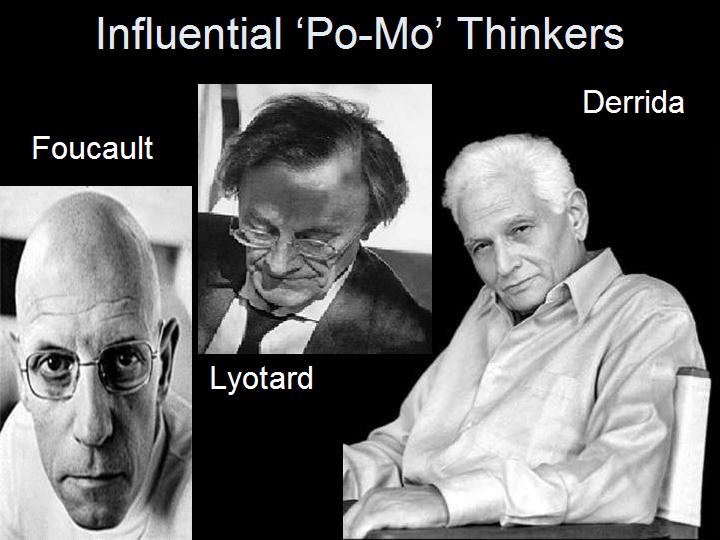
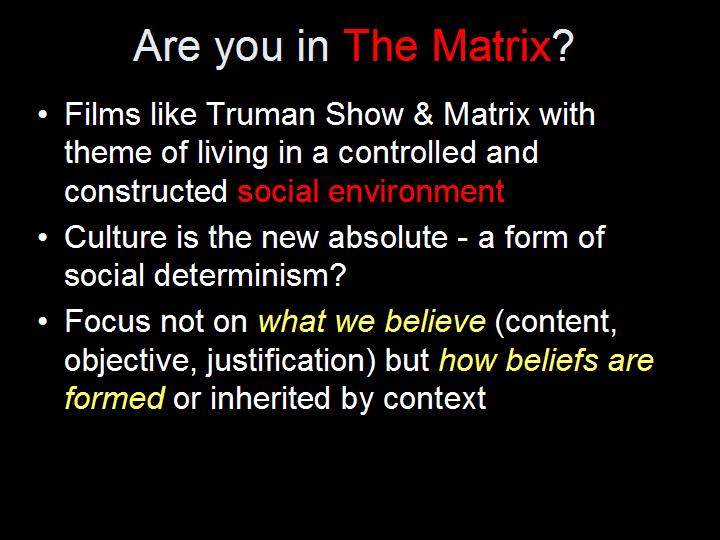
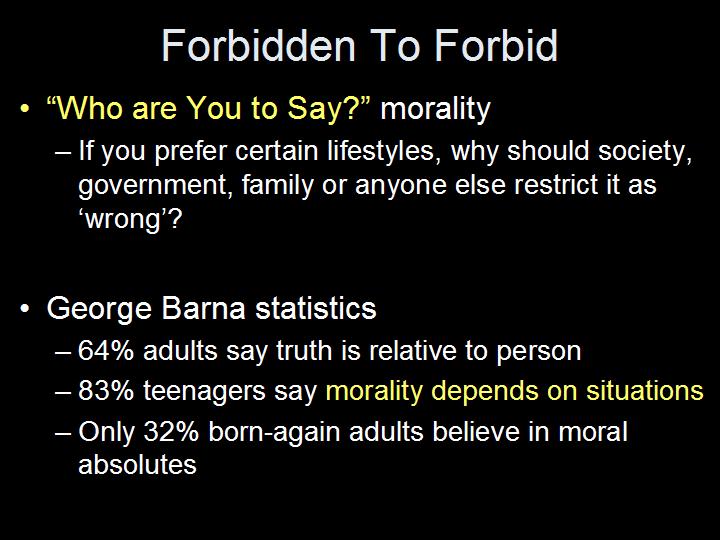
Primer On Postmodernism

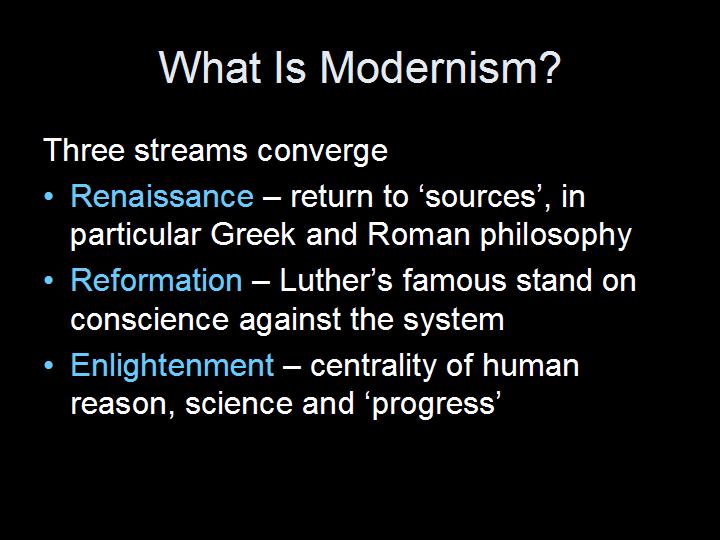
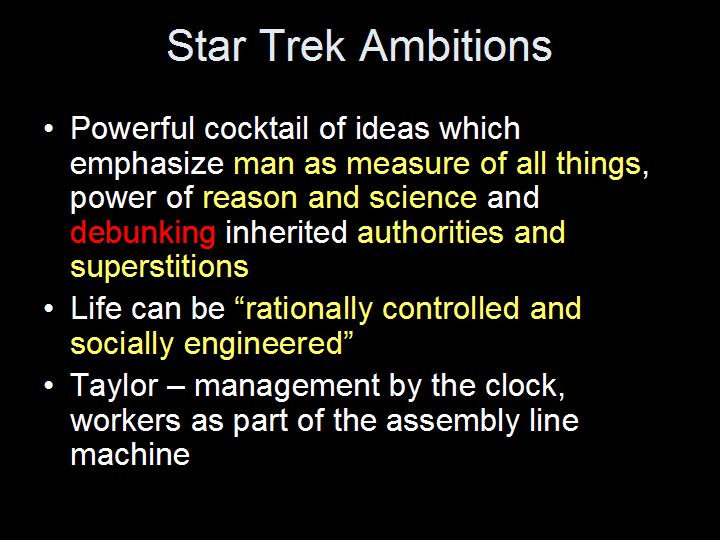
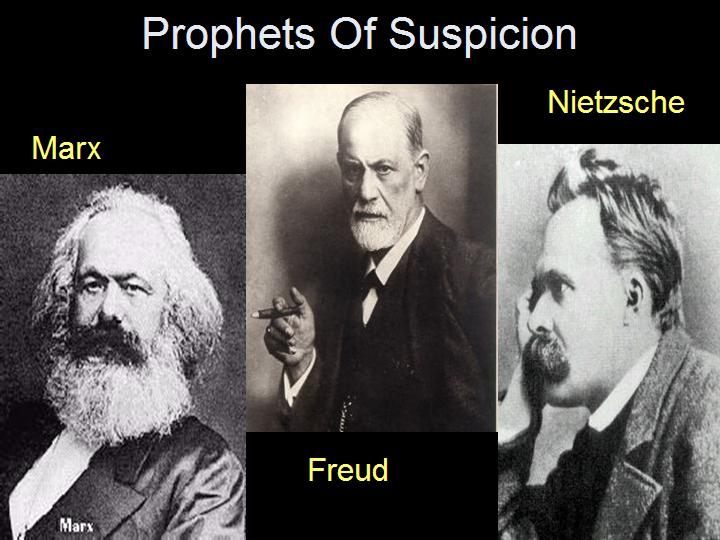
Presentation slides from Agora Forum on Postmodernism in Dec 2005. Most materials were taken from Stuart McAllister's talk at RZIM Bali Conference. But I modified them and any inaccuracy left is mine. The materials are not meant to be comprehensive replacement of the speaker's speech :)


The middle guy is David Hume, the skeptical empiricist.


I Shop Therefore I Am

Hyper-Consumerism: If life is a supermarket, and moral choices are like the products on the shelves, then all that matters is personal choice.
The only problem is the lack of freedom to choose. A determined failure to acknowledge limits and boundaries

Gospel Opportunities

Weakened pride in autonomous reason and naturalistic scientism
Openness to the ‘supernatural’
Yearning for authentic relationships
Need to see gospel embodied before it is proclaimed
Be sensitive to context, history, culture, locality, earthiness, here-and-now rather than extreme other-worldliness

Gospel Challenges

Suspicion of evangelistic ‘propaganda’, more conversation
False dichotomy – Love versus Truth. “Speak the Truth In Love” (Eph 4:15)
Organized religion is out, personal spirituality is in
Gospel subverted as ‘one of many stories’ Social pressure of relativism which is intolerant of Christian faith in particular

Our Calling

Understand the times, every era has its challenges
Confidence in God and His truth
Indwell the gospel, take the risk to effective persuasion
Demonstrate ‘earthly good’
Dialogue… What Would Jesus Ask?
C. S. Lewis’ argument from desire, longing? (1 Peter 3:15-16)